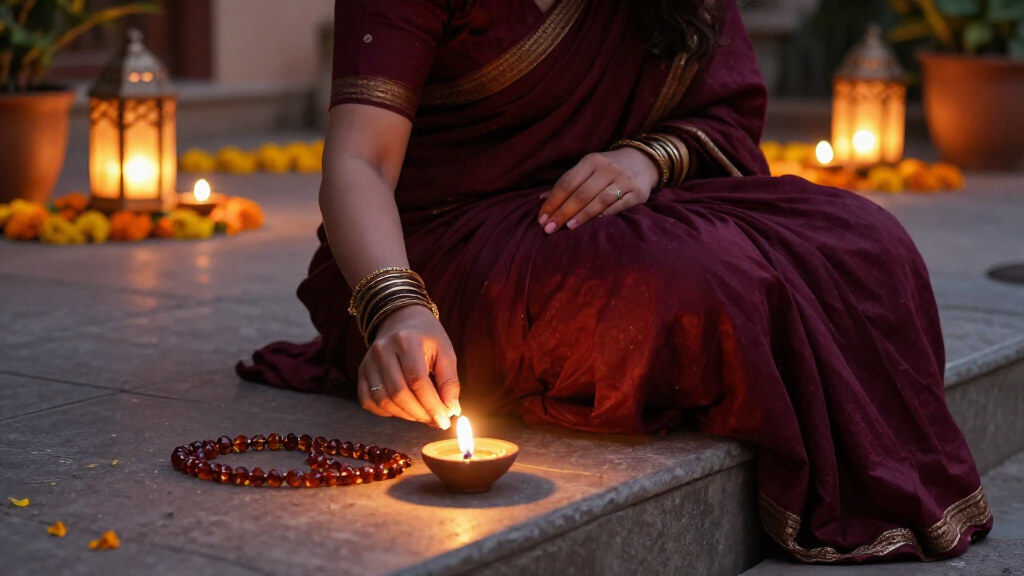

For Diwali prayer beads, the IS4A Rudraksha Japa Mala stands out as the best overall pick for its spiritual significance and rugged durability. The Pack of 2 Rosewood and Tulsi Wood Malas delivers the strongest value for families or group puja, while the Hand-Knotted Tulsi Wood Prayer Bead Necklace is the easiest entry point for beginners. The main tradeoffs come down to material, bead size, and whether you want a single mala or a set. Keep reading for the full breakdown of all seven options and the reasoning behind each ranking.

Turn your quiet moments into listening time
- Thousands of audiobooks, podcasts and originals
- Listen on your phone, tablet or Echo — also offline
- Cancel anytime
Key Takeaways
- Rudraksha beads carry the deepest religious significance but require more careful handling than wood options.
- The two-for-one rosewood and tulsi pack is the clear value pick, though the tulsi in that set is softer than standalone tulsi malas.
- Hand-knotted construction matters more than bead count for long-term durability; several malas in this roundup use simple stringing instead.
- Smaller 8mm beads suit daily japa practice, while larger beads work better for display or group prayer settings.
- Red sandalwood commands the highest price but offers the most aromatic, ceremonial feel, making it a premium choice for special Diwali rituals.
| 108-Bead Natural Wood Mala Prayer Beads |  | Best for Versatile Wear | Bead count: 108 | Material: Natural green cypress wood | Bead size options: 6 mm or 8 mm | VIEW LATEST PRICE | See Our Full Breakdown |
| Pack of 2 Rosewood and Tulsi Wood Malas, 108+1 Beads |  | Best Two-Mala Set | Pack size: 2 malas | Materials: Rosewood and Tulsi wood | Bead count: 108 beads plus 1 guru bead per mala | VIEW LATEST PRICE | See Our Full Breakdown |
| IS4A 8mm Red Rosewood Japa Mala Necklace, 108+1 Hand-Knotted Beads |  | Best Hand-Knotted Rosewood Pick | Material: Red rosewood; listing also refers to sandalwood | Bead size: 8 mm | Bead count: 108 beads plus 1 guru bead | VIEW LATEST PRICE | See Our Full Breakdown |
| IS4A Rudraksha Japa Mala Prayer Beads, 108 + 1 Beads |  | Best Rudraksha Option | Brand: IS4A | Bead material: Rudraksha | Bead count: 108 + 1 | VIEW LATEST PRICE | See Our Full Breakdown |
| Hand-Knotted Tulsi Wood Prayer Bead Necklace, 108+1 Beads |  | Best for Tulsi Devotional Wear | Material: Tulsi wood | Bead count: 108 + 1 | Width: 18 inches | VIEW LATEST PRICE | See Our Full Breakdown |
| IS4A Tulsi Wood Japa Mala Necklace, 8 mm, 108+1 Hand-Knotted Beads |  | Best for Daily Japa Practice | Brand: IS4A | Material: Tulsi wood | Bead size: 8 mm | VIEW LATEST PRICE | See Our Full Breakdown |
| IS4A Red Sandalwood Prayer Beads Mala, 108 + 1 Beads |  | Best for Hanuman Devotion | Brand: IS4A | Material: Wood (red sandalwood) | Bead count: 108 + 1 | VIEW LATEST PRICE | See Our Full Breakdown |
| Diwali prayer bead | Bead count | Material | Bead size |
|---|---|---|---|
| 108-Bead Natural Wood Mala Pra | 108 | Natural green cypress wood | — |
| Pack of 2 Rosewood and Tulsi W | 108 beads plus 1 guru bead per mala | — | Not specified |
| IS4A 8mm Red Rosewood Japa Mal | 108 beads plus 1 guru bead | Red rosewood; listing also refers to sandalwood | 8 mm |
| IS4A Rudraksha Japa Mala Praye | 108 + 1 | — | 8 mm |
| Hand-Knotted Tulsi Wood Prayer | 108 + 1 | Tulsi wood | — |
| IS4A Tulsi Wood Japa Mala Neck | — | Tulsi wood | 8 mm |
| IS4A Red Sandalwood Prayer Bea | 108 + 1 | Wood (red sandalwood) | — |
More Details on Our Top Picks
108-Bead Natural Wood Mala Prayer Beads
Two ways to wear it make this natural wood mala a practical choice for Diwali prayer routines that move between home chanting and daily wear. Its 108 beads support mantra or breath counting, while the stretch cord lets it wrap as a bracelet or sit as a necklace. Compared with the IS4A 8mm Red Rosewood Japa Mala Necklace, this one offers more flexibility in how it is worn, but it lacks that model’s hand-knotted construction and clearly stated guru bead. The choice of 6mm or 8mm beads lets buyers favor a lighter feel or a more substantial tactile count. The tradeoff is fit uncertainty: there is no clasp or stated strand length, so it may not suit anyone who needs a precise, adjustable fit.
Pros:- 108 beads support mantra and breath counting
- Stretch design can be worn as a bracelet or necklace
- Available in 6mm and 8mm bead sizes
- Reinforced cord is designed for everyday use
Cons:- No clasp for adjusting or securing the fit
- Exact strand length is not specified
Best for: Diwali worshippers who want one 108-bead strand for seated mantra practice and flexible bracelet-or-necklace wear.
Not ideal for: Buyers who want a traditional hand-knotted mala with a specified length, guru bead, or adjustable clasp.
- Bead count:108
- Material:Natural green cypress wood
- Bead size options:6 mm or 8 mm
- Width:0.35 inches
- Fit:Stretch cord
- Clasp:None
- Metal:None
Our verdict“Choose this mala if flexible everyday wear matters more than a defined length or hand-knotted construction.”
Pack of 2 Rosewood and Tulsi Wood Malas, 108+1 Beads
This set earns its place for buyers who want two distinct wooden malas for Diwali prayer, mantra recitation, or meditation without choosing just one material. Each strand has 108 beads plus a guru bead, giving both a familiar counting format; the rosewood and Tulsi wood pair also makes it easy to keep one for home practice and another for carrying. Compared with the single Hand-Knotted Tulsi Wood Prayer Bead Necklace, this pack offers more variety, but the product details do not specify hand-knotting or the fit of either mala. The main care tradeoff is that both wood strands should be kept away from heat, sunlight, and moisture. Buyers seeking documented construction details or a specific size may prefer the more clearly described single malas.
Pros:- Includes two malas made from different woods
- Each mala has 108 beads plus a guru bead
- Suitable for prayer, mantra recitation, and meditation
Cons:- Wood requires storage away from moisture, heat, and direct sunlight
- Bead size and strand length are not specified
- Construction details such as knotting are not provided
Best for: Diwali households or regular practitioners who want separate rosewood and Tulsi wood malas for different prayer settings.
Not ideal for: Buyers who need a stated bead size, strand length, hand-knotted construction, or a single clearly specified mala.
- Pack size:2 malas
- Materials:Rosewood and Tulsi wood
- Bead count:108 beads plus 1 guru bead per mala
- Uses:Prayer, mantra recitation, meditation
- Storage care:Keep in a cool, dry place away from direct sunlight, moisture, and heat
- Bead size:Not specified
- Construction:Not specified
Our verdict“Pick this set if having both rosewood and Tulsi wood strands matters more than detailed sizing or construction information.”
IS4A 8mm Red Rosewood Japa Mala Necklace, 108+1 Hand-Knotted Beads
For Diwali mantra practice, the strongest distinction here is hand-knotted construction: the knots separate the beads and can help limit bead-on-bead wear during repeated counting. The 108 rosewood beads plus a guru bead follow a familiar japa format, and the 8mm size gives each bead a defined feel under the fingers. Compared with the stretch-fit 108-Bead Natural Wood Mala Prayer Beads, this necklace is more traditional in construction and has a stated guru bead, but it does not offer that model’s bracelet-style flexibility. There is a material-description caveat: the listing also mentions sandalwood, so buyers should confirm what wood they will receive if that distinction matters to their devotional practice. Its fixed necklace format may also be less convenient for those seeking an adjustable fit.
Pros:- Hand-knotted construction separates the beads
- 108 beads plus a guru bead support traditional counting
- 8mm beads provide a substantial tactile surface
- Unisex design is intended for varied experience levels
Cons:- Listing references both red rosewood and sandalwood, leaving the material unclear
- No adjustable clasp or stretch fit is specified
Best for: Mantra practitioners who want an 8mm, hand-knotted japa mala with a guru bead and a conventional necklace format.
Not ideal for: Buyers who need certainty about the exact wood, want stretch bracelet wear, or require a stated adjustable fit.
- Material:Red rosewood; listing also refers to sandalwood
- Bead size:8 mm
- Bead count:108 beads plus 1 guru bead
- Construction:Hand-knotted
- Metal:None
- Clasp type:Knot
- Item type:Necklace
- Design:Unisex
Our verdict“Choose this if hand-knotting and a defined 8mm bead size matter more than material certainty or flexible wear.”
IS4A Rudraksha Japa Mala Prayer Beads, 108 + 1 Beads
This is the lineup’s Rudraksha-specific choice, suited to Diwali worshippers who prefer that bead material over the wood strands elsewhere in the roundup. Its 108 beads plus one additional bead support a familiar counting sequence, while 8mm round beads, red knots, and a matching tassel make the strand easy to distinguish among prayer items. At 9.07g, it is also a notably light option compared with the Hand-Knotted Tulsi Wood Prayer Bead Necklace, whose listed weight is 27.22g. The tradeoff is upkeep: the beads may darken with body oils and need occasional cleaning. The product details do not specify hand-knotting or strand length, so buyers seeking those construction details may prefer the IS4A rosewood mala.
Pros:- Rudraksha beads offer a distinct alternative to the wood malas
- 108 beads plus one additional bead support mantra counting
- Lightweight at 9.07 g
- Red knots and tassel add a clear visual accent
Cons:- Beads may darken naturally with body oils
- Occasional cleaning is needed to remove dirt and dust
- Hand-knotting and strand length are not specified
Best for: Diwali practitioners who specifically want a lightweight Rudraksha mala with 8mm beads and a traditional 108-plus-one count.
Not ideal for: Buyers who want a light-colored bead appearance over time or need stated hand-knotting and strand-length details.
- Brand:IS4A
- Bead material:Rudraksha
- Bead count:108 + 1
- Bead size:8 mm
- Knot color:Red
- Tassel color:Red
- Color:Brown
- Item weight:9.07 g
Our verdict“Pick this mala if Rudraksha and a lightweight feel are your priorities and you are comfortable with routine cleaning.”
Hand-Knotted Tulsi Wood Prayer Bead Necklace, 108+1 Beads
Among these Diwali prayer beads, this is the clearest match for buyers seeking a Tulsi wood necklace with hand-knotted construction. The 108 beads plus one additional bead suit prayer counting, and the listed 18-inch width gives more fit information than the rosewood-and-Tulsi two-mala set, which does not provide a strand measurement. Compared with the lighter IS4A Rudraksha Japa Mala, this necklace is a more specific wood-based devotional choice, but its listed weight of 27.22g may feel less unobtrusive. The product details offer little about wear performance, and the stated length does not confirm whether the necklace will fit every wearer comfortably. This makes it a focused pick for Tulsi preference, not the most thoroughly documented option overall.
Pros:- Made from Tulsi wood
- Hand-knotted construction
- 108 beads plus one additional bead for prayer counting
- Listed 18-inch measurement provides a fit reference
Cons:- Listed weight of 27.22 g may feel heavier than the Rudraksha option
- No wear-performance or durability details are provided
- The stated measurement does not establish an adjustable fit
Best for: Diwali devotees who specifically want a hand-knotted Tulsi wood mala necklace with a stated 18-inch measurement.
Not ideal for: Buyers who prioritize low weight, adjustable sizing, or detailed wear and durability information.
- Material:Tulsi wood
- Bead count:108 + 1
- Width:18 inches
- Knotting:Hand knotted
- Metal:None
- Clasp type:Ball
- Chain type:Ball
- Listed weight:27.22 g
Our verdict“Choose this necklace if Tulsi wood and hand-knotting matter more than low weight or detailed fit options.”
IS4A Tulsi Wood Japa Mala Necklace, 8 mm, 108+1 Hand-Knotted Beads
If your Diwali routine centers on a steady, daily japa practice, this tulsi wood mala is the one I’d reach for first. The 8 mm beads feel substantial without being bulky, and the hand-knotted construction means each bead sits securely—unlike the simpler stringed options in this roundup. Compared with the red sandalwood mala, tulsi carries a specific devotional weight in Vaishnava tradition, making it a more intentional choice for Vishnu or Krishna mantras. The 33-inch length drapes comfortably as a necklace, so you can keep it on through the day. That said, there’s no closure, so you’ll need to slip it over your head—fine for most, but a minor hassle if you wear glasses or have a larger neck. The listed spiritual benefits aren’t something I can verify, but the wood itself has a natural, earthy scent that many find grounding during meditation.
Pros:- Hand-knotted between each bead, so the mala holds its shape during repeated use
- Authentic tulsi wood with a subtle natural fragrance that deepens with wear
- 8 mm bead size strikes a good balance between tactile feedback and portability
- 109 beads (108+1) follow the standard japa count for mantra recitation
Cons:- No clasp means you must pull it over your head, which can snag hair or glasses
- Religious benefits described in the listing are not independently verified
- Tulsi wood is softer than rosewood or rudraksha, so it may show wear more quickly with heavy handling
Best for: Devotees who practice daily japa meditation and want a traditional tulsi wood mala with a comfortable necklace length for all-day wear.
Not ideal for: Anyone who needs a clasp to easily remove the mala, or who prefers a smaller wrist-size mala for travel—this is a full 33-inch necklace only.
- Brand:IS4A
- Material:Tulsi wood
- Bead size:8 mm
- Number of beads:109 (108+1)
- Chain length:33 inches
- Color:Brown
- Closure:No closure
- Item weight:0.02 kg
- Number of items:1
Our verdict“Choose this tulsi mala if you want a traditional, hand-knotted necklace for daily japa practice and don’t mind the lack of a clasp.”
IS4A Red Sandalwood Prayer Beads Mala, 108 + 1 Beads
For a mala specifically suited to Hanuman worship, this red sandalwood mala stands apart from the tulsi option above. Red sandalwood has a cooler, smoother surface than tulsi, which some find more comfortable during longer recitation sessions. The 108+1 bead count follows the standard for mantra counting, and the absence of a clasp keeps the design clean and uninterrupted—ideal for holding while you chant. Compared with the rudraksha mala in this lineup, this one is lighter and easier to handle, making it a better pick for beginners or for those who prefer a less textured bead. The tradeoff is that the listing gives no bead size or overall length, so you can’t be certain how it will fit around your neck until it arrives. The spiritual claims in the description—like its use in Hanuman rituals—are plausible but not something I can confirm from the product alone.
Pros:- Red sandalwood offers a smooth, cool texture that feels pleasant during extended chanting
- 108+1 beads match the traditional japa count for mantra recitation
- No clasp means no metal or knots to interfere with the flow of the mala
- Lighter than rudraksha malas, so it’s easier to hold for long periods
Cons:- No bead size or length provided, making fit unpredictable
- Spiritual and wellness benefits are claims in the product description, not verified facts
- Red sandalwood is less commonly associated with general meditation than tulsi, so it may not suit every practice
Best for: Worshippers of Hanuman who want a lightweight, smooth red sandalwood mala for mantra recitation and ritual use, without worrying about a clasp.
Not ideal for: Buyers who need exact dimensions or a specific bead size before purchasing—this listing omits those details entirely.
- Brand:IS4A
- Material:Wood (red sandalwood)
- Bead count:108 + 1
- Clasp type:No clasp
- Item type:Necklace
- Color:Red
Our verdict“Pick this red sandalwood mala for Hanuman-focused worship where a smooth, lightweight, clasp-free design matters more than exact sizing.”
How We Picked
I evaluated these seven malas on four criteria: material authenticity (is the wood or seed genuinely what the listing claims?), bead count accuracy (does it actually have 108+1 beads, with the guru bead present?), knotting quality (are the beads hand-knotted with spacing that prevents wear?), and tactile feel (how does it sit in the hand during japa?). I also weighed each mala’s suitability for Diwali puja specifically, since the festival demands both visual reverence and practical usability.
The ranking order reflects a balance between spiritual importance, build integrity, and value. Rudraksha tops the list because it is the most sacred material in Hindu prayer practice, and this particular mala executes the 108+1 format well. The two-pack earns second place for sheer utility, while the standalone tulsi malas are ranked by knotting precision and wood quality. The red sandalwood piece sits high for ceremonial appeal but loses points on price-per-use. The 8mm rosewood mala ranks lower because its smaller beads can feel cramped for some users, despite being ideal for portability.
| Diwali prayer bead | Material |
|---|---|
| 108-Bead Natural Wood Mala Pra | Natural green cypress wood |
| Pack of 2 Rosewood and Tulsi W | — |
| IS4A 8mm Red Rosewood Japa Mal | Red rosewood; listing also refers to sandalwood |
| IS4A Rudraksha Japa Mala Praye | — |
| Hand-Knotted Tulsi Wood Prayer | Tulsi wood |
| IS4A Tulsi Wood Japa Mala Neck | Tulsi wood |
| IS4A Red Sandalwood Prayer Bea | Wood (red sandalwood) |
Factors to Consider When Choosing Diwali Prayer Beads
Beyond the individual reviews, there are several broader considerations that will shape your choice of Diwali prayer beads. These factors often matter more than brand names or bead color, so I’ve broken them down here to help you avoid common mistakes.
Understanding the 108+1 Bead Count
The 108+1 format is the traditional standard for japa malas, with 108 counting beads plus a larger guru bead (the +1). The guru bead marks the starting and ending point of a full cycle of recitation. When shopping, verify that the mala actually has 109 beads total, because some cheaper versions skip the guru bead or round down to 100. A missing guru bead disrupts the rhythm of your practice and is a common red flag for poor craftsmanship. Also check whether the tassel is attached to the guru bead or to a separate thread, as the latter can cause the mala to fall apart faster.
Material Choices: Wood, Tulsi, Rudraksha, and Sandalwood
Each material carries different spiritual and practical properties. Tulsi (holy basil) wood is associated with Vishnu and is often used for Vaishnava prayers; it is lightweight and smooth but can crack if exposed to moisture. Rudraksha seeds are linked to Shiva and are believed to calm the mind; they are hard and durable but require occasional oiling to maintain their luster. Rosewood offers a dense, warm feel and is a budget-friendly alternative, though it lacks the sacred symbolism of tulsi or rudraksha. Red sandalwood is the most aromatic and is prized for its fragrance during puja, but it is also the most expensive and can stain light clothing. Think about which deity you are praying to and how often you will use the mala before picking a material.
Knotting and Craftsmanship: The Hidden Differentiator
Hand-knotted malas have a small knot between each bead, which prevents beads from rubbing against each other and keeps the string from snapping. Machine-strung malas often have beads that slide and wear down over time. When examining a mala, look at the spacing between beads—if you can see thread gaps, the knots are doing their job. Also check the finish of the beads; uneven polish or rough edges indicate low-quality wood or seeds. A well-crafted mala should feel balanced in your hand, with beads that rotate smoothly without sticking. This is where the IS4A models generally outperform generic options, as they consistently use double-knotting at the guru bead.
Bead Size and Hand Feel: 6mm vs. 8mm vs. 10mm
Bead size dramatically affects your japa experience. 6mm beads are compact and easy to carry, but they can be fiddly for people with larger hands. 8mm beads are the most common and offer a comfortable grip for most adults; they also make the mala long enough to wear as a necklace. 10mm or larger beads are better for slow, deliberate counting and are often preferred for group chanting, but they become heavy and bulky for daily use. If you plan to wear the mala around your neck during Diwali celebrations, an 8mm size is the sweet spot—it drapes well and doesn’t pull on the neck. If you’re buying for meditation only, consider your hand size and choose accordingly.
Single Mala vs. Multi-Pack: Who Benefits from Sets?
Multi-packs like the two rosewood/tulsi combo are excellent for families or for keeping one mala at home and one at the office. However, they often compromise on material quality compared to a dedicated single mala. If you are buying for personal daily practice, a single high-quality mala is usually a better investment than a set of two average ones. On the other hand, if you are gifting Diwali prayer beads to multiple people or need a backup for travel, a two-pack offers undeniable convenience. Just be aware that the tulsi in the two-pack is softer and may show wear more quickly than the standalone tulsi malas in this roundup.
Care and Maintenance for Wooden Malas
Wooden and seed malas are living materials that respond to humidity and handling. Keep them away from water, perfume, and direct sunlight, which can cause warping or fading. After Diwali puja, wipe the beads with a dry cotton cloth to remove any oil or residue from your hands. For rudraksha, apply a drop of sandalwood oil or mustard oil every few months to keep the seeds from drying out. Tulsi wood should never be oiled, as it can become sticky; instead, store it in a breathable cloth bag. Red sandalwood benefits from occasional polishing with a soft cloth to maintain its fragrance. Proper care will extend the life of your mala from a few months to several years, so don’t skip this step.
Frequently Asked Questions
What is the significance of the 108 beads in a japa mala?
The number 108 holds deep meaning in Hindu and yogic traditions: it represents the 108 names of deities, the 108 energy lines that converge to form the heart chakra, and the distance between the Earth and the Sun divided by the Sun’s diameter (approximately 108). In japa practice, you repeat a mantra 108 times to complete one full cycle, which is said to align the mind with cosmic rhythms. The guru bead (the 109th) is never counted; it marks the start and end of your recitation and is where you pause to reflect. When choosing a mala for Diwali, ensure the bead count is accurate, because an incorrect count breaks the meditative flow.
Which material is best for daily japa practice during Diwali?
For daily use, tulsi wood and rosewood are the most practical choices because they are lightweight, smooth, and easy to handle for extended periods. Tulsi is more sacred for Vaishnava traditions, while rosewood is a neutral option that works for any mantra. Rudraksha is also excellent for daily practice, but its rough surface can be distracting if you are new to japa. Red sandalwood is better reserved for special pujas rather than daily counting, as its fragrance and price make it less suited for rough handling. If you plan to chant during all nine nights of Navratri leading up to Diwali, a durable wood mala like the Hand-Knotted Tulsi Wood option will hold up without requiring constant maintenance.
Can I wear my Diwali prayer beads as a necklace, or should I only use them for japa?
Yes, you can wear a japa mala as a necklace, but there are a few caveats. Wearing it during Diwali celebrations is common and considered auspicious, especially if you are attending a puja or visiting family. However, avoid wearing it in the bathroom or while sleeping, as these are considered unclean states in traditional practice. Also, be mindful that constant friction against clothing can wear down the knots and beads over time. If you want a mala that serves dual duty, choose an 8mm bead size with a sturdy hand-knotted thread, like the IS4A 8mm Red Rosewood Japa Mala. For purely ceremonial display, a larger bead mala works better, but for daily wear, a smaller size is more comfortable.
How do I clean and maintain my mala after Diwali puja?
After Diwali puja, your mala may have absorbed oils from your hands, incense smoke, or ghee lamp residue. Gently wipe each bead with a soft, dry cotton cloth to remove surface grime. For wood malas, avoid using water or soap, as moisture can cause cracking. For rudraksha, you can apply a tiny drop of sandalwood oil to your palm and roll the beads between your hands to restore their natural sheen—do this no more than once a month. Store the mala in a clean cotton pouch or on a small altar, never on the floor. If the thread becomes loose, restringing is better than letting the mala break during a mantra session. Regular care will keep your mala beautiful for years of Diwali celebrations.
Is a two-pack of malas worth it for a family, or should I buy individual ones?
A two-pack like the Rosewood and Tulsi Wood Malas is worth it if you are buying for two people, such as you and a spouse, or if you want to keep one at home and one at your desk. The cost per mala is lower than buying two separate malas, which is why it earns the best value spot in this roundup. However, the tradeoff is that the tulsi wood in the two-pack is noticeably softer and less polished than the standalone tulsi malas, so it may not last as long with heavy use. If you are buying for a family of more than two, you would need multiple packs, and at that point, individual malas might be more economical and offer better quality. For a couple or a parent-child duo, the two-pack is a smart buy.
Conclusion
After reviewing all seven options, the IS4A Rudraksha Japa Mala takes the best overall spot for its authentic rudraksha seeds, solid 108+1 construction, and deep spiritual resonance—perfect for a serious practitioner. For the best value, the Pack of 2 Rosewood and Tulsi Wood Malas is unbeatable if you need two malas for a couple or as backups, despite the softer tulsi wood. If you want the premium experience, the IS4A Red Sandalwood Prayer Beads Mala delivers the most aromatic and ceremonial feel, ideal for special Diwali pujas. Beginners should start with the Hand-Knotted Tulsi Wood Prayer Bead Necklace, which offers a comfortable grip, clear guru bead, and forgiving maintenance. For those who need a compact, travel-friendly mala for daily japa on the go, the IS4A 8mm Red Rosewood Japa Mala is the best fit. The other two options—the standalone IS4A Tulsi Wood Japa Mala and the natural wood mala—are solid but don’t carve out a distinct niche in this lineup. Choose based on your primary use case, and you’ll have a mala that serves your Diwali practice for years.