TL;DR
A Becoming Minimalist report traces the commercialization of Christmas through gift-giving traditions, early retail advertising, Santa promotions and department-store displays. Its account also cites estimates of high holiday spending and stress, though the figures and their sources are not fully documented in the material provided.
A historical account published by Becoming Minimalist traces the commercialization of Christmas from early gift-giving customs to retail advertising and in-store Santa appearances, arguing that modern holiday shopping has developed over centuries. The account also cites forecasts of more than $1 trillion in November and December U.S. retail sales and reports of holiday financial stress, but the source material does not identify all the studies or establish the figures’ comparison periods.

Turn your quiet moments into listening time
- Thousands of audiobooks, podcasts and originals
- Listen on your phone, tablet or Echo — also offline
- Cancel anytime
The timeline begins with the story of St. Nicholas, a fourth-century bishop associated in legend with secretly giving gifts to children and people in need. The report says this tradition inspired later versions of Santa Claus, while emphasizing that the early practice was not itself modern retail commercialization. For centuries, children in parts of Europe received presents on St. Nicholas Day, December 6.
During the Protestant Reformation, the report says, Martin Luther began giving gifts to children on December 25, shifting both the date and the religious framing of gift-giving. A Salem, Massachusetts, bookseller is credited with using the phrase “Christmas gifts” in a retail newspaper advertisement in 1806. Similar advertising followed in Boston and New York, including a store promotion for “four hundred and fifty kinds of Christmas presents,” according to the account.
The report connects Christmas’s family-centered image with the 1823 publication of the poem later known as “A Visit from St. Nicholas” or “’Twas the Night Before Christmas.” In 1841, a shop owner in Albany, New York, reportedly hired a man to appear as Santa Claus and promote the store. Macy’s introduced a special Christmas window display in 1874, helping make seasonal shopping a public spectacle. The account also notes the spread of German glass ornaments in the United States from 1880, though the supplied excerpt ends before detailing that episode.
How Retail Shaped Holiday Traditions
The timeline shows that Christmas commerce was not a single modern invention. Gift customs, popular images of Santa and retail promotion accumulated over time, changing how families marked the holiday and how businesses sought seasonal customers. Shop windows and in-store Santa appearances turned shopping into an event as well as a transaction.
The report says current holiday spending can bring financial strain, including debt and pressure to exceed budgets. It also cites survey findings about stress and loneliness. Those claims matter to readers weighing holiday expectations against household finances, but the supplied material does not provide enough study details to independently evaluate the findings or establish that commercialism caused them.
Products Worth Considering

Therabody Theragun Prime 6th Generation Deep Tissue Massage Gun, Black

Levoit Core 400S-P Smart Air Purifier for Large Rooms up to 1718 ft²
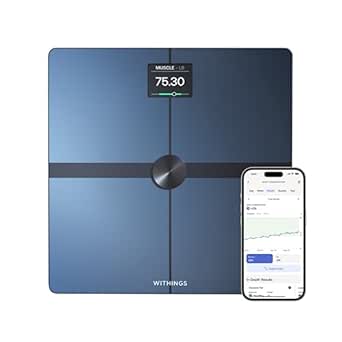
Withings Body Smart Smart Scale with Body Composition Tracking, Black
As an affiliate, we earn on qualifying purchases.
From Saint Nicholas to Store Windows
Christmas gift traditions predate modern advertising. In the account, St. Nicholas is a religious and charitable predecessor to Santa, while the move of gift-giving to December 25 connected presents more closely with the Christmas celebration. That history helps distinguish the custom of giving from the later business practice of advertising gifts for sale.
By the 19th century, the report describes a growing sequence: newspaper promotions, Santa as a store attraction and elaborate displays designed to bring shoppers inside. It says other retailers followed Macy’s window displays, and that by 1914 Saks Fifth Avenue was promoting a Christmas-window unveiling. These examples suggest a gradual expansion of holiday retail, rather than a single starting point.
The source also quotes a 1904 Harper’s Bazaar article in which novelist Margaret Deland complained that Christmas had become more burdensome than it had been 25 years earlier. Her criticism indicates that concerns about commercial pressure were present more than a century ago, although the historical quotation is not a measure of how widespread those views were.
““Twenty-five years ago, Christmas was not the burden that it is now.””
— Margaret Deland, writing in Harper’s Bazaar in 1904, as quoted by Becoming Minimalist
Limits of the Spending Figures
The source material gives no publication date for its current-season forecasts, despite referring to a year-on-year comparison with 2025. It also does not name the retail-sales forecast organization, define the period behind the projected $1 trillion total, or provide the studies supporting its figures on Black Friday participation, planned gift spending, debt, stress, loneliness and social pressure. Those numbers should be treated as claims reported by the source, not as independently verified findings here.
The historical account also presents some origin stories and milestones without showing the underlying archival records in the supplied material. Its excerpt cuts off during the discussion of ornaments, so the rest of its timeline and any further qualifications are unavailable. The precise influence of any one poem, retailer or tradition on later spending is not established by the excerpt.
What the Account Leaves Open
No new policy, retail announcement or scheduled event is reported; the material is a retrospective account rather than breaking news. To assess its present-day claims, readers would need the original forecast and survey sources, their publication dates, methods and comparison baselines. Those details would clarify whether the figures describe intentions or actual spending and how they compare with prior years.
The historical narrative could also be checked against contemporary advertisements and newspaper archives, especially for the early retail milestones. Until those sources are supplied, the account supports a broad timeline of changing Christmas customs and merchandising, while the size and effects of current holiday spending remain less fully documented.
Key Questions
When does the account trace Christmas gift-giving back to?
It points to traditions associated with St. Nicholas, a fourth-century bishop, while describing the connection as a legend and distinguishing it from modern retail commerce.
When did retailers begin advertising Christmas gifts?
The report identifies an 1806 newspaper advertisement by a Salem, Massachusetts, bookseller as an early use of the phrase “Christmas gifts” to sell products.
How did Santa become part of retail promotion?
According to the account, an Albany shop owner hired a man to portray Santa in 1841, using the character to attract attention to the store.
What current spending figures does the source cite?
It cites a forecast of more than $1 trillion in U.S. November–December retail sales and several survey figures about spending and stress. The supplied material does not identify all underlying sources or establish the forecast year clearly.
Does the account prove that commercialization causes holiday stress?
No. It reports survey findings and presents an argument about commercialism and well-being, but the supplied excerpt does not provide enough study details to establish causation.
Source: becomingminimalist.com