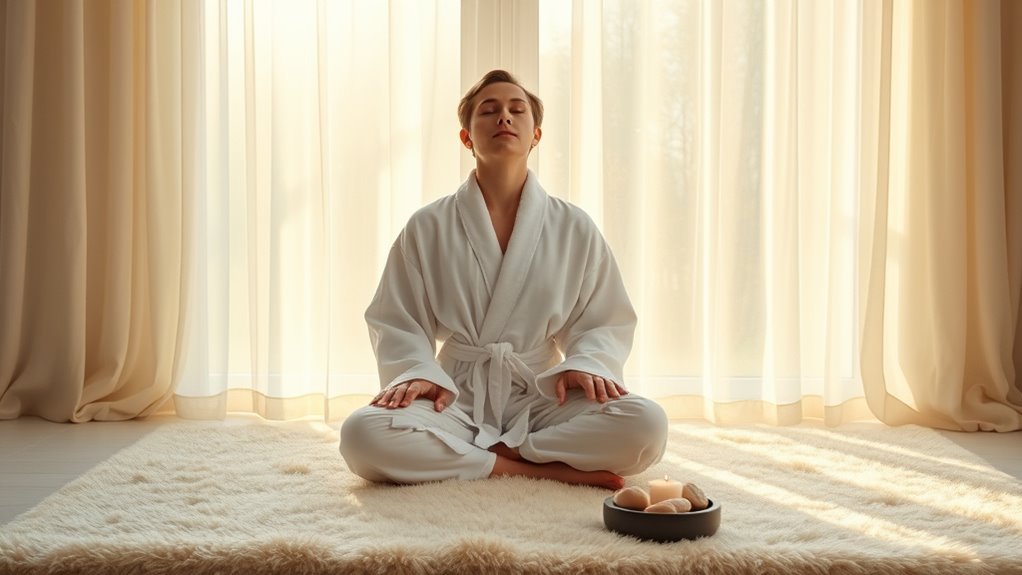

To improve your sleep with meditation, try calming techniques like deep breathing exercises and body scan meditations before bed. Focus on slow, mindful breaths to lower your heart rate and relax your muscles, or systematically scan your body to release tension. Establishing a calming nightly routine can signal your brain to wind down and ease stress. Keep practicing these simple steps regularly, and you’ll discover more ways to transform stressful nights into restful sleep.
Key Takeaways
- Practice deep breathing exercises, inhaling and exhaling slowly to calm the nervous system before bed.
- Use body scan meditation to release tension, starting from toes and moving upward through the body.
- Establish a consistent nightly routine incorporating meditation to signal your brain to wind down.
- Focus on mindfulness during meditation to acknowledge intrusive thoughts without judgment and redirect attention.
- Regularly practicing these techniques helps reduce stress, relax muscles, and improve overall sleep quality.
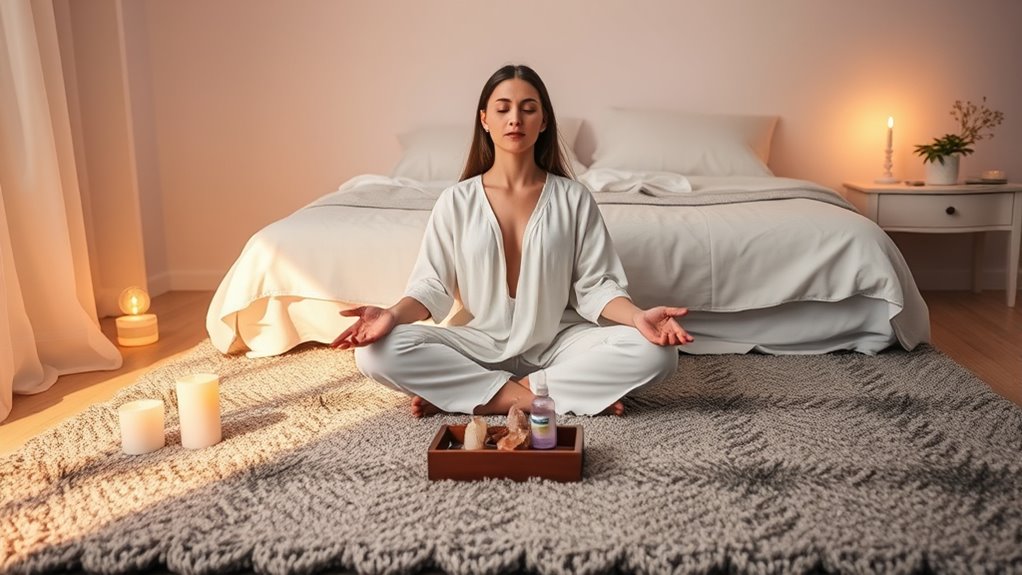
Have you ever struggled to fall asleep despite feeling tired? If so, you’re not alone. Many people find themselves tossing and turning, unable to quiet their minds or relax their bodies enough to drift off. One effective way to improve your sleep is by incorporating meditation practices into your nightly routine. Techniques like breathing exercises and body scan meditation can help you unwind, reduce stress, and prepare your mind and body for restful sleep.
Breathing exercises are simple yet powerful tools to calm your nervous system. When you lie in bed, focus on slow, deep breaths. Try inhaling through your nose for a count of four, holding that breath for a count of four, then exhaling slowly through your mouth for another four counts. Repeat this process several times. This deliberate breathing helps lower your heart rate and relax your muscles, making it easier to shift into sleep. When your mind starts to race, guiding your attention to your breath draws you away from worries and intrusive thoughts. Consistent practice strengthens your ability to find calm during stressful moments, especially at bedtime.
Another effective meditation technique is body scan meditation. As you lie down, close your eyes and bring your attention to different parts of your body, starting at your toes and gradually moving upward. Notice any tension or discomfort and consciously release it as you exhale. This practice encourages mindfulness and helps you become aware of physical sensations, promoting relaxation. Instead of fighting restless thoughts, acknowledge them without judgment, then gently shift your focus back to sensations in your body. Over time, this cultivates a sense of grounding and tranquility, easing you into sleep more effortlessly.
Both breathing exercises and body scan meditation are accessible and can be tailored to fit your needs. They require no special equipment, just your willingness to dedicate a few minutes before bed. Incorporating these practices into your nightly routine creates a calming ritual that signals your brain it’s time to wind down. Consistency is key; the more you practice, the more natural these techniques become, making it easier to fall asleep even on stressful nights.
As an affiliate, we earn on qualifying purchases.
Frequently Asked Questions
Can Meditation Replace Medication for Sleep Issues?
Meditation can help improve sleep, but it shouldn’t substitute medication without consulting a healthcare professional. While meditation safety is generally high, it may not fully address severe sleep issues or medication dependence. If you’re considering switching, discuss this with your doctor to ensure it’s a safe, effective choice. Meditation can complement medication and promote relaxation, but it’s unlikely to fully replace prescribed treatments for serious sleep problems.
How Long Should I Meditate Before Bedtime?
You should aim for about 10 to 20 minutes of meditation before bedtime, following duration guidelines that promote relaxation without causing fatigue. The best meditation timing is about 30 minutes before you plan to sleep, allowing your mind to wind down effectively. Consistency matters, so try to meditate at the same time each night to establish a calming bedtime routine and improve your sleep quality over time.
Are There Any Side Effects of Meditation for Sleep?
You might wonder about meditation side effects, but they’re generally rare. Some people experience mild sleep disruption if meditation causes overstimulation or if you meditate too close to bedtime. It’s important to listen to your body and adapt your practice if you notice any negative effects. Usually, meditation helps improve sleep, but being mindful of your responses ensures it remains a beneficial part of your bedtime routine.
Is Meditation Effective for Chronic Insomnia?
Yes, meditation can be effective for chronic insomnia. When you practice mindfulness, it helps reduce stress and calm your mind, which improves your sleep quality over time. Regular meditation can make falling asleep easier and deepen your rest. While results vary, many find that incorporating meditation into their routine offers significant benefits, helping you manage insomnia better and enjoy more restorative sleep each night.
What Meditation Techniques Are Best for Beginners?
Starting with meditation is like opening a door to calm; for beginners, mindfulness breathing and body scan are great first steps. You focus on your breath to anchor your mind, then gently scan your body for tension, releasing it gradually. These simple techniques help you relax and prepare for restful sleep, making your meditation journey smooth and inviting. Just breathe deeply, let go, and embrace the serenity ahead.
As an affiliate, we earn on qualifying purchases.
Conclusion
By embracing these meditation practices, you’ll uncover the secret to sleep so profound, it’s like slipping into a peaceful paradise every single night. Say goodbye to restless tossing and turning, and hello to nights so deep and restorative, you’ll feel reborn each dawn. Don’t just dream of better sleep—make it your reality. With dedication, you’ll experience a sleep so blissful, it’ll feel like living in a perpetual state of pure, unending serenity.

Breathing Exercise Device for Lungs, Lung Exerciser Device – 5000ml Volumetric Deep Breathing Trainer with Flow Rate Indicator for Respiratory Health & Recovery
- Large Capacity: 5000ml volume for deep breathing training
- Flow Rate Indicator: Guides controlled inhale speed
- Progress Tracking: Clear markings for monitoring improvements
As an affiliate, we earn on qualifying purchases.
As an affiliate, we earn on qualifying purchases.
As an affiliate, we earn on qualifying purchases.