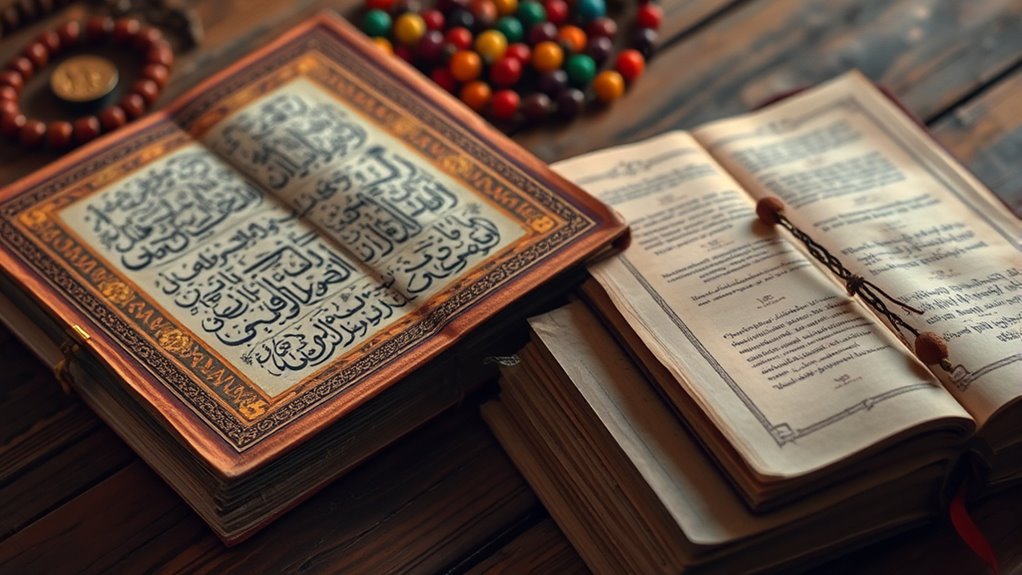

When exploring sacred texts across traditions, you’ll find they reveal core beliefs, values, and spiritual identities that shape communities worldwide. These texts aren’t just stories or laws; they use symbols like light and water to communicate profound truths, often rooted in their unique historical contexts. By understanding both the symbolism and the era they come from, you can see how these ancient writings remain meaningful today. Keep exploring, and you’ll uncover deeper insights into their lasting significance.
Key Takeaways
- Sacred texts embody core beliefs and values that shape diverse religious and cultural identities worldwide.
- Symbolic interpretation reveals deeper meanings and universal themes within texts across traditions.
- Understanding the historical context of each text clarifies its themes and origins.
- Analyzing symbols within their cultural and historical frameworks enhances cross-traditional understanding.
- Sacred texts serve as enduring expressions of human spirituality, influencing societies across generations.

Have you ever wondered what makes sacred texts so influential across cultures and religions? These texts hold a special place because they’re more than just stories or laws; they’re windows into the core beliefs and values that shape entire communities. One key to understanding their power is exploring how people interpret them symbolically. Symbolic interpretation allows you to see beyond the literal words, revealing deeper meanings that resonate across generations. For example, many sacred texts use symbols—like light representing divine presence or water symbolizing purification—that help communicate complex spiritual truths in a way that’s accessible and memorable. By recognizing these symbols, you can grasp how ancient peoples understood their world and conveyed their most profound ideas.
Sacred texts use symbols to convey profound spiritual truths across generations.
But it’s equally important to contemplate the historical context of these texts. When you examine the time and place in which a sacred text was written, you gain insight into the circumstances that shaped its message. The historical context provides clues about why certain themes emerged or why specific laws were emphasized. For instance, understanding the social, political, or cultural realities of the time can help you appreciate the text’s relevance then—and how its meanings might evolve or be understood anew today. Without this context, you risk interpreting sacred texts as static or disconnected from their origins, missing vital nuances that explain their enduring significance.
Furthermore, engaging with both symbolic interpretation and historical context enriches your comprehension of sacred texts. It invites you to see them as dynamic documents—products of their time, yet capable of speaking across ages. When you analyze symbols within their historical framework, you begin to see how ancient authors used familiar images and ideas to address timeless human concerns like morality, justice, or divine justice. This layered approach makes sacred texts more approachable because you’re not just reading words; you’re exploring a worldview that was alive and meaningful to its original audience, yet still capable of inspiring new interpretations today.
In the end, understanding sacred texts involves more than memorizing passages or doctrines. It’s about engaging with their symbols and historical background to appreciate their richness and relevance. Recognizing how these elements work together helps you see these texts not just as religious documents but as profound expressions of human experience across time. It’s through this lens that you can truly begin to grasp why sacred texts continue to influence cultures, inspire individuals, and endure through centuries.

The Apocrypha: A Guide (Guides to Sacred Texts)
As an affiliate, we earn on qualifying purchases.
As an affiliate, we earn on qualifying purchases.
Frequently Asked Questions
How Do Sacred Texts Influence Modern Ethical Decisions?
Sacred texts influence your modern ethical decisions by providing moral guidance during complex situations. When faced with ethical dilemmas, you often turn to these texts for principles and values that help you determine right from wrong. They shape your understanding of morality, encouraging compassion, honesty, and justice. By reflecting on their teachings, you can navigate contemporary issues with a clearer moral compass rooted in age-old wisdom.
What Are the Earliest Known Sacred Writings Across Cultures?
You might find it fascinating that the earliest known sacred writings date back over 5,000 years. Ancient manuscripts like the Sumerian cuneiform texts and ritual inscriptions from Egypt and Mesopotamia serve as the earliest evidence of spiritual beliefs. These texts, carved in stone or written on clay, reveal rituals and divine laws, shaping religious practices and cultural identities long before modern scriptures, offering a glimpse into humanity’s spiritual origins.
How Are Sacred Texts Preserved and Transmitted Through Generations?
You preserve sacred texts through manuscript traditions, copying and annotating them carefully across generations. Oral transmission also plays a vital role, especially in cultures with limited writing systems, as stories and teachings are passed verbally from elders to younger members. Both methods guarantee the continuity of sacred knowledge, allowing these texts to remain essential and relevant, even as societies evolve and new generations emerge.
What Role Do Sacred Texts Play in Interfaith Dialogues?
You might think sacred texts only serve religious communities, but they actually foster interfaith understanding by providing common ground. In sacred dialogue, these texts reveal shared values and inspire respect across traditions. They bridge differences, helping people see each other’s beliefs more clearly. By engaging with sacred texts, you participate in a meaningful dialogue that promotes unity, compassion, and mutual appreciation in a diverse world.
How Do Translations Affect the Interpretation of Sacred Texts?
Translations greatly influence how you interpret sacred texts by introducing linguistic nuances that can alter meaning. You might face interpretative challenges because words or phrases may not have exact equivalents in your language, leading to different understandings. These nuances can shape your perception of the text’s message and teachings. As a result, being aware of translation limitations helps you approach sacred texts with a more thoughtful and nuanced perspective.

Sinai and Zion: A Treasury of Religious Thought and Faith in the Symbolic World of the Bible
As an affiliate, we earn on qualifying purchases.
As an affiliate, we earn on qualifying purchases.
Conclusion
As you explore sacred texts across traditions, you see the harmony in diverse beliefs, yet notice their unique voices. Like different melodies in a grand symphony, each offers wisdom and insight. Embrace the contrasts—the silent prayers and spoken hymns, the ancient stories and modern reflections. In this juxtaposition, you find a richer understanding, realizing that despite differences, these sacred words all serve to connect us to something greater, guiding your journey with shared human longing.

NIV, Cultural Backgrounds Study Bible (Context Changes Everything), Hardcover, Red Letter: Bringing to Life the Ancient World of Scripture
As an affiliate, we earn on qualifying purchases.
As an affiliate, we earn on qualifying purchases.

As an affiliate, we earn on qualifying purchases.