Finding the right espresso machine as a beginner can be overwhelming, with options ranging from manual to semi-automatic models. The De’Longhi Stilosa stands out as the best overall choice, thanks to its balance of simplicity and quality. For those looking for a budget-friendly entry, the Chulux Slim Espresso Machine offers quick setup, while the SHARDOR 20 Bar provides advanced features like a touchscreen for future growth. The main challenge for beginners is choosing a machine that’s easy to operate without sacrificing coffee quality or breaking the bank. Keep reading for a detailed review of these options and what makes each one unique.

Turn your quiet moments into listening time
- Thousands of audiobooks, podcasts and originals
- Listen on your phone, tablet or Echo — also offline
- Cancel anytime
Complete the kit


Key Takeaways
- The best machines balance ease of use with enough features to improve coffee quality over time.
- Entry-level models often sacrifice some control but excel in simplicity and affordability.
- Compact size and quick heating are common traits among top picks, ideal for home use.
- More advanced features like pressure gauges or grinders tend to come with a higher price and complexity.
- Choosing a machine with removable water tanks and easy cleaning features simplifies maintenance for beginners.


| espresso machine for beginner | Pressure | Water Tank Capacity | Wattage | Operation Mode |
|---|---|---|---|---|
| De’Longhi Stilosa Compact Manu | — | — | — | — |
| Casabrews 3700 Essential Stain | 20 bar | 43.9 oz | 1350 W | Semi-Automatic |
| Chulux Slim Espresso Machine w | — | 40 oz | 1400 watts | Manual |
| Casabrews CM5418 Compact Espre | 20 bar | 34 oz | — | — |
| Spacekey Espresso Machine with | 20 bar | — | 1350 W | Semi-Automatic |
| AYCHIRO 20 Bar Espresso Machin | — | — | 1350 watts | Semi-Automatic |
| 20 Bar Espresso Machine with M | 20 Bar | 34 oz | — | — |
| XIXUBX Espresso Machine with M | 20-bar | — | — | — |
| SHARDOR 20 Bar Espresso Machin | 20 bar | 45 oz | 1350 watts | Semi-Automatic |
| AMZCHEF Espresso Machine With | — | 60 oz | — | — |
More Details on Our Top Picks
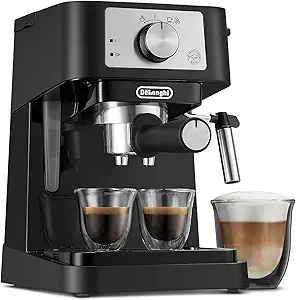
De’Longhi Stilosa Compact Manual Espresso Machine, Manual Milk Frother
This model stands out for its simplicity and stylish, space-saving design, making it ideal for newcomers eager to learn the craft of espresso. Unlike the Casabrews 3700, which offers more power and automatic features, the Stilosa’s manual milk frother provides a more authentic experience for those willing to practice. Its stainless steel boiler guarantees durability, but the manual frother requires some skill to perfect. It doesn’t include a grinder, so pre-ground coffee is necessary, which might be a drawback for those wanting a fully integrated solution. Still, for overall ease of use and quality, this pick suits beginners who enjoy hands-on brewing without complexity.
Pros:- Compact and modern design fits well in small kitchens
- Manual controls offer hands-on learning for beginners
- Durable stainless steel boiler ensures longevity
Cons:- Manual milk frother can take time to master
- No built-in grinder limits convenience for fresh beans
Best for: Beginners who want a compact, stylish machine with manual control to develop their barista skills at home
Not ideal for: Users preferring fully automatic, high-volume machines or those with limited manual skills
- Pump Pressure:15 bar
- Boiler Material:Stainless Steel
- Includes:Portafilter, two filters, tamper, measuring spoon, instruction manual, quick start guide
- Cup Holder:Two-level adjustable
- Frother:Manual milk frother
- Design:Contemporary, compact, stainless steel elements
Our verdict“Best suited for beginners who appreciate manual brewing and a sleek, space-efficient machine.”
Casabrews 3700 Essential Stainless Steel Espresso Machine with Steam Wand
Compared to the De’Longhi Stilosa, the Casabrews 3700 offers a more powerful 20-bar pressure system and a larger water tank, making it suitable for multiple drinks without constant refilling. It’s ideal for users who are comfortable with semi-automatic operation and want richer flavor extraction. The included steam wand produces creamy micro-foam, elevating the quality of milk-based drinks. However, it requires initial setup and some familiarity with espresso brewing, which may be daunting for complete novices. Unlike the Chulux or Spacekey, which are more manual and beginner-friendly, the Casabrews aims at those willing to learn a bit more about espresso techniques for professional results.
Pros:- 20-bar pressure system for rich, flavorful espresso
- Powerful steam wand creates professional micro-foam
- Large, removable water tank for multiple brews
Cons:- Requires initial setup and some brewing knowledge
- No pod compatibility limits ease of use
Best for: Beginners ready to invest time in learning semi-automatic espresso brewing for café-quality drinks
Not ideal for: Total beginners seeking fully automatic, plug-and-play machines or those with limited space
- Wattage:1350 W
- Pressure:20 bar
- Water Tank Capacity:43.9 oz
- Material:Stainless Steel
- Operation Mode:Semi-Automatic
Our verdict“Ideal for beginners willing to learn semi-automatic brewing for high-quality espresso and milk drinks.”
Chulux Slim Espresso Machine with Milk Frother for Home Use
This machine makes a strong case for those who want quick, quality espresso with minimal fuss. Its 20-bar Italian pump and 30-second preheating are advantages over the Casabrews 3700, especially for users who value speed and real-time pressure control. The integrated pressure gauge helps beginners understand extraction, unlike the more manual Stilosa or Spacekey. However, the manual operation means some learning curve is involved, and its limited water capacity may require frequent refills. It lacks a built-in grinder, similar to the Stilosa, but its fast heating and pressure monitoring make it a better choice for those wanting more control without complexity.
Pros:- Fast 30-second preheating for quick brewing
- Real-time pressure gauge enhances understanding of extraction
- Compact and durable design fits small kitchens
Cons:- Manual operation requires some practice
- Limited water capacity for frequent use
Best for: Home baristas who want fast results with real-time pressure feedback and space-saving design
Not ideal for: Absolute beginners who prefer fully automated machines or those with very limited counter space
- Pump Pressure:20 bar
- Wattage:1400 watts
- Voltage:120 volts
- Water Tank Capacity:40 oz
- Operation Mode:Manual
Our verdict“Perfect for beginners seeking quick, controlled espresso extraction with helpful pressure feedback.”
Casabrews CM5418 Compact Espresso Machine with Milk Frothing Steam Wand
Compared with the Chulux, the Casabrews CM5418 emphasizes style and powerful steam performance. Its 20-bar pressure and stainless steel build make it suitable for users who want to craft rich espresso and milk drinks like lattes or cappuccinos. The steam wand is a clear advantage for those who want to practice creating micro-foam art, though it requires a cooling period after frothing, which might slow down busy mornings. Beginners who prioritize aesthetics and professional-quality frothing will find this model appealing, but they should be prepared for some operational nuances. It’s less automatic than the Spacekey or Casabrews 3700, making it better suited for hands-on learning rather than quick, effortless brewing.
Pros:- Sleek, modern aesthetic fits well in stylish kitchens
- 20-bar pressure for rich espresso extraction
- Powerful steam wand for foam art
Cons:- Requires cooling down before additional brewing
- Instructions are essential to prevent overheating
Best for: Home users who want a stylish espresso machine capable of producing barista-quality milk foam
Not ideal for: Beginners seeking fully automatic, quick-to-use machines with minimal fuss
- Pressure:20 bar
- Power:1350 W
- Water Tank Capacity:34 oz
- Frothing System:Steam wand
- Material:Stainless steel
Our verdict“Great for style-conscious beginners who want to master milk frothing and espresso extraction with a professional touch.”
Spacekey Espresso Machine with Milk Frother, 20 Bar Compact Espresso Coffee Maker for Home, Stainless Steel, 39oz Removable Water Tank, Fast Heating, Silver
This machine offers a well-rounded option for beginners who want a bit of everything—speed, versatility, and decent control. Its 20-bar pressure pump and 45-second preheat make it faster than many semi-automatic options like the Casabrews 3700, making it suitable for quick mornings. The adjustable steam wand and multiple modes, including cappuccino and latte, make it more flexible than the simpler models. However, its size may be less ideal for very small kitchens, and initial setup can be slightly involved. Compared to the De’Longhi Stilosa, it adds automation features, but still requires some user familiarity, especially when switching between modes.
Pros:- Fast preheating in under a minute for quick use
- Multiple brewing modes including cappuccino and latte
- Removable water tank simplifies cleaning
Cons:- Initial setup and familiarization needed
- Size may be bulky for small kitchens
Best for: Home users who want a versatile, semi-automatic machine with quick heating and multiple brew options
Not ideal for: Purists who prefer manual control or have very tight space constraints
- Pressure:20 bar
- Wattage:1350 W
- Voltage:120 V
- Capacity:39 oz
- Operation Mode:Semi-Automatic
Our verdict“Ideal for beginners seeking a versatile, quick-heating espresso machine with multiple drink options.”
AYCHIRO 20 Bar Espresso Machine with Pressure Gauge, Compact Semi-Automatic Espresso Maker with Steam Wand, 1350W Fast Heating Coffee Machine with Removable 37oz Water Tank for Home Office
This machine stands out for its high 20-bar pressure that delivers rich, crema-topped espresso, making it ideal for those who want cafe-quality drinks at home. Unlike the 19 Bar Espresso Machine, it offers a sleek stainless steel design and a pressure gauge to fine-tune extractions, though it requires some familiarity with semi-automatic operation. Its removable water tank and drip tray simplify cleaning, but its size might be a challenge in small spaces. This pick is perfect for beginners willing to learn basic espresso techniques but not suited for those seeking fully automated convenience.
Pros:- High 20-bar pressure for authentic crema
- Includes steam wand for milk frothing
- Removable water tank and drip tray for cleaning
- Sleek stainless steel design
Cons:- Limited to semi-automatic operation, requiring some skill
- Size may be bulky for tight spaces
Best for: Beginners who want a semi-automatic machine that emphasizes authentic espresso with some control over brewing parameters
Not ideal for: Small kitchen spaces or users preferring fully automatic machines with minimal manual effort
- Operation Mode:Semi-Automatic
- Wattage:1350 watts
- Voltage:120 volts
- Output Pressure:20 bar
- Capacity:37 oz
- Item Dimensions:11.78″D x 5.16″W x 11.93″H
Our verdict“This machine is a great choice for those new to espresso who want control and quality, but it demands some learning and space.”
20 Bar Espresso Machine with Milk Frother, Compact Stainless Steel Coffee Maker with 34oz Water Tank
This model excels for users needing a small footprint without sacrificing high pressure, thanks to its 20-bar pump and quick heat-up system. Compared with the AYCHIRO, it offers a slightly smaller water tank but faster preparation times, making it suitable for quick, daily coffee routines. Its compact dimensions ensure it fits comfortably in tight spaces, yet it still provides a powerful steam wand for milk drinks. However, it requires preheating before use and the limited water capacity might interrupt multiple drinks in a row. It’s best for those who want fast, quality espresso in a small package but don’t mind preheating routines.
Pros:- High-pressure 20 Bar pump for rich crema
- Fast heating system for quicker coffee prep
- Compact size fits in small kitchens or offices
- Includes milk frother for versatility
Cons:- Requires preheating before use
- Limited water capacity for frequent brewing
Best for: Small-space dwellers who want quick, high-quality espresso and milk drinks with minimal fuss
Not ideal for: Users planning to make several drinks back-to-back, due to limited water tank capacity
- Pressure:20 Bar
- Water Tank Capacity:34 oz
- Power:1450W
- Dimensions:5.3×12.2×11.5 inches
- Material:Stainless Steel
Our verdict“Ideal for compact spaces where quick, quality espresso is needed, but not for high-volume use.”
XIXUBX Espresso Machine with Milk Frother, White
This machine offers PID temperature control, ensuring consistent brewing temperatures that improve shot quality—an advantage over basic semi-automatics like the AYCHIRO. Its quick brew time of 22-30 seconds means less waiting, ideal for busy mornings. The inclusion of a milk frother and pitcher adds versatility, making it perfect for creating lattes and cappuccinos. However, its semi-automatic operation** still demands some skill, especially in grinding and tamping, and it does not feature an integrated grinder. Compared to fully automatic options, it provides more control but also requires more user input, which may be a hurdle for absolute beginners.
Pros:- Quick brewing time of 22-30 seconds
- Built-in PID for stable temperature control
- Includes milk frother and pitcher
- Compact vertical design
Cons:- Limited to semi-automatic operation, requiring skill
- No built-in grinder
Best for: Beginners eager to produce consistent espresso shots and milk drinks with some manual involvement
Not ideal for: Users seeking a fully automatic, plug-and-play experience without much learning curve
- Pressure:20-bar
- Temperature Control:PID
- Brewing Time:22-30 seconds
- Color:White
- Included Accessories:Stainless steel milk frothing pitcher
Our verdict“Perfect for beginners who want to master espresso consistency and milk drinks without complex automation.”
SHARDOR 20 Bar Espresso Machine with Milk Frother and Touchscreen
This model emphasizes ease of use with a touchscreen interface, making it stand out among semi-automatics like the AYCHIRO or 19 Bar options. Its powerful 20-bar pressure and professional steam wand enable craft-quality drinks, while the removable 45 oz water tank supports multiple beverages without frequent refills. The touchscreen simplifies operation, appealing to those who find traditional controls intimidating. However, some users might find the size on the larger side, and the complex controls could be overwhelming for absolute beginners with no prior experience. This pick suits those who want a blend of automation and control, with minimal fuss once familiar with the interface.
Pros:- Powerful 20-bar pressure system for rich espresso
- Touchscreen interface for easy operation
- Includes professional steam wand
- Large 45 oz water tank for multiple drinks
Cons:- Requires descaling over time
- Larger footprint may not fit small kitchens
Best for: Beginners who prefer intuitive operation with customizable settings and frequent drink making
Not ideal for: Users with very small kitchens or those uncomfortable with touchscreen controls
- Wattage:1350 watts
- Voltage:120 volts
- Pressure:20 bar
- Water Tank Capacity:45 oz
- Item Dimensions:8.14″D x 5.12″W x 15.27″H
- Operation Mode:Semi-Automatic
Our verdict“A solid choice for beginners seeking an intuitive, feature-rich espresso machine with room for customization.”
AMZCHEF Espresso Machine With Grinder, Temp Control, 44 Grind Settings
This machine offers unprecedented control with 44 grind settings and precise temperature regulation, making it suitable for those who want to experiment with different brewing styles. Its large 60 oz water tank and touchscreen interface provide convenience, but the sheer range of features can be daunting for complete beginners. Unlike more straightforward models like the 19 Bar, it demands learning about grind size, tamping, and temperature adjustments. It’s best for users who are interested in learning and experimenting, though casual users might find it overly complex and costly.
Pros:- 44 adjustable grind settings for full control
- Precise temperature regulation from 190℉ to 201℉
- Easy-to-use touch screen interface
- Powerful steam wand for microfoam milk
Cons:- Complex for absolute beginners due to many features
- Large water tank requires frequent refilling
- Higher price point
Best for: Enthusiastic beginners eager to learn all aspects of espresso brewing and customization
Not ideal for: Casual users seeking a simple, straightforward espresso machine without extensive adjustments
- Temperature Range:190℉–201℉
- Grind Settings:44
- Water Tank Capacity:60 oz
- Power:1350W
- Steam Wand:Stainless steel, 8mm
Our verdict“Best suited for motivated beginners who want to explore espresso brewing in depth, accepting the learning curve and investment.”

How We Picked
Products were selected based on their suitability for beginners, focusing on ease of use, affordability, and build quality. We prioritized machines that require minimal technical knowledge but still produce quality espresso. Features like automatic operation, straightforward controls, and quick heating times were key considerations. We also evaluated durability, maintenance ease, and overall value to ensure these options provide a reliable starting point for new espresso enthusiasts. The ranking reflects a balance between user-friendliness and potential for growth as skills improve.| espresso machine for beginner | Operation Mode |
|---|---|
| De’Longhi Stilosa Compact Manu | — |
| Casabrews 3700 Essential Stain | Semi-Automatic |
| Chulux Slim Espresso Machine w | Manual |
| Casabrews CM5418 Compact Espre | — |
| Spacekey Espresso Machine with | Semi-Automatic |
| AYCHIRO 20 Bar Espresso Machin | Semi-Automatic |
| 20 Bar Espresso Machine with M | — |
| XIXUBX Espresso Machine with M | — |
| SHARDOR 20 Bar Espresso Machin | Semi-Automatic |
| AMZCHEF Espresso Machine With | — |
Factors to Consider When Choosing Espresso Machine For Beginners
When choosing an espresso machine for beginners, it’s important to consider several factors that impact both usability and coffee quality. A machine that’s too complex can discourage new users, while one lacking essential features might limit your ability to learn and enjoy better espresso over time. Think about your budget, available space, and how much control you want over the brewing process. Avoid models that are overly complicated or require extensive maintenance unless you’re prepared for a steeper learning curve. In this section, I’ll guide you through the most important considerations to help you find a machine that matches your needs and skill level.Ease of Use and Controls
For beginners, a machine with intuitive controls and minimal manual steps makes starting out much easier. Look for models with simple push-button operation, automatic milk frothing, or pre-set brewing functions. Avoid overly complex machines that require manual tamping or extensive calibration, as these can be frustrating when you’re just learning. A straightforward interface reduces the risk of mistakes and helps develop confidence in your coffee-making skills.
Price and Value
Beginners should aim for a machine that offers good value without overspending on features they won’t use immediately. Entry-level machines typically range from budget-friendly to mid-tier prices, with the most affordable models still capable of producing decent espresso. Be cautious of very cheap options that lack durability or consistent performance. Conversely, investing in a slightly more expensive machine with better build quality and features can provide a more satisfying experience and longer-lasting product.
Size and Design
Many beginner machines are compact, making them suitable for small kitchens or limited space. Consider the footprint of the machine, especially if you plan to keep it on a countertop with other appliances. A sleek, simple design can also make the learning process more inviting by reducing visual clutter. Additionally, removable water tanks and easy-to-clean components are important for maintaining the machine without hassle.
Features and Functionality
While advanced features like pressure gauges, grinders, or programmable settings can be tempting, they may overwhelm new users. Focus on essential features such as a steam wand for frothing milk, consistent heating, and straightforward brewing options. These capabilities help improve your skills gradually without the intimidation of complex controls. As you gain experience, you can consider models with additional functionalities to expand your coffee-making repertoire.
Maintenance and Durability
Beginners benefit from machines that are easy to clean and maintain. Look for models with removable drip trays, water tanks, and brew components. Regular cleaning prevents buildup and ensures consistent performance. Also, consider the durability of the materials—metal and high-quality plastics tend to last longer and withstand daily use better. This can save you money and frustration down the line, especially if you’re just starting out and still learning proper care routines.
Frequently Asked Questions
Do I need a professional barista-level machine as a beginner?
Not at all. A beginner-friendly espresso machine should focus on simplicity, ease of operation, and quick results. Professional machines often have features and controls that can be confusing or unnecessary for someone just learning. Starting with a straightforward model allows you to develop your skills gradually and enjoy a good cup of espresso without the complexity or expense of high-end equipment.
Can I make milk-based drinks with a beginner machine?
Yes, many beginner machines come with steam wands or milk frothers designed for easy milk texturing. While the quality of milk froth may improve as you practice, these features enable you to make lattes, cappuccinos, and other milk-based drinks from the start. Choosing a machine with an accessible steam wand or automatic frother simplifies the process and makes creating these drinks more straightforward for new users.
How much should I expect to spend on a good beginner espresso machine?
Most quality beginner machines fall within the $100 to $300 range. This budget range typically offers models with reliable performance, decent durability, and essential features like steam wands and simple controls. Investing slightly more can yield better build quality and more consistent results, but it’s possible to find excellent options without breaking the bank. Be wary of very low-cost models that may lack durability or consistent espresso quality.
Is it better to choose a semi-automatic or manual machine as a beginner?
Semi-automatic machines are generally better suited for beginners because they offer a good balance of control and ease of use. They allow you to learn essential skills like controlling extraction time without needing advanced techniques. Manual machines give more control but require more skill and practice, which can be intimidating for new users. Starting with semi-automatic models helps you build confidence before exploring more manual or complex options.
What maintenance should I expect with a beginner espresso machine?
Regular maintenance involves descaling the machine, cleaning the brew head, and rinsing removable parts like water tanks and drip trays. Most beginner models are designed for straightforward cleaning routines, often with removable components that simplify this process. Performing these steps consistently ensures your machine stays in good condition and produces quality espresso over time. Investing in a cleaning schedule from the start helps prevent common issues like blockages or scale buildup.
Conclusion
For those new to espresso, the De’Longhi Stilosa offers the best overall experience, combining simplicity with good results. If budget is a primary concern, the Chulux Slim provides quick setup and decent quality at a lower price. For users who want a machine that can grow with their skills, the SHARDOR 20 Bar delivers advanced features like a touchscreen and strong performance. Beginners seeking an easy entry should prioritize models with automatic features and straightforward controls, while those ready to explore more control might prefer semi-automatic options. Ultimately, selecting the right machine depends on your comfort level, budget, and how deeply you want to dive into home espresso brewing.
Fall Picks
fall essentials
As an affiliate, we earn on qualifying purchases.