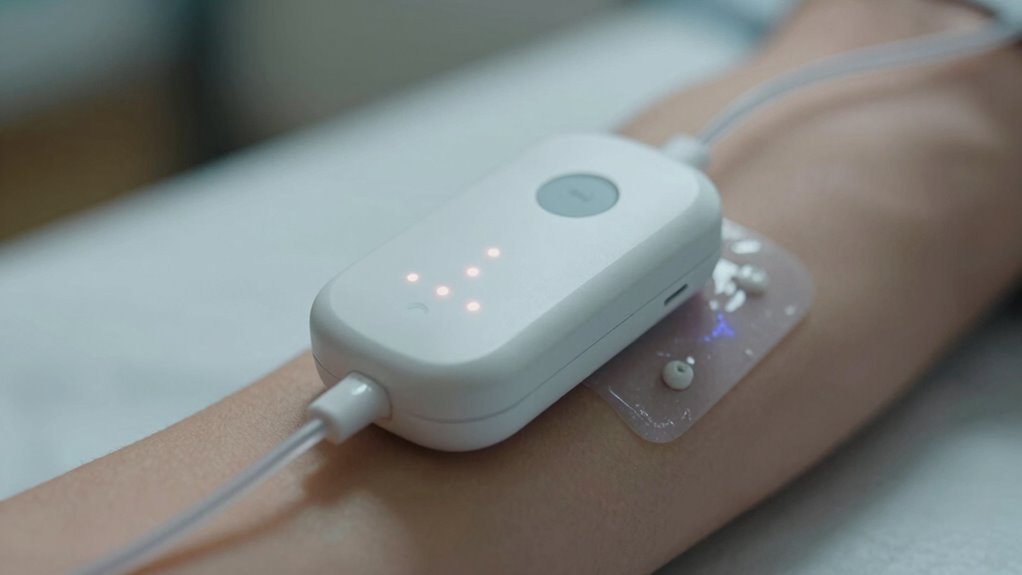

Biofeedback devices measure your body’s physiological responses to stress and emotions, giving you real-time data. They track signals like your heart rate, muscle tension, skin temperature, and breathing patterns. When you feel anxious or overwhelmed, these devices help you recognize those signs early, so you can learn calming techniques. By understanding what your body reveals, you can improve your stress management and overall well-being. Keep exploring to discover how these signals work and how to use them effectively.

Turn your quiet moments into listening time
- Thousands of audiobooks, podcasts and originals
- Listen on your phone, tablet or Echo — also offline
- Cancel anytime
Key Takeaways
- Biofeedback devices measure physiological functions such as heart rate, muscle tension, skin temperature, respiration rate, and blood flow.
- Heart rate variability indicates emotional and stress levels, allowing users to monitor anxiety or relaxation.
- Muscle tension sensors detect subconscious physical stress responses, aiding in relaxation techniques.
- Skin temperature sensors reflect blood flow changes associated with stress or relaxation states.
- Respiration tracking identifies rapid or shallow breathing patterns linked to stress or anxiety.
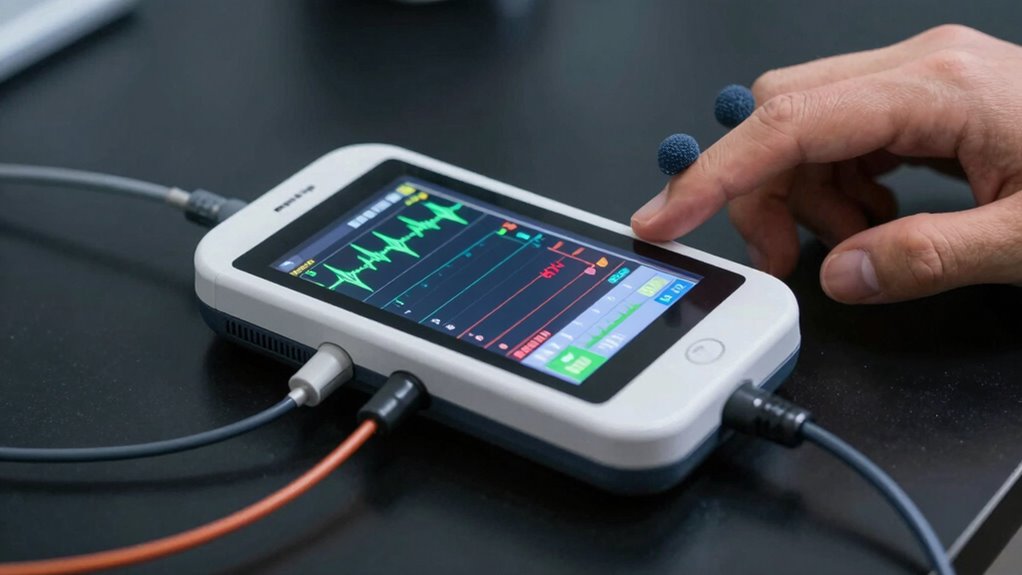
Biofeedback devices are innovative tools that help you gain awareness and control over your body’s physiological functions. When you use them, you’ll see real-time data that reveals what’s happening inside your body, making it easier to understand how your mind and body are interconnected. For many, one of the main benefits is stress reduction. By monitoring your body’s responses, you can learn how stress manifests physically, often through changes in your heart rate. As you become more aware of these fluctuations, you can practice techniques to calm yourself, like deep breathing or mindfulness, which gradually lower your heart rate and reduce stress levels.
These devices measure specific physiological signals, with heart rate being one of the most common metrics. Your heart rate is an essential sign that reflects how your body responds to different emotional states or environmental factors. For example, when you’re anxious or overwhelmed, your heart rate tends to increase. With biofeedback, you see this change immediately, which helps you recognize when stress is building up. By consciously controlling your breathing or relaxing your muscles, you can slow your heart rate down, creating a calming feedback loop. Over time, this can improve your ability to manage stress more effectively, especially in high-pressure situations.
Beyond heart rate, biofeedback devices often measure other bodily functions, such as muscle tension, skin temperature, and respiration rate. Muscle tension sensors, for instance, can detect how tightly you’re holding your muscles, which is often a subconscious response to stress. When you notice this tension, you can work to relax those muscles, easing physical discomfort and mental strain. Skin temperature sensors can reveal how your body responds to stress by showing changes in blood flow, which can cause your extremities to feel cold when you’re anxious. Respiration rate tracking helps you identify rapid or shallow breathing, a common stress response, so you can practice slow, deep breaths to restore balance. Recognizing these physiological signals is closely linked to biodiversity, as variations in bodily responses can be influenced by environmental factors and individual health. Additionally, understanding these signals can help inform personalized approaches to stress management and overall well-being. Moreover, awareness of environmental influences on bodily responses can enhance your overall self-awareness and resilience.
A deeper understanding of these signals can also contribute to personalized health strategies, allowing you to tailor stress reduction techniques to your specific needs.
biofeedback device for stress management
As an affiliate, we earn on qualifying purchases.
As an affiliate, we earn on qualifying purchases.
Frequently Asked Questions
Can Biofeedback Devices Diagnose Medical Conditions?
Biofeedback devices can’t diagnose medical conditions on their own. They provide real-time data on your physiological signals, but accurate readings depend on proper device calibration. Keep in mind, data privacy is essential since your personal health information is involved. Always consult a healthcare professional to interpret the data properly and determine if further medical evaluation is necessary, rather than relying solely on these devices for diagnosis.
Are Biofeedback Devices Suitable for Children?
Yes, biofeedback devices can be suitable for children, but you should look for child-friendly features that make them easier and more engaging for kids. Safety considerations are vital, so choose devices with non-toxic materials and secure fitting designs. When used under supervision, these devices can help children learn relaxation techniques or manage stress effectively. Always consult a healthcare professional to guarantee the device fits your child’s specific needs.
How Accurate Are Biofeedback Measurements?
Biofeedback measurements are generally accurate, but measurement limitations can affect their reliability. Factors like device calibration, environmental conditions, and user movement can influence results. To guarantee accuracy, always calibrate your device properly and use it in a consistent setting. Keep in mind that no device is perfect, so it’s wise to interpret results as part of a broader health assessment rather than relying solely on biofeedback data.
Do Biofeedback Devices Require Professional Training?
You don’t need professional training to use biofeedback devices, but understanding their user interface helps you operate them correctly. Many devices are designed for easy use at home, with clear instructions. Just guarantee your data privacy is protected, especially if the device records sensitive health information. While training isn’t mandatory, consulting a professional can optimize your results and ensure accurate readings, especially for complex conditions.
Can Biofeedback Help With Mental Health Issues?
Yes, biofeedback can help with mental health issues by enhancing mindfulness training and promoting stress reduction. When you use biofeedback devices, you become more aware of bodily responses like heart rate or muscle tension, allowing you to manage anxiety and improve emotional regulation. Regular practice empowers you to develop coping skills, reduce symptoms of depression or anxiety, and foster overall mental well-being through real-time feedback and self-awareness.
As an affiliate, we earn on qualifying purchases.
Conclusion
In the end, understanding what biofeedback devices measure helps you make better choices for your health. For instance, imagine you’re using a device to track your heart rate during stress; it can help you recognize triggers and practice calming techniques. By paying attention to these readings, you gain insight into your body’s responses. Ultimately, biofeedback empowers you to take control, making small adjustments that can lead to big improvements in your overall well-being.
As an affiliate, we earn on qualifying purchases.
skin temperature biofeedback tool
As an affiliate, we earn on qualifying purchases.
As an affiliate, we earn on qualifying purchases.
Halloween Picks
halloween
As an affiliate, we earn on qualifying purchases.