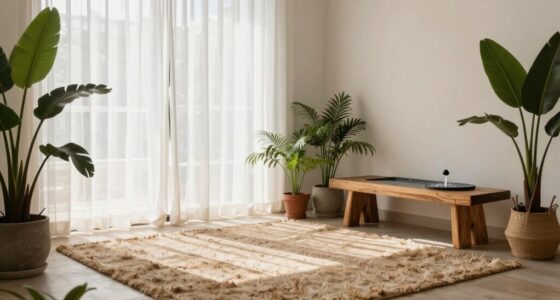
To create a beginner-friendly spiritual practice space, focus on comfort and simplicity. Use suitable meditation furniture like cushions or chairs to support your posture, and add soft, warm lighting to promote relaxation. Keep your space clutter-free with meaningful objects, such as candles or crystals, to inspire your practice. Including gentle sounds or natural silence helps you stay focused. Personalize your space to make it feel welcoming; more ideas to enhance your sanctuary await as you explore further.

Turn your quiet moments into listening time
- Thousands of audiobooks, podcasts and originals
- Listen on your phone, tablet or Echo — also offline
- Cancel anytime
Key Takeaways
- Comfortable meditation furniture like cushions or chairs to support prolonged sitting.
- Soft, ambient lighting such as dim lamps or candles to create a calming atmosphere.
- A clutter-free environment with meaningful objects like crystals or statues for inspiration.
- Quiet surroundings or gentle sounds to enhance focus and immersion.
- Personalization options, including natural decor and adaptable layout, to make the space inviting.

Creating a dedicated spiritual practice space can profoundly enhance your ability to focus, reflect, and connect with your inner self. When you carve out a specific area for your practice, you create an environment that invites peace and mindfulness. When designing your space, consider incorporating elements that promote a sense of balance and harmony, which can significantly elevate your practice. One of the most important elements is comfortable meditation furniture. Whether it’s a cushion, bench, or chair, having a piece that supports your body can make a significant difference in your ability to sit still and stay present. Choose something that feels natural and grounding, helping you settle into your practice without physical distraction.
Creating a dedicated space enhances focus, mindfulness, and inner connection through comfort, simplicity, and intentional environment.
Alongside meditation furniture, ambient lighting plays an essential role. Soft, warm lights create a calming atmosphere that encourages relaxation and focus. You don’t need bright overhead lights; instead, opt for lamps with dimmable features or candles that cast gentle shadows. The goal is to craft a space that feels cozy and inviting, where you can easily slip into a meditative or contemplative state. The right lighting reduces visual distractions and helps your mind settle into stillness.
In addition to furniture and lighting, consider keeping your space clutter-free. A clean, organized environment minimizes mental clutter, making it easier to enter a state of mindfulness. You might want to add meaningful objects—like crystals, statues, or candles—that inspire you and foster a sense of sacredness. These items don’t have to be elaborate; even a small vase of flowers or a favorite stone can deepen your connection to your space and your practice. Maintaining a calm environment can also help reinforce your intentions and intentions in your spiritual journey.
Sound is another element that can support your focus. Many beginners find that gentle background music or nature sounds help drown out distractions and create an immersive experience. If you prefer silence, that’s perfectly fine too. Just guarantee your environment is free from interruptions, so you can dedicate your full attention to your practice.
Finally, keep your space adaptable. As you grow more comfortable with your practice, you might want to add new elements or change the layout. The key is to make the space feel personal and welcoming, a sanctuary where you can return whenever you need to reconnect or find peace. Incorporating biodiversity elements, such as plants or natural decor, can also enhance your connection with nature and foster a sense of serenity in your practice. Ultimately, creating a dedicated spiritual practice space is about setting a foundation—making it easier for you to cultivate mindfulness and deepen your spiritual journey every time you step into it.
Products Worth Considering

Oral-B iO Series 7 Deep Clean + Protect Rechargeable Electric Toothbrush, Black, with 2 Brush Heads and Charging Travel Case

Garmin Forerunner 165 GPS Running Smartwatch, 43 mm, Black

Philips Sonicare 7300 Rechargeable Electric Toothbrush with 3 Brush Heads, Black
As an affiliate, we earn on qualifying purchases.
Frequently Asked Questions
How Much Space Do I Need for My Practice Area?
You’ll want a space of at least a few square feet, enough to comfortably sit or kneel without feeling cramped. Keep the area open for easy movement and consider adding decorative elements like candles or plants to enhance the atmosphere. Arrange furniture thoughtfully to create a calm environment, ensuring there’s enough room for meditation or reflection. A cozy, uncluttered space helps you focus and deepen your practice.
Can I Create a Practice Space Outdoors?
Yes, you can definitely create a practice space outdoors. It offers outdoor serenity and enhances your connection with nature, deepening your spiritual experience. Find a quiet spot with minimal distractions, and add comfortable seating or mats. Incorporate natural elements like stones, plants, or water features to enrich your space. Regularly practicing outside allows you to embrace the calming energy of nature, making your spiritual journey more meaningful and grounding.
What Lighting Is Best for a Spiritual Space?
The best lighting for your spiritual space depends on the ambiance you want to create. Soft, warm lighting enhances relaxation, so opt for dimmable lamps or candles. Incorporate natural light options like sheer curtains or positioning your space near windows to let in gentle sunlight. This combination fosters a calming atmosphere, helping you focus inward and deepen your practice, whether through meditation, prayer, or reflection.
Do I Need Special Furniture for My Practice Area?
You don’t need special furniture for your practice area, but incorporating decorative textiles can create a calming atmosphere. Choose pieces that feel meaningful and comfortable, and consider adding sacred symbols to enhance your space’s energy. Keep it simple and personal, focusing on items that inspire serenity and connection. This way, your practice space becomes a sacred refuge, tailored to support your spiritual journey without the need for specialized furniture.
How Often Should I Update or Change My Space?
You should refresh your meditation zone and altar arrangement whenever you feel your space no longer inspires or aligns with your evolving practice. Changes can be subtle—adding a new ornament, rearranging items, or enhancing the ambiance. Regular updates keep your space vibrant and intentional, helping you stay connected and focused. Trust your intuition; if it feels right to change, go ahead and breathe new energy into your sacred space.
Conclusion
Creating your spiritual practice space doesn’t have to be complicated. Focus on what resonates with you, keep it peaceful, and let your intuition guide you. Remember, it’s not about having everything perfect, but about making it a sanctuary for your growth. Sometimes, less truly is more, so don’t feel pressured to fill every corner. With patience and an open heart, your space will become a haven where your spirit can soar.