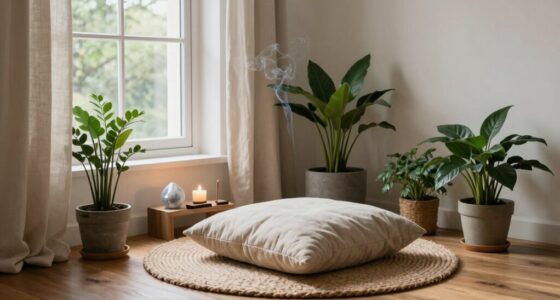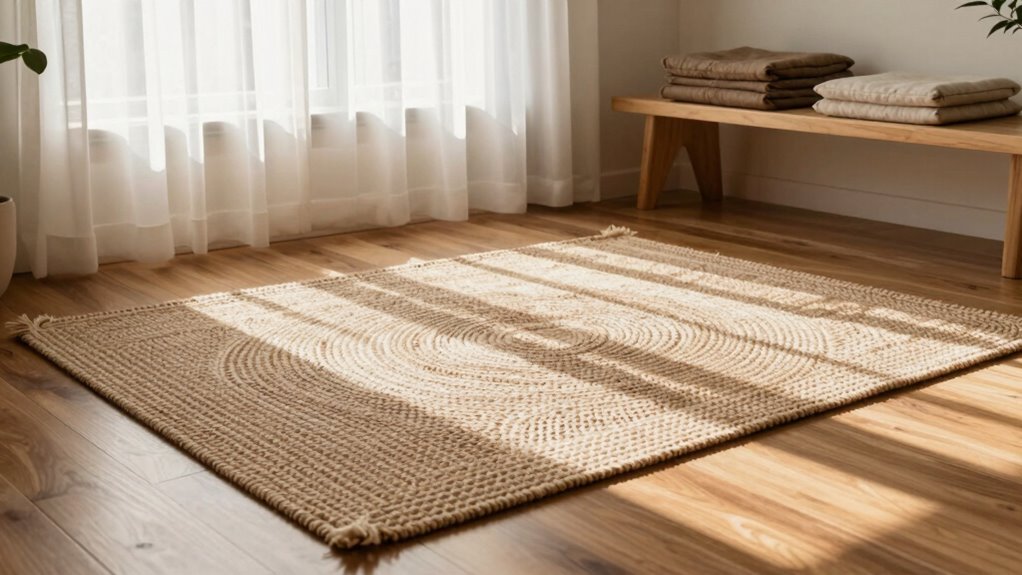

When choosing a rug for your yoga and meditation space, prioritize a natural, eco-friendly material like cotton, wool, or jute for softness and breathability. Opt for subtle patterns and calming colors to promote focus and relaxation, avoiding busy designs. Thicker rugs with padding work well for extended poses, while flat-woven options suit mindfulness practices. Selecting the right rug sets the foundation for a peaceful environment—keep exploring to find the perfect fit for your practice.

Turn your quiet moments into listening time
- Thousands of audiobooks, podcasts and originals
- Listen on your phone, tablet or Echo — also offline
- Cancel anytime
Key Takeaways
- Select natural, breathable materials like cotton, wool, or jute for comfort and sustainability.
- Opt for calming patterns and neutral or soft colors to promote tranquility and focus.
- Consider practice type: thicker rugs for cushioning, flat-woven for stability and ease of movement.
- Ensure the rug complements the space’s atmosphere, supporting relaxation and mindfulness.
- Prioritize eco-friendly options to align with sustainability and enhance overall harmony.
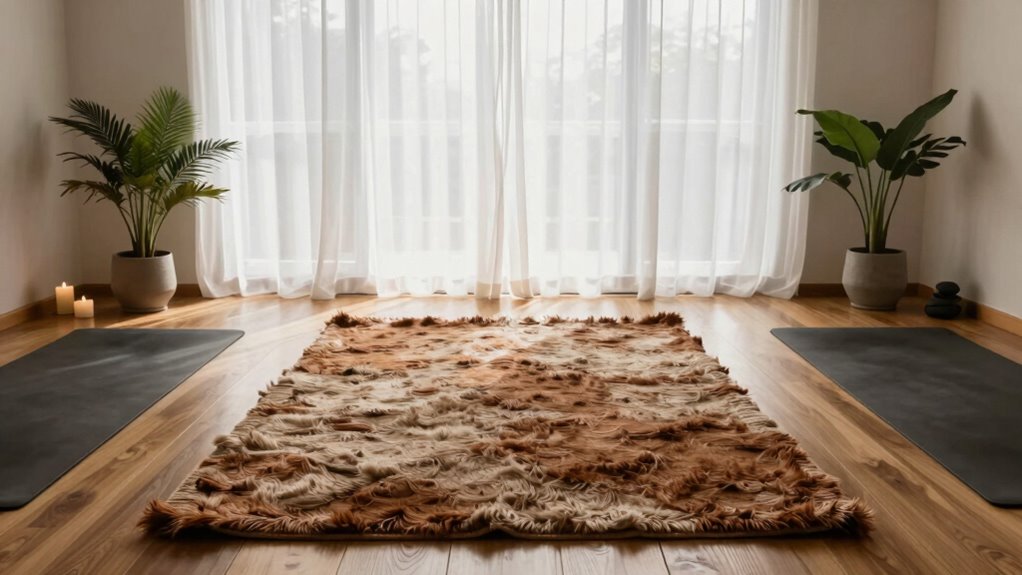
Creating a calming and comfortable yoga or meditation space starts with choosing the right rug. The right rug can set the tone for your practice, making it easier to relax, focus, and find your center. When selecting a rug, consider both decorative patterns and rug material options, as these elements influence the overall atmosphere and functionality of your space.
Decorative patterns can add visual interest and personality to your yoga or meditation area. Opt for designs that evoke tranquility, such as subtle geometric shapes, gentle waves, or nature-inspired motifs like leaves or water patterns. Avoid overly busy or loud designs that might distract you during your practice. Instead, choose patterns that promote calmness and help you maintain focus. Neutral tones or soft colors often work well for creating a serene environment, but if you prefer a pop of color, select hues that energize without overwhelming.
Choose tranquil patterns and soft colors to create a calming, focused yoga or meditation space.
Rug material options are equally important because they affect comfort, durability, and maintenance. Natural fibers like cotton, wool, or jute are popular choices for their softness and breathability. Cotton rugs are lightweight and easy to clean, making them ideal for daily use. Wool offers plush comfort and natural insulation, providing a cozy feel underfoot, especially during colder months. Jute, on the other hand, has a rustic texture that adds an earthy vibe, though it might not be as plush as wool or cotton. Synthetic materials like nylon or polyester can be more affordable and stain-resistant, but they may not offer the same breathability and natural feel as organic options. Additionally, sustainable materials can help reduce environmental impact and support eco-conscious practices. Considering the environmental benefits of your rug choice can further align your space with your values and promote a sense of harmony. Choosing rugs made from renewable resources can also contribute positively to your sustainability goals.
Think about the type of practice you engage in most often. If you need extra cushioning for poses or longer meditation sessions, prioritize rugs with a thicker pile or layered padding underneath. For a space that’s more about mindfulness and stillness, a thinner, flat-woven rug might be enough and easier to keep clean. Incorporating eco-friendly practices into your choice of materials can also enhance the overall harmony of your space. Additionally, choosing eco-friendly and sustainable materials aligns with the principles of biodiversity and conservation, supporting environmental well-being.
Ultimately, your choice should reflect your style, comfort needs, and the vibe you want to cultivate. Combining a decorative pattern that resonates with your personality with a rug material that feels good under your feet can transform your space into a sanctuary. Remember, a well-chosen rug is not just a functional element but a foundation that supports your journey toward relaxation and self-awareness.
As an affiliate, we earn on qualifying purchases.
Frequently Asked Questions
What Is the Best Material for a Yoga Rug?
You should choose a natural fiber like cotton or wool for your yoga rug, as they offer great grip and comfort. These materials align well with your design aesthetics, creating a calming atmosphere, and are durable enough for regular use. While wool might cost more, it’s worth the investment for quality and longevity. Cotton rugs are more budget-friendly, making them a smart choice if price considerations are a priority.
How Do I Clean and Maintain My Yoga Rug?
You should clean your yoga rug regularly, at least once a week, to keep it pristine and inviting. For stain removal, act fast—blot spills immediately with a damp cloth, then use a gentle cleaning solution. Avoid harsh chemicals that could damage your rug’s fibers. Proper maintenance guarantees your rug stays fresh, supportive, and a true sanctuary for your mind and body, no matter how often you practice.
Can I Use a Regular Rug in My Meditation Space?
You can use a regular rug in your meditation space, but consider decor placement and color coordination first. Opt for a rug that complements your calming environment and doesn’t overpower the room. Look for soft, neutral tones or gentle patterns that enhance your practice. Make sure it’s comfortable underfoot and easy to clean. This way, your rug supports your meditation without distracting from your focus or serenity.
How Thick Should a Yoga Rug Be for Comfort?
For comfort, your yoga rug should be about 1/4 to 1/2 inch thick, balancing cushioning and stability. Rug thickness directly affects comfort levels; too thick can make balancing difficult, while too thin may not provide enough padding. Aim for a rug that offers enough support to cushion your joints without compromising your ability to maintain stability. Test different thicknesses to find what feels best for your practice.
Are There Eco-Friendly Options for Yoga Rugs?
Yes, eco-friendly yoga rugs exist, blending sustainability with comfort. You can find options made through sustainable manufacturing processes and crafted from organic fiber options like jute, cork, or hemp. These rugs not only support your practice but also protect the planet. Imagine grounding yourself on a natural, biodegradable surface, knowing you’re reducing environmental impact while creating a peaceful, wholesome space for meditation and yoga.
As an affiliate, we earn on qualifying purchases.
Conclusion
Choosing the right rug sets the foundation for a peaceful yoga and meditation space. Remember, a well-chosen rug isn’t just about style; it’s about creating a sanctuary where your mind can truly unwind. Trust your instincts and don’t rush the process—sometimes, the perfect fit comes when you least expect it. Once you find that ideal rug, you’ll see it’s the little things that make all the difference in cultivating a calm, centered atmosphere.
As an affiliate, we earn on qualifying purchases.
As an affiliate, we earn on qualifying purchases.
Fall Picks
fall essentials
As an affiliate, we earn on qualifying purchases.