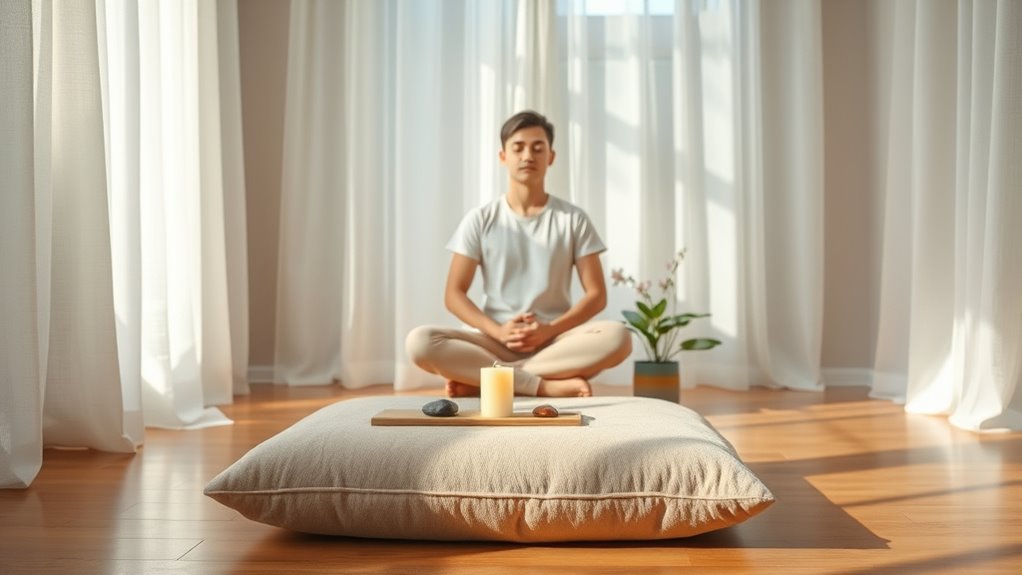

To start a mindfulness meditation practice, find a quiet space where you can sit comfortably with a relaxed but straight back. Focus on your breath, noticing the sensation of air entering and leaving your body. Practice for a few minutes daily, gradually increasing as you become more comfortable. Incorporate mindfulness into daily routines like walking or washing dishes. With consistent effort, you’ll discover how simple habits can foster calm and presence—learn more about building a steady practice below.
Key Takeaways
- Begin with focused breathing exercises in a quiet, comfortable space to establish a simple meditation routine.
- Use your breath as an anchor, gently redirecting attention back whenever your mind wanders.
- Practice daily for a few minutes, integrating mindfulness into routines like walking, washing dishes, or after waking.
- Maintain consistency by setting specific times and creating habits that make mindfulness natural and sustainable.
- Recognize the mental benefits such as calmness and presence, motivating ongoing practice and integration into daily life.

Beginning a mindfulness meditation practice can feel overwhelming at first, but it’s a simple and rewarding skill to develop. One of the most effective ways to start is by focusing on breathing techniques. Your breath is always accessible and serves as a natural anchor to bring your attention back to the present moment. To begin, find a quiet space where you won’t be disturbed. Sit comfortably with your back straight but relaxed. Close your eyes if you feel comfortable doing so, or keep a soft gaze downward. Take a deep breath in through your nose, feeling your lungs expand, then exhale slowly through your mouth or nose. Pay close attention to the sensation of the air entering and leaving your body. When your mind drifts — which it will — gently acknowledge the distraction and guide your focus back to your breathing. This simple act of observing your breath helps train your mind to stay present and cultivates a sense of calm.
Incorporating mindfulness into your daily routines is key to making it sustainable. You don’t need hours of free time; even a few minutes can make a difference. Many people find it helpful to set aside specific times each day, such as right after waking up, during lunch breaks, or before bed. By integrating mindfulness into these habitual moments, you create a consistent pattern that gradually becomes second nature. For example, you might decide to dedicate five minutes each morning to breathing exercises, sitting quietly and focusing solely on your breath. Over time, this practice can extend into other parts of your day, like during a walk, while washing dishes, or waiting in line. The goal isn’t to clear your mind of all thoughts but to observe your experience without judgment. This way, mindfulness becomes a natural part of your daily life, helping you stay grounded amid the busyness and distractions.
Frequently Asked Questions
How Long Should I Meditate Each Day?
You should aim to meditate for about 10-15 minutes daily to build a consistent practice. This duration allows you to explore techniques overview without feeling overwhelmed, especially if you’re a beginner. Many beginners have misconceptions that longer sessions are better, but short, focused meditations can be more effective. As you gain experience, gradually increase your time. Consistency matters more than duration, helping you develop mindfulness habits that stick.
Can I Meditate While Lying Down?
Absolutely, you can meditate lying down—think of it as drifting on a calm lake. Just focus on your meditation posture, ensuring your body feels supported and relaxed. Use relaxation techniques like deep breathing to anchor your mind. While lying down may make you more prone to sleep, gentle awareness keeps you grounded. Experiment with this position to find what best helps you cultivate mindfulness and calmness.
What if My Mind Keeps Wandering?
If your mind keeps wandering, don’t get frustrated. It’s normal to experience mental distraction during meditation. When you notice your thoughts drifting, gently bring your focus back to your breath or chosen anchor without judgment. Practice patience and kindness toward yourself. Over time, you’ll improve your ability to stay present, and mind wandering will happen less often. Consistent practice strengthens your mindfulness and enhances your concentration.
Is It Okay to Meditate With Eyes Open?
Yes, it’s okay to meditate with your eyes open. You can maintain a visual focus by softly gazing at a point in front of you, keeping your eye position relaxed. This approach helps reduce distractions and keeps you grounded in the present moment. Experiment with different eye positions, like a gentle downward gaze or soft focus, to find what feels most calming and natural for your meditation practice.
How Do I Stay Motivated to Practice Regularly?
You stay motivated by making meditation a habit, just like brushing your teeth. Use motivational strategies like setting small, achievable goals or rewarding yourself after consistent practice. When your mind wanders, remember how calm and focused you feel afterward. Visualize the benefits, like reduced stress or improved focus. Keep a meditation journal, and celebrate your progress—this keeps your habit formation strong and your motivation high.
Conclusion
Just as a garden flourishes with gentle care and consistent watering, your mindfulness practice blooms through daily patience and attention. Each moment you dedicate is like tending to a delicate seed, slowly growing into a vibrant, resilient tree. Over time, you’ll notice how your awareness deepens, grounding you amid life’s storms. Keep nurturing your practice, and like a well-tended garden, it will flourish, offering you the serenity and clarity you seek on this mindful journey.