TL;DR
Meditation and mindfulness apps offer guided audio, breathing exercises, sleep content, reminders, and progress tools that can make practice easier to fit into daily life. Research suggests mindfulness practice may help some people with stress, anxiety, mood, or sleep, but app results vary and these tools are not a replacement for professional care. Choose an app by checking its beginner guidance, price, privacy terms, and whether its tone feels supportive.
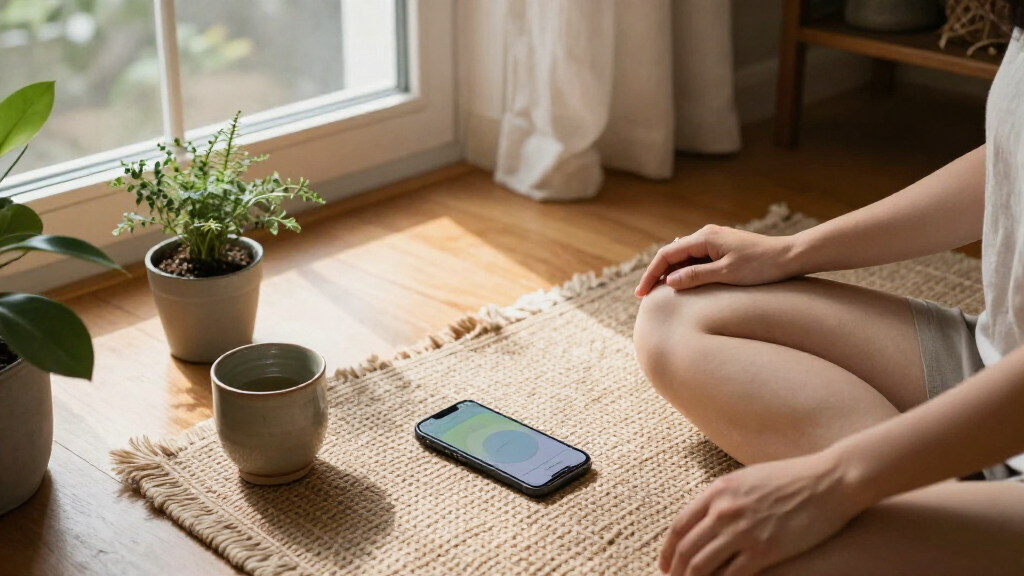
Your phone can guide a two-minute breathing pause while the kettle hisses, but a polished app cannot promise a calmer life. Meditation and mindfulness apps make guided practice easy to try: you can press play, follow a voice, and stop when your break ends. You do not need a class, special equipment, or a silent retreat.

Turn your quiet moments into listening time
- Thousands of audiobooks, podcasts and originals
- Listen on your phone, tablet or Echo — also offline
- Cancel anytime
This guide explains what these apps offer, what research can and cannot tell you, and how to choose one without being drawn in by grand promises. You will also find practical ways to start, plus questions to ask about subscriptions, privacy, and uncomfortable experiences. The aim is simple: help you decide whether an app belongs in your routine, and how to use it on your own terms.
Meditation apps provide guided practices and convenient structure; they do not guarantee a health outcome.
Evidence about mindfulness programs does not automatically establish that a specific app or feature works.
Try a short free session and check renewal, cancellation, and privacy terms before subscribing.
Start with a few comfortable minutes several times a week, and adjust reminders or streaks to suit you.
If practice causes ongoing distress or symptoms are worsening, stop and consider support from a qualified professional.
What a meditation app can do in a few minutes
A meditation and mindfulness app is a phone or tablet service that uses guided audio, video, reminders, or tracking to help you practice attention and awareness. It can give you a voice to follow when you are new, a breathing timer when you have only a short break, or a sleep story when the room is dark and your thoughts keep chattering. Most apps do not require equipment beyond your device.
These features solve different problems. Guidance reduces the uncertainty of beginning: you do not have to decide what to do each moment. Timers offer more freedom but ask you to supply your own structure. Reminders can help practice become easier to remember, while tracking can show patterns over time. The same tools can also become distractions if choosing among dozens of sessions takes longer than practicing, or if a streak makes a missed day feel like failure.
Content varies. One app may focus on meditation; another may bundle it with sleep sounds, courses, live classes, or broader wellness tools. A beginner course can explain how to notice your breath and return to it after your mind wanders. A large library may offer more choice, but it can also feel like standing in front of a wall of books when all you wanted was a five-minute starting point. A clear starting path matters because reducing the effort of choosing can make it more likely you will press play.
For example, imagine you have ten minutes before a video meeting. You choose a short breathing practice, sit with both feet on the floor, and listen to gentle instructions. If a car horn cuts through the audio, that interruption can simply become part of what you notice. The app provides a structure for practice; your attention supplies the practice itself. That distinction explains why an app can make practice accessible without doing the mental work for you.
People use these tools to build routines, manage everyday stress, focus, or wind down. Those are common aims, not promised results. A subscription is not required to learn basic mindfulness: free recordings or a quiet, self-guided breathing pause may be enough to try it. Paying may buy convenience, variety, or a course, but it does not by itself make a practice more suitable or effective.
Products Worth Considering

Hyperice Hypervolt Go 3 Percussion Massage Gun with Carry Case

BowFlex Results Series 552 SelectTech Adjustable Dumbbell

BowFlex Results Series SelectTech Adjustable Dumbbells (Pair)
As an affiliate, we earn on qualifying purchases.
What research says—and what it cannot promise
Meditation apps may help some people practice regularly, and research on mindfulness programs more broadly suggests possible benefits for stress, anxiety, depressive symptoms, and sleep. Those findings do not mean every app works equally well, or that a particular feature will produce a specific result. Evidence about mindfulness in general and evidence about an individual app are two different questions. A program studied with trained teachers and a defined schedule may differ substantially from an app people use briefly, intermittently, or without support.
App studies have reported benefits, but findings vary. Some studies are small or short, and many rely on participants describing how they feel. That can offer useful clues, yet it leaves room for uncertainty: a brief improvement after listening is not the same as proof that an app treats a health condition. Results may also depend on who takes part, how long they practice, and what they compare the app with. Marketing claims can sound more certain than the research behind them, so look for evidence about the specific service and outcome being claimed.
Picture two coworkers using the same five-minute session during a busy week. One says it helps them pause before answering stressful emails; the other finds the narrator distracting and switches to a silent timer. Their different reactions do not prove the practice is useless or universally effective. They show why comfort, fit, and personal experience matter. A small practical benefit—such as remembering to pause—may still be worthwhile, even if it does not amount to treatment or a lasting change in symptoms.
It is sensible to treat an app as a practice tool, not a guaranteed treatment. If anxiety or low mood feels severe, gets worse, or disrupts daily life, consider talking with a qualified health professional. An app may sit alongside support, but it does not diagnose you or replace professional care. This distinction helps keep expectations realistic and makes it easier to seek more appropriate help when a self-guided tool is not enough.
Pick an app you will actually want to open
The most useful app is usually one whose sessions fit your day, whose tone feels comfortable, and whose price and data practices you understand. A popular service is not automatically a good fit for your language, schedule, or needs. Before you subscribe, try a short session and look at the details behind the play button. The point is to test the experience you will actually use, since a large library has little value if its format or voice puts you off.
- Try the free option or trial. Check which sessions it includes and when a trial converts to a paid plan. A trial can reveal whether the app suits you, but its introductory price may not reflect what you will pay later.
- Check the price and renewal terms. Find the billing schedule and cancellation steps before entering payment details. Compare the ongoing cost with the features you expect to use; paying for an extensive catalog is less useful if you only need one short practice.
- Look for a clear starting path. A structured beginner course may feel easier than choosing from hundreds of recordings. A simple path reduces decision-making, while a library can be more flexible once you know what styles work for you.
- Match the format to your routine. Test session length, language, voice, offline access, and whether a brief practice fits your commute or lunch break. Features such as downloads matter most when your connection or setting makes streaming impractical.
- Review reminders and tracking. Turn off streaks or notifications if they start to feel like pressure. These tools can prompt a habit, but pressure can make practice feel like another obligation and undermine the reason you chose it.
- Read the privacy details. Check what data the app collects, whether it is shared, how long it is retained, and how to delete your account or data. These details matter because usage patterns or stated goals can reveal personal habits even when the service is not providing medical care.
For example, suppose a night-shift worker wants a calming audio session after work, while the rest of the household sleeps. A library with short, downloadable audio may suit them better than live classes at fixed times. Someone else may prefer a simple timer with no account at all. The right choice depends on what you will use comfortably, and on what tradeoffs—such as a smaller catalog or fewer personalization features—you are willing to accept.
Wellness services may have partnerships with employers, insurers, or health programs, and their availability and privacy terms can differ. Do not assume workplace access means an employer cannot see anything; read the specific terms. Also pay attention to the app’s language: support should feel encouraging, not like a streak is a score you have failed. A service that is free through work may save money, but it is still worth understanding what account information and activity data are visible to the service or partner.
Build a small routine without turning it into homework
A sustainable mindfulness routine can start with a few minutes several times a week; you do not need to commit to long daily sessions from day one. There is no single schedule that suits everyone, and a streak counter is not a measure of personal worth. Short, comfortable sessions can make the first step easier to repeat because they require less time and planning. Starting modestly also gives you a chance to learn which format feels helpful before making a bigger commitment.
Try attaching practice to something that already happens. After you pour your morning tea, sit for three minutes and follow a breathing guide. At lunch, take one mindful minute before opening your inbox. The routine can be small enough to survive a busy Tuesday, rather than depending on a quiet hour that rarely appears. A reliable cue helps you remember, but the practice should remain flexible: a missed cue is a reason to resume when convenient, not evidence that you have failed.
Here is one simple way to begin: choose a time you can usually protect, pick a brief beginner session, and decide in advance what you will do if you miss a day. You might simply restart at the next planned moment. If reminders become annoying, silence them; if tracking motivates you, keep it. Let the tools serve your routine, rather than making the routine serve the tools. That choice matters because app features are meant to reduce friction, and keeping a feature that creates guilt reverses its purpose.
Some users notice a sense of calm after one session; broader changes, if they happen, may take longer and vary from person to person. Keep expectations modest. The goal is not to empty your mind like a cleared desk. It is to notice when your attention wanders and gently bring it back, one breath at a time. Treating wandering as part of the exercise can make practice less discouraging: success is the return of attention, not uninterrupted concentration.
Know when a guided practice needs a gentler approach
A meditation session should feel like an invitation, not a demand, and you can adjust or stop if quiet attention brings up distress. Some people find that sitting still or focusing inward makes difficult thoughts or feelings more noticeable. That experience is not a personal failure, and you do not have to push through it to satisfy an app. A practice is only useful while it remains tolerable enough for you to engage with it; continuing through distress can make the experience feel less safe.
If a practice feels uncomfortable, try a shorter session, choose a gentler guided exercise, keep your eyes open, or focus on sounds around you instead of your breath. You might also stand or walk slowly while paying attention to each step. For instance, if a silent exercise in a dark bedroom feels unsettling, switch on a lamp and try noticing the warm mug in your hands or the soft hum of a fan. These changes shift attention toward the surroundings and give you more control over how inwardly focused the exercise feels.
If distress continues, consider speaking with a qualified instructor or clinician who can help you find an appropriate approach. People with significant or worsening anxiety or depression may need professional support beyond an app. The app can offer a pause or practice, but it cannot assess your situation or provide individualized care. Seeking guidance is especially useful when you cannot tell whether a change in practice is enough or symptoms are interfering with everyday life.
For children, check the service’s age guidance, privacy practices, and subscription settings before use. A child may enjoy a brief bedtime story, but the app should not replace support from caregivers or health professionals. Age guidance matters because content, data collection, and account controls may be designed for adults. Across ages, choice and comfort matter: you can pause, switch practices, or stop.
Compare the features that change your day-to-day experience
App features matter most when they solve a real problem in your routine, such as finding a short session or listening without internet access. A longer content list does not automatically mean a better experience. Compare practical details, then picture using the app on an ordinary day rather than an ideal one. A feature has value when it removes a barrier you actually face; otherwise it can add complexity without changing whether you practice.
| Feature | How it may help | What to check |
|---|---|---|
| Beginner course | Gives you a guided path instead of an overwhelming library | Whether lessons are short and easy to follow |
| Breathing or mindful moments | Fits a commute, break, or pause between tasks | Session length and whether guidance feels comfortable |
| Sleep stories and soundscapes | Offers a wind-down option for bedtime | Playback controls, sleep timer, and whether content is included free |
| Reminders and streaks | Can prompt you to practice at a chosen time | Whether you can adjust or turn them off |
| Personalized suggestions | May make it easier to find content matching your goals | How recommendations are made and what activity data they use |
| Offline listening | Helps when your connection is unreliable | Which sessions can be downloaded and whether this requires payment |
Consider a commuter who wants a quiet session on a train. Offline listening and headphones may matter more than live classes. Someone who prefers a simple evening routine may care most about a sleep timer and a voice they enjoy. The best comparison starts with your actual use case, not a feature count. This keeps the decision focused on what will make practice easier in the settings where you plan to use it.
Apps increasingly bundle meditation with courses, coaching, workplace programs, or broader wellness content. Recommendations and privacy details can vary, so check what is included and what activity the service tracks. Personalization may save time by surfacing relevant sessions, but it can also depend on collecting more information about your use. A free plan may be enough for a breathing exercise, while a paid plan may suit someone who wants structured courses or downloads. More content can be useful, but it is not proof of better results; compare the added convenience and privacy tradeoffs with the price.
Frequently Asked Questions
Do meditation apps actually work?
They can help some people establish a practice and may support wellbeing or stress management. Research varies across apps and studies, so treat an app as a tool for practice rather than a guaranteed treatment.
How often should I meditate?
There is no schedule that fits everyone. Starting with a few minutes several times a week may feel more manageable than aiming for long daily sessions. Comfort and consistency matter more than a streak.
Are free meditation apps good enough?
Often, yes. Free sessions, public recordings, or a simple breathing exercise may be enough to begin. Paid plans may add courses, downloads, or a larger library, but more content does not guarantee better results.
Can an app help with anxiety or depression?
A guided practice may support some people, but an app cannot diagnose or replace professional care. If symptoms are significant, worsening, or disrupting daily life, consider speaking with a qualified health professional.
Can meditation feel uncomfortable?
Yes. Quiet attention can bring difficult feelings or thoughts to the surface for some people. You can stop, try a shorter or gentler practice, keep your eyes open, or seek guidance if distress continues.
Do meditation apps protect my privacy?
Practices differ by service. Before signing up, check what data is collected, whether it is shared, how long it is kept, and how to delete your account or data. Do not assume wellness data is handled like medical-record data.
Conclusion
Choose an app that makes a small, comfortable practice easier to return to, and treat its claims with the same care you give its subscription terms. Start with a few minutes, notice how the experience feels, and change course if it adds pressure or distress.
A phone can offer the first gentle cue; the meaningful pause is yours to shape, like a quiet patch of light on a busy day.