
Science shows that meditation and breathing techniques can markedly reduce stress by calming your nervous system and rewiring your brain for greater emotional resilience. These practices lower cortisol levels, increase mindfulness, and activate relaxation responses, helping you respond calmly to challenges. Over time, they strengthen pathways associated with positive emotions and reduce worry-related activity. Keep exploring to discover how integrating these techniques into your routine can boost your overall well-being and stress management skills.
Key Takeaways
- Scientific studies show meditation reduces stress by activating the parasympathetic nervous system through breathing techniques.
- Regular meditation rewires brain areas, decreasing worry and fear responses, and enhancing emotional regulation.
- Mindfulness practices increase present-moment awareness, decreasing rumination and impulsive reactions to stress.
- Meditation lowers cortisol levels, helping the body respond calmly to stressors and promoting overall well-being.
- Combining meditation with sleep hygiene improves resilience and mental health, supported by scientific evidence.
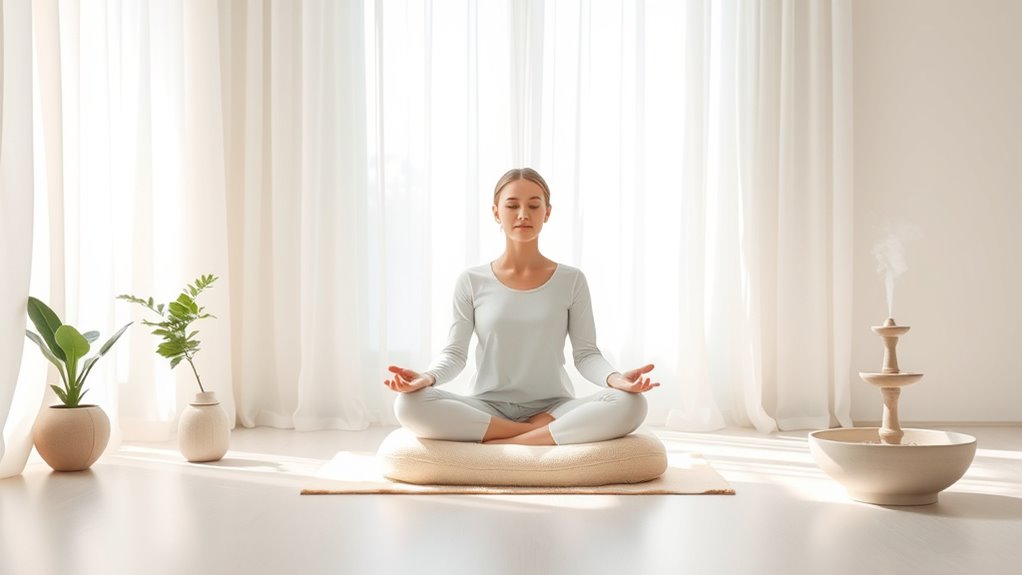
Meditation is a powerful tool you can use to reduce stress and improve overall well-being. One of the key ways it helps is through cultivating mindfulness benefits, which involve staying present and aware of your thoughts, feelings, and bodily sensations without judgment. Developing mindfulness can considerably decrease stress levels by helping you respond more calmly to difficult situations instead of reacting impulsively. When you practice meditation regularly, you train your mind to focus on the here and now, which reduces the tendency to ruminate over worries or past regrets. This mental clarity fosters a sense of calm and control, making daily stressors feel more manageable.
Breathing techniques are central to many meditation practices and are especially effective at calming your nervous system. When you’re stressed, your body tends to enter a fight-or-flight mode, marked by rapid, shallow breathing. By intentionally slowing your breath through specific techniques—such as diaphragmatic breathing, box breathing, or alternate nostril breathing—you signal to your body that it’s safe. This shift activates the parasympathetic nervous system, which helps you relax and lowers cortisol levels, the hormone associated with stress. These breathing techniques are simple to learn and can be done anywhere, making meditation a practical tool for managing stress throughout your day.
As you incorporate mindfulness benefits into your routine, you’ll notice changes in how you handle stressors. Instead of reacting impulsively or feeling overwhelmed, you become more aware of your thoughts and emotions, which allows you to respond more thoughtfully. This awareness can help break the cycle of stress and anxiety, fostering resilience over time. Breathing techniques serve as quick, effective anchors to bring your focus back to the present moment whenever your mind starts to spiral. Combining mindfulness with controlled breathing not only promotes relaxation but also enhances your overall mental clarity and emotional stability.
Regular meditation practice also rewires your brain, strengthening pathways associated with positive emotions and reducing activity in areas linked to worry and fear. This neuroplasticity means that over time, you become more naturally inclined to remain calm in stressful situations. Additionally, integrating sleep hygiene practices can further improve your stress management by ensuring restorative rest, which is essential for emotional regulation. The synergy between mindfulness benefits and breathing techniques offers a science-backed approach to stress reduction that’s easy to integrate into your life. With consistent effort, you’ll find yourself better equipped to face daily challenges with a centered, peaceful mindset. Meditation isn’t just about relaxation; it’s a practical, accessible way to build resilience and enhance your overall well-being.
Top picks for "meditation stres reduction"
Open Amazon search results for this keyword.
As an affiliate, we earn on qualifying purchases.
Frequently Asked Questions
How Long Does It Take to See Stress Reduction Benefits From Meditation?
You can start noticing stress reduction benefits from meditation within just a few days to a couple of weeks. Consistent practice, even for 10-15 minutes daily, helps build mindfulness duration and improves your overall stress response. The key is regular meditation timing; the more you stick to your routine, the quicker you’ll experience calming effects. Keep at it, and you’ll likely see positive changes sooner than you think.
Can Meditation Replace Other Stress Management Techniques?
You can’t rely solely on meditation to handle all your stress, but it’s a powerful tool. Mindfulness meditation and breathing exercises work wonders, yet combining them with other techniques like physical activity or therapy improves results. Think of meditation as a superhero sidekick that enhances your stress management arsenal. So, while it’s not a complete replacement, it’s an essential part of a balanced, effective approach to reducing stress.
Is Meditation Effective for Severe Anxiety or Depression?
Yes, meditation can be effective for severe anxiety or depression. By practicing mindfulness regularly, you can experience cognitive benefits like improved emotional regulation and reduced rumination. Meditation helps you become more aware of your thoughts and feelings, allowing you to manage them better. While it’s often most effective when combined with therapy or medication, many people find that mindfulness practices markedly decrease their symptoms over time.
Are There Specific Meditation Styles Better for Stress Relief?
Yes, certain meditation styles can be more effective for stress relief. Breathing techniques help calm your nervous system, reducing stress quickly. Guided imagery allows you to visualize peaceful scenarios, promoting relaxation. You should try these methods to see what works best for you. Combining breathing exercises with guided imagery often provides a powerful way to manage stress and improve your overall mental well-being.
Can Meditation Cause Any Negative Side Effects?
Meditation is generally safe, but you should be aware of potential drawbacks and meditation safety concerns. Some people might experience increased anxiety, dissociation, or emotional discomfort during or after practice. If you have underlying mental health issues, consult a healthcare professional before starting. Be mindful of how you feel, and if negative effects arise, consider adjusting your technique or seeking guidance to guarantee a positive experience.
Conclusion
So, next time stress feels overwhelming, remember that meditation offers more than just calm—it’s backed by science. But what happens inside your brain when you meditate regularly? The answers might surprise you, and the impact could change your life in ways you never expected. Are you ready to explore the deeper potential of meditation? The journey to true stress relief might just be one mindful breath away—if you’re willing to take the first step.