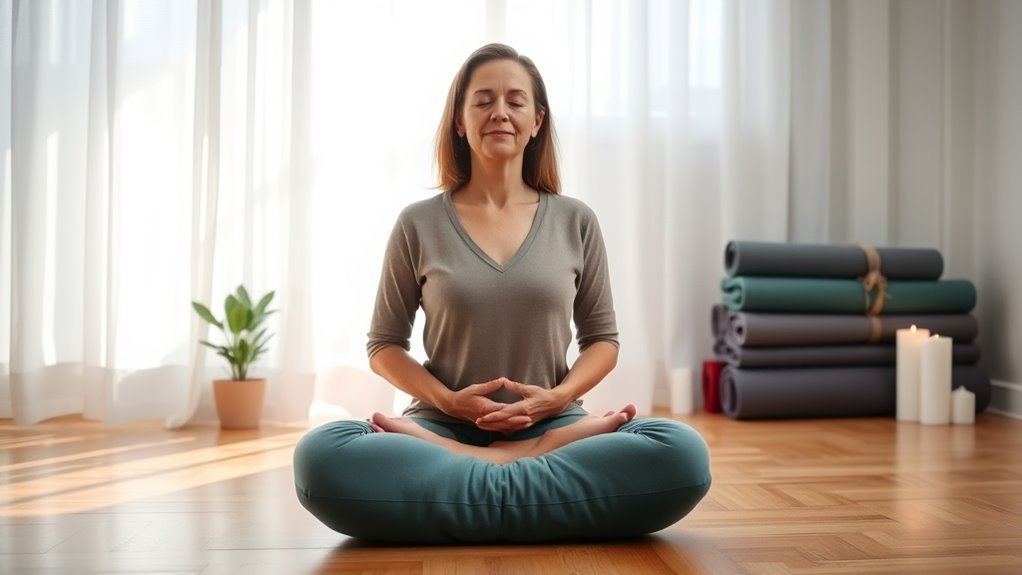

Meditation is a proven tool for managing depression by helping you improve emotional regulation and reduce negative thought cycles. Techniques like mindfulness and body scans teach you to stay present and observe emotions without judgment, which can lessen feelings of sadness and hopelessness over time. Regular practice supports long-term mood improvement and emotional resilience, making it a valuable complement to traditional treatments. Keep exploring to discover how you can incorporate meditation into your journey toward better mental health.
Key Takeaways
- Evidence shows meditation improves mood and reduces depressive symptoms through emotional regulation and mindfulness practices.
- Mindfulness techniques help manage negative thought patterns and decrease rumination associated with depression.
- Meditation complements traditional treatments, promoting acceptance, emotional stability, and resilience over time.
- Regular practice enhances present-moment awareness, fostering long-term emotional growth and reducing feelings of hopelessness.
- Scientific studies support meditation as an effective, accessible tool for managing depression alongside conventional therapies.
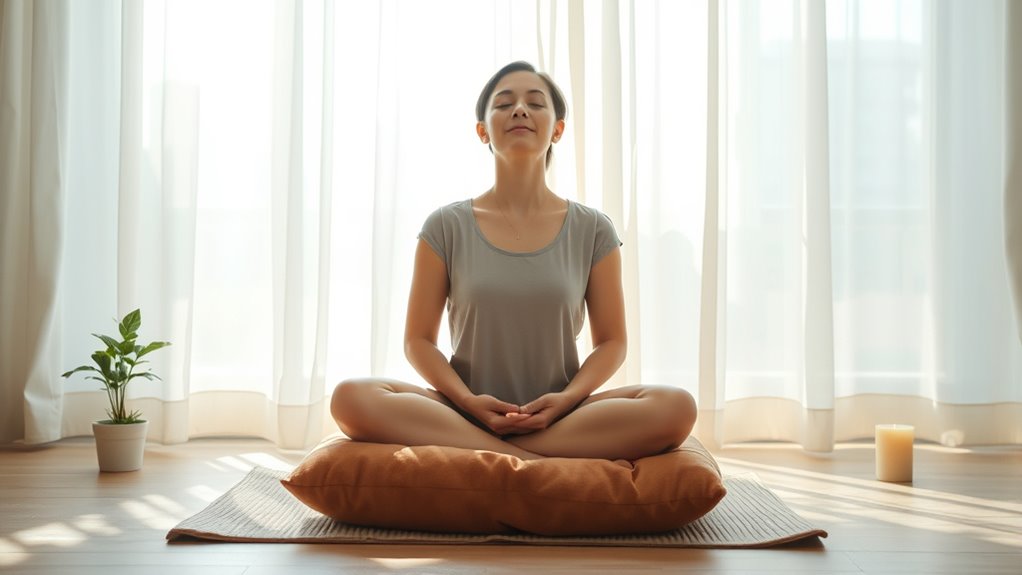
Have you ever wondered if meditation could help lift your mood? Many people turn to meditation as a way to manage depression, and there’s growing evidence that it can be effective. One key reason is that meditation often involves mindfulness techniques, which train you to stay present and aware of your thoughts and feelings without judgment. This practice can profoundly enhance your emotional regulation skills, helping you better handle negative emotions and reduce feelings of sadness or hopelessness. When you focus on mindfulness, you learn to observe your emotional state without becoming overwhelmed by it, creating a buffer against the spiral of negative thinking typical of depression.
Practicing mindfulness techniques regularly allows you to develop a calmer, more balanced outlook. Instead of getting caught up in ruminative thoughts, you learn to acknowledge them without giving them power over your mood. This shift can diminish the intensity and frequency of depressive symptoms. For example, simple breathing exercises or body scans can anchor you to the present moment, helping you break free from cycles of despair. Over time, these techniques help you build resilience against emotional upheaval, fostering a sense of control and stability. As you become more adept at emotional regulation through meditation, you may find your overall mood improving and your negative thought patterns weakening.
Research supports the idea that meditation, especially mindfulness-based interventions, can be a valuable complement to traditional treatments for depression. Multiple studies show that people who incorporate mindfulness techniques into their routines often report reductions in depressive symptoms. The practice not only helps manage immediate emotional distress but also encourages a long-term shift in how you relate to your feelings. Instead of avoiding or suppressing emotions, you learn to accept and process them more effectively. This acceptance is essential because it reduces the shame or guilt often associated with depression, creating a healthier emotional environment inside your mind.

Retrospec Sedona Zafu Meditation Cushion Filled w/Buckwheat Hulls – Yoga Pillow for Meditation Practices – Machine Washable 100% Cotton Cover & Durable Carry Handle, Crescent, Black
NATURAL COMFORT & SUPPORT: Filled with sustainable buckwheat hulls, this meditation cushion elevates your practice by aligning your…
As an affiliate, we earn on qualifying purchases.
As an affiliate, we earn on qualifying purchases.
Frequently Asked Questions
Can Meditation Replace Medication for Depression Treatment?
Meditation efficacy varies, so it can’t fully substitute medication for depression, especially in severe cases. As a medication alternative, meditation can complement treatment, helping manage symptoms and improve mood. However, you shouldn’t stop prescribed medication without consulting your healthcare provider. If you’re exploring options, combining meditation with medication might offer a balanced approach, but always seek professional advice to ensure your treatment plan is safe and effective.
How Long Does It Take to See Benefits From Meditation?
Like planting a seed, your meditation journey blossoms with patience. You may start noticing benefits within 2 to 4 weeks of consistent practice, but it varies. Regular mindfulness duration and meditation consistency are key, gradually strengthening your mental resilience. Keep at it daily, and you’ll see changes that grow stronger over time—just like a flourishing garden—transforming your mood and outlook step by step.
Are There Specific Meditation Techniques Best for Depression?
You should focus on mindfulness practices and breathing exercises, as they’re often most effective for depression. Techniques like body scans, mindful breathing, and guided imagery help you stay present and reduce negative thoughts. Regular practice, even for just 10-15 minutes daily, can make a difference over time. Consistency is key—try different methods to see which ones resonate and bring you the most relief.
Is Meditation Safe for Severe Depression or Suicidal Thoughts?
You’re wondering if meditation is safe when your brain feels like a storm. Well, for severe depression or suicidal thoughts, it’s wise to do a risk assessment first. Meditation can be beneficial, but only if supervised by a mental health professional, as it’s vital to guarantee brain safety. Skipping expert guidance might turn a calming practice into a risky venture, so tread carefully and seek support.
Can Children or Teens Effectively Use Meditation for Depression?
You can definitely introduce child mindfulness and teen mindfulness practices to help manage depression. Children and teens often respond well to meditation, especially when guided properly. It can improve focus, reduce stress, and promote emotional regulation. However, make certain that practices are age-appropriate and supervised by a mental health professional if depression is severe. Meditation isn’t a cure, but it’s a helpful tool within an all-encompassing treatment plan.

A Guided Meditation to Help Relieve Depression- Guided Imagery to Reduce Negative Thinking, Self-Criticism, Discouragement, and Improve Mood, Hope, Sense of Well Being
As an affiliate, we earn on qualifying purchases.
As an affiliate, we earn on qualifying purchases.
Conclusion
Meditation can be a steady anchor in the turbulent sea of depression, helping you find calm amid chaos. While it’s not a magic cure, consistent practice gradually brings clarity and peace, like a lighthouse guiding you through foggy waters. Remember, every small step matters—each moment of mindfulness strengthens your resilience. Embrace meditation as a gentle compass on your journey, leading you toward healing, one breath at a time.

Body Scan Meditation
As an affiliate, we earn on qualifying purchases.
As an affiliate, we earn on qualifying purchases.

Mindfulness & Guided Sleep Meditation
Meditation to improve focus
As an affiliate, we earn on qualifying purchases.
As an affiliate, we earn on qualifying purchases.