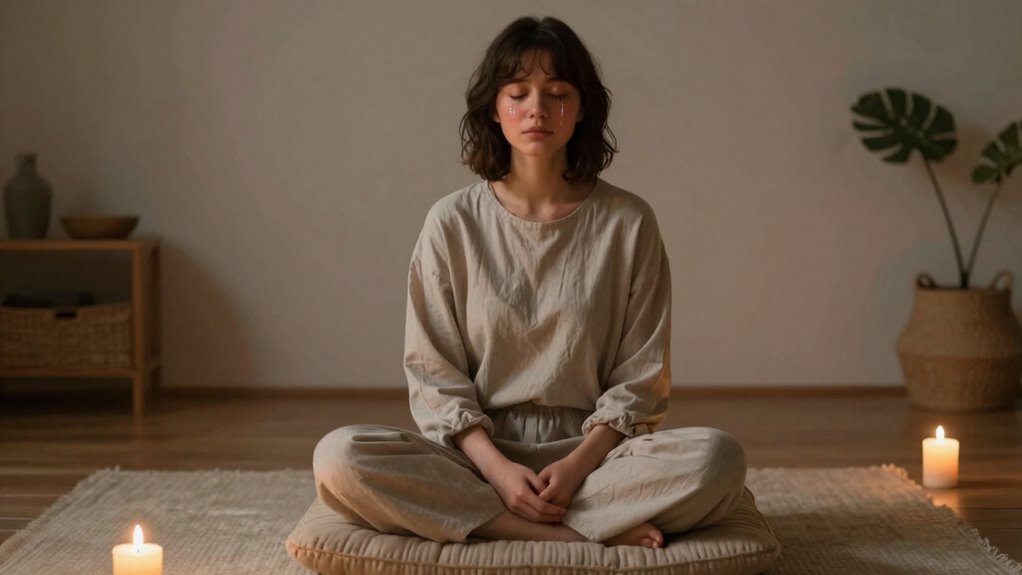

When meditation brings up strong emotions, acknowledge them without judgment, recognizing that feelings like tears or vulnerability are natural. Focus on your breath or grounding techniques, such as feeling your feet or listening to sounds, to stay centered. Approach your emotions with kindness and curiosity, understanding they’re part of the healing process. If emotions become overwhelming, gently shift your attention back to your breath or environment. Keep exploring to discover more ways to navigate these powerful moments.
Key Takeaways
- Acknowledge and accept your emotions as a natural part of the meditation process.
- Focus on your breath to stay grounded and observe feelings without judgment.
- Use grounding techniques, like feeling your feet or listening to sounds, to maintain emotional stability.
- Approach emotions with kindness and curiosity, avoiding suppression or resistance.
- Create a calming environment to support emotional exploration and foster safety during practice.
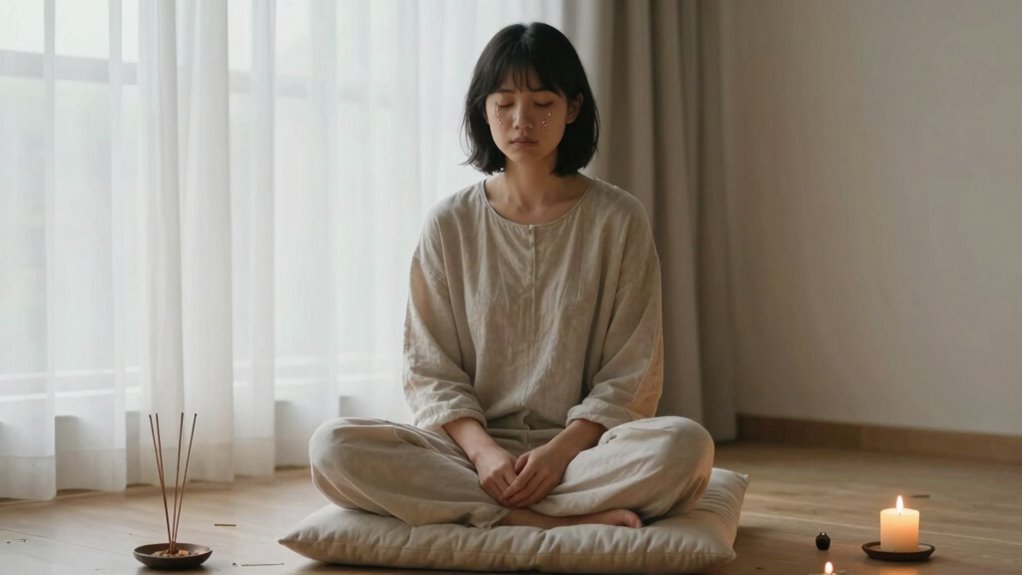
Meditation can reveal deep emotions you might not expect, and feeling emotional during your practice is more common than you think. When you sit quietly and focus inward, you often uncover feelings or memories that have been tucked away, sometimes surfacing as tears or a sudden sense of vulnerability. It’s a natural response, and it doesn’t mean you’re doing anything wrong. Instead, it’s an opportunity to deepen your understanding of yourself. As you encounter these emotions, it’s helpful to lean on mindfulness techniques to stay grounded. Focus on your breath, noticing each inhale and exhale without judgment. This simple act can help you observe your feelings without becoming overwhelmed by them. Recognize that emotions are temporary and part of the human experience, which can foster emotional resilience over time. Building this resilience allows you to face difficult feelings with greater ease, turning meditation into a tool for emotional healing rather than a source of distress. You can also incorporate landscaping elements into your environment to create a calming space that supports your practice. Additionally, understanding the science behind sound healing can provide reassurance that your emotional responses are part of the natural healing process. Exploring emotional awareness as part of your meditation journey can further enhance your ability to navigate these feelings with compassion. Incorporating techniques like mindfulness can help you observe emotions without judgment and cultivate a gentle curiosity about your inner experiences. When your practice brings up strong emotions, it’s important to approach yourself with kindness. Instead of trying to suppress or avoid what’s coming up, acknowledge it. Say to yourself that it’s okay to feel this way, and remind yourself that these feelings are valid. If emotions become intense, you can gently shift your focus. For example, you might return to your breath or use a grounding technique like feeling the sensations of your feet on the floor or noticing the sounds around you. These mindfulness techniques act as anchors, helping you stay present and prevent emotions from spiraling. Recognizing the role of home environment in supporting your meditation can help you create a more conducive space for emotional exploration. Remember, meditation isn’t about achieving a void or perfect calm; it’s about observing your inner landscape with openness and curiosity.

Retrospec Sedona Zafu Meditation Cushion with Buckwheat Hull Fill – Adjustable Yoga & Pilates Equipment Support – 17in Crescent Cotton Cover
NATURAL COMFORT & SUPPORT: Filled with sustainable buckwheat hulls, this meditation cushion elevates your practice by aligning your…
As an affiliate, we earn on qualifying purchases.
As an affiliate, we earn on qualifying purchases.
Frequently Asked Questions
Can Meditation Cause Long-Term Emotional Issues?
Meditation can sometimes impact your emotional well-being, but it usually doesn’t cause long-term issues if practiced mindfully. As you develop emotional awareness, you might experience temporary feelings or memories surfacing. These reactions are part of the meditation impact, helping you process emotions. If emotional difficulties persist, consider consulting a mental health professional. Consistent, gentle meditation supports emotional resilience without risking long-term emotional problems.
Should I Stop Meditating if I Feel Overwhelmed?
If you feel overwhelmed during meditation, it’s okay to pause or stop. Studies show that around 20% of practitioners experience emotional release, which can be intense. Listening to your body is key; if meditation practices trigger strong feelings, taking a break helps you process those emotions safely. You might also try gentler techniques or seek guidance from a meditation teacher to manage emotional responses effectively.
How Do I Differentiate Between Normal Emotions and Distress?
You can differentiate between normal emotions and distress by practicing emotional awareness and mindfulness development. Normal emotions arise naturally during meditation and pass with time, while distress feels overwhelming or persistent. Pay attention to your body’s signals, your thoughts, and how you respond. If your emotions feel manageable and you notice them without judgment, you’re likely experiencing normal feelings. If they cause ongoing discomfort, consider adjusting your practice or seeking support.
Are Certain Meditation Techniques More Likely to Trigger Emotions?
Like gentle waves touching the shore, certain meditation techniques, such as breath awareness and body scan, can stir deep emotions. You might find that focusing on your breath or scanning your body opens floodgates, revealing feelings beneath the surface. These methods tend to be more emotionally triggering because they invite you to tune into your inner landscape. Embrace this process, knowing each wave carries insight and growth.
When Should I Seek Professional Help for Meditation-Related Emotions?
You should seek professional help if meditation-related emotions persist or worsen, despite practicing emotional resilience and understanding common meditation misconceptions. If you find yourself overwhelmed, unable to manage intense feelings, or experiencing anxiety or depression, it’s a sign to consult a mental health professional. They can guide you safely through your emotional reactions, ensuring your meditation practice remains beneficial without causing harm or distress.

HIMALAYAN HEALING® Tibetan Singing Bowls Set~ Meditation Sound Bowl hand Hammered in Nepal For Yoga, Meditation, Mindfulness, Healing & Chakra balancing~
💚 Hand Made by Local Artisans: Singing Bowls from Himalayan Healing are hand-hammered in the foothills of Nepal…
As an affiliate, we earn on qualifying purchases.
As an affiliate, we earn on qualifying purchases.
Conclusion
Remember, emotions surfacing during meditation are a sign you’re opening up and healing. Don’t fight the tide—embrace it, knowing that even storms pass. Sometimes, you need to ride out the rough patches to find calm on the other side. Keep practicing with patience and compassion for yourself. Ultimately, every wave of emotion is a stepping stone toward greater self-awareness and peace. Trust the process—you’re stronger than any storm that comes your way.

Earthing and Grounding Meditation Practices: In a fast-paced world, finding serenity can feel like a distant dream. This book is your gateway to a … that transcends the chaos of modern life
As an affiliate, we earn on qualifying purchases.
As an affiliate, we earn on qualifying purchases.

Meditation Journal: Daily meditation tracking, quotes on mindfulness, consciousness and oneness, record sensations and insights, black and gold design, ,6"x9"
As an affiliate, we earn on qualifying purchases.
As an affiliate, we earn on qualifying purchases.