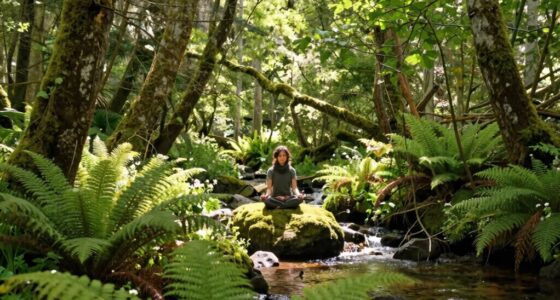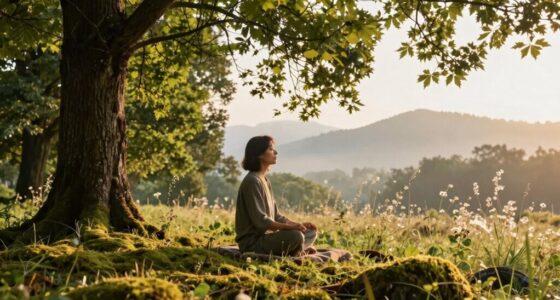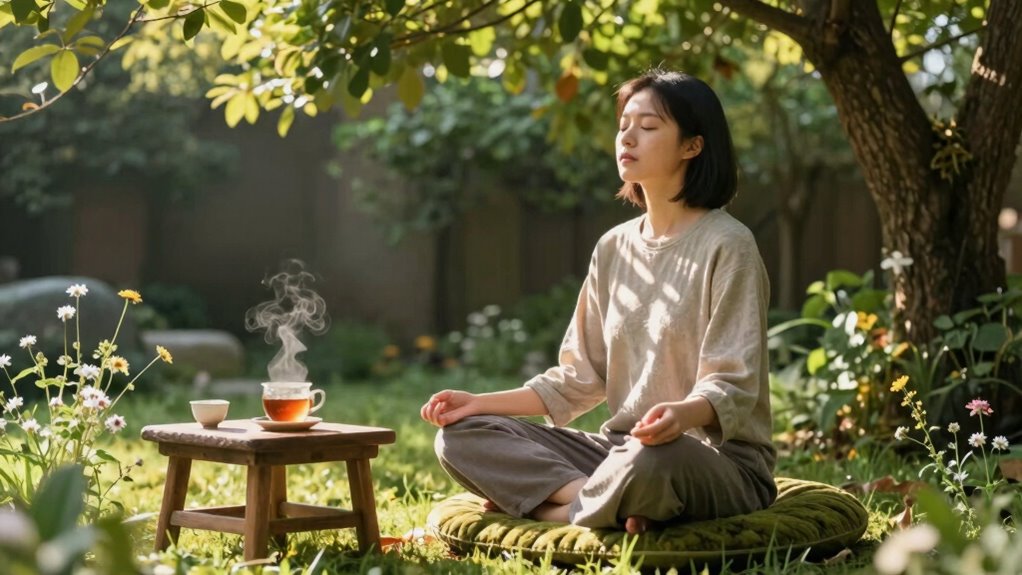

To relax after meditation without losing your calm, gently shift by focusing on slow, deliberate breaths that anchor you in the present moment. Incorporate gentle stretches, paying attention to how your body responds, and move mindfully to deepen your sense of relaxation. Maintain a peaceful attitude, expressing gratitude for the calm you’ve cultivated. Slight adjustments like these help preserve your serenity and set a smooth course into daily life—if you keep exploring, you’ll discover even more ways to sustain your tranquility.

Turn your quiet moments into listening time
- Thousands of audiobooks, podcasts and originals
- Listen on your phone, tablet or Echo — also offline
- Cancel anytime
Key Takeaways
- Transition slowly by pausing and focusing on deep, controlled breathing to maintain calm.
- Incorporate gentle, mindful stretches to deepen relaxation without disrupting serenity.
- Pay close attention to bodily responses, using awareness to sustain tranquility.
- Silently acknowledge your calm and practice gratitude to reinforce a peaceful mindset.
- Proceed with small, deliberate movements to seamlessly carry relaxation into daily activities.
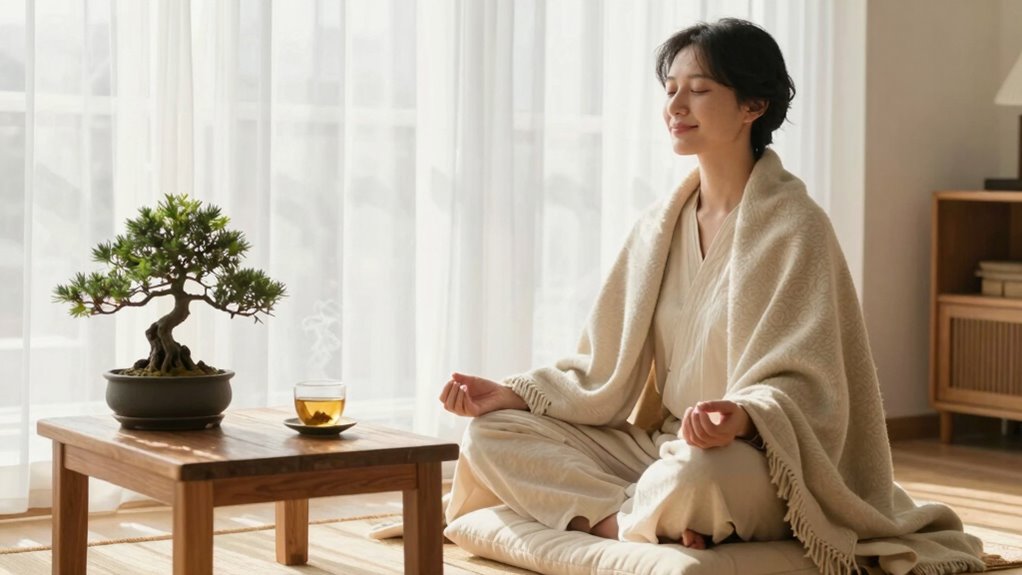
After you finish meditating, taking a few moments to shift smoothly back into your daily routine can enhance your sense of calm. Instead of rushing back into your busy day, pause and allow yourself to segue gently. You can do this by focusing on your breathing techniques, which help anchor your mind and body in the present moment. Take slow, deliberate inhales through your nose, filling your lungs completely, then exhale just as gradually through your mouth or nose. This controlled breathing not only maintains the tranquility you’ve cultivated but also stabilizes your heart rate and eases any residual tension.
Once you feel centered, incorporating gentle stretches can further deepen your relaxation. These stretches should be slow and mindful, moving through each position with awareness. Stretch your neck by tilting your head slowly from side to side, releasing any stiffness. Extend your arms overhead, feeling the stretch across your shoulders and upper back. Loosen your hips and legs with simple seated or standing stretches, focusing on breathing steadily as you move. Gentle stretching helps release muscle tension that may have built up during the day, reinforcing the calm state you’ve achieved during meditation. Incorporating mindfulness into your stretching routines can further enhance your mental clarity and emotional balance. Additionally, paying attention to your body awareness during these moments can deepen your sense of presence and relaxation.
Incorporate slow, mindful stretches to deepen relaxation and release tension, supporting your calm state post-meditation.
As you continue to breathe deeply and stretch gently, pay attention to your body’s responses. Notice how each breath deepens your relaxation and how each stretch alleviates any lingering tightness. Keep your movements smooth and deliberate, avoiding any abrupt or jerky motions that could disturb your peaceful state. This careful approach assures your transition remains gentle, helping you preserve the serenity from your meditation session. Remember that practicing mindful movement can amplify the benefits of your relaxation routine and promote overall well-being.
You might also consider incorporating brief mindfulness moments during this transition. As you breathe or stretch, silently acknowledge your calm and express gratitude for this peaceful pause. Doing so reinforces your mental connection to the tranquility you’ve cultivated, making it easier to carry that sense of calm into the rest of your day. Remember, the goal isn’t to rush or force a return to normalcy but to integrate the calm naturally and effortlessly.
In essence, by combining mindful breathing techniques with gentle stretches, you create a seamless bridge from meditation to daily life. This approach allows you to preserve your peaceful state, making it easier to face upcoming tasks with clarity and composure. Taking these small, intentional steps helps you maintain the serenity you’ve worked so hard to achieve, guaranteeing that your relaxation endures well beyond your meditation session. Additionally, being mindful of biodiversity and sustainable living practices can further enrich your overall sense of well-being and harmony with the environment.
As an affiliate, we earn on qualifying purchases.
Frequently Asked Questions
How Long Should I Wait Before Resuming Daily Activities?
You should wait about 5 to 10 minutes before resuming daily activities after meditation. During this time, focus on your breathing and gentle stretching to facilitate a seamless transition. This pause helps you retain the calm and clarity gained from your practice. Incorporate post meditation routines like mindful walking or deep breathing exercises to reinforce relaxation, ensuring a smooth shift back into your day without losing the peaceful state you’ve achieved.
Can I Listen to Music Immediately After Meditation?
Yes, you can listen to music immediately after meditation. Music therapy enhances your experience, helping you maintain your meditative mindset. To prevent losing your calm, focus on sensory grounding—notice the melodies, textures, and tones. Soft, soothing tunes support your serenity, while energetic music might disrupt your relaxation. Trust your intuition, and choose calming sounds that cultivate your calm, carrying your peacefulness into your post-meditation moment.
Is It Okay to Eat Right After Relaxing Post-Meditation?
Yes, it’s okay to have a post meditation snack, but choose something light that won’t disrupt your relaxation. After your meditation, use gentle relaxation techniques like deep breathing or stretching before eating, so you stay in that calm state. Eating too soon might make you feel restless or bloated, so give yourself a few minutes to savor the moment first. This helps you prolong the benefits of your meditation.
How Do I Prevent Losing My Meditation Focus During Relaxation?
To prevent losing your meditation focus during relaxation, use breathing techniques like deep breaths or box breathing to stay centered. Mental anchoring helps too—visualize a calming image or repeat a peaceful mantra to hold onto your focus. These practices keep your mind grounded, ensuring you maintain the calm you achieved during meditation. Incorporate them into your routine, and you’ll find it easier to stay relaxed without drifting away.
What Are Signs I Might Be Over-Relaxing or Losing the Calm?
If you notice drowsiness effects or emotional fluctuations, you might be over-relaxing or losing your calm. These signs include feeling excessively sleepy, mood swings, or a sense of disconnection from your surroundings. To stay balanced, pay attention to your body’s signals, keep your relaxation gentle, and avoid pushing yourself too hard. Recognizing these signs helps you maintain the peaceful state you worked hard to achieve during meditation.
As an affiliate, we earn on qualifying purchases.
Conclusion
After your meditation, gently ease back into your day, like shifting from a peaceful stream to a lively river. Keep that calm feeling close, like a treasured secret, and let it ripple through your moments. Remember, it’s okay to carry a whisper of serenity with you, softening the rush and noise. With a little mindful care, you’ll find that your calm remains a cozy corner, ready to welcome you whenever you need a quiet retreat.
As an affiliate, we earn on qualifying purchases.
post-meditation relaxation accessories
As an affiliate, we earn on qualifying purchases.
As an affiliate, we earn on qualifying purchases.
Columbus Day / Indigenous Peoples' Day Picks
long weekend sales
As an affiliate, we earn on qualifying purchases.