TL;DR

Turn your quiet moments into listening time
- Thousands of audiobooks, podcasts and originals
- Listen on your phone, tablet or Echo — also offline
- Cancel anytime
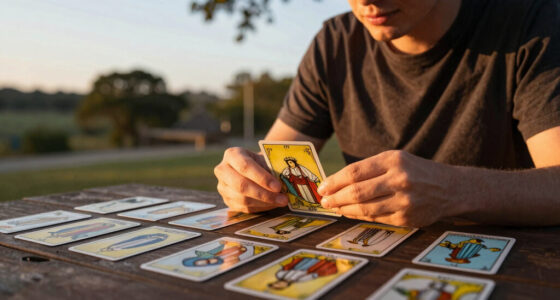
Tarot, originally a courtly card game, has evolved into a popular method of divination and spiritual guidance. This shift highlights changing cultural attitudes toward mysticism and self-reflection.
Tarot cards, once primarily a courtly card game in medieval Europe, have increasingly become a tool for divination and spiritual guidance. This transformation reflects broader shifts in cultural perceptions of mysticism and self-exploration, making tarot a significant part of contemporary spiritual practices, according to recent analyses.
Historically, tarot originated as a card game in 15th-century Europe, known as a pastime among aristocratic circles. It was not initially associated with mystical or spiritual meanings. Over time, particularly from the 18th century onward, tarot cards began to be linked with occult practices and esoteric symbolism, driven by the rise of spiritualism and interest in mysticism. Scholars note that the shift from entertainment to divination was gradual, influenced by cultural changes and the desire for personal insight during periods of social upheaval. Today, tarot is widely used in spiritual communities, therapy, and personal development, with many practitioners emphasizing its role as a mirror for self-reflection rather than fortune-telling.Recent studies and cultural observations indicate that the perception of tarot has shifted significantly over the past century, moving away from its courtly origins toward a tool for introspection and spiritual growth. This evolution has been supported by the proliferation of online tarot communities and the commercialization of tarot decks aimed at personal empowerment rather than mysticism alone.
From Courtly Card Game to Spiritual Guide
Tarot began as aristocratic entertainment in 15th-century Europe. Across five centuries, it absorbed occult symbolism, divinatory practice, psychology, and digital culture—becoming a widely used mirror for self-reflection and spiritual growth.
Five centuries of reinvention
Tarot did not shift from game to spiritual practice in a single moment. New meanings accumulated as social attitudes toward mysticism, individual agency, and inner life changed.
The courtly game
Tarocchi emerges in Europe as a recreational card game, especially among wealthy and aristocratic circles.
The occult turn
Esoteric writers begin assigning ancient, mystical, and symbolic meanings to the cards.
Divination expands
Influential books, societies, and decks formalize tarot reading as a spiritual and predictive practice.
The reflective mirror
Tarot enters wellness, therapy-adjacent conversation, online communities, and personal development.
Why tarot’s meaning shifted
Its transformation reflects a broader cultural movement: authority migrated from courtly rules and occult experts toward personal interpretation, emotional awareness, and accessible spiritual practice.
Mysticism reappraised
Esoteric societies and spiritualist movements created a receptive setting for symbolic interpretations of ordinary cards.
The inward turn
Modern readers increasingly use imagery to surface feelings, test perspectives, and structure self-reflection.
Access goes digital
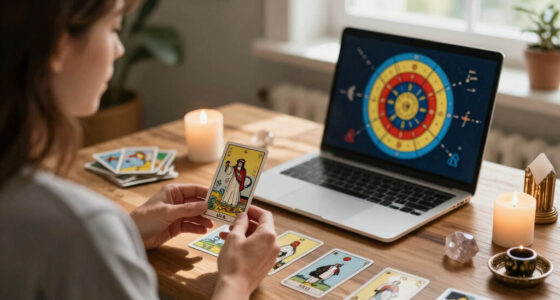
Social media, apps, and online communities distribute techniques while making tarot more visible and personal.
| Dimension | Courtly tarot | Contemporary tarot | Direction of change |
|---|---|---|---|
| Primary purpose | Competitive recreation | Reflection and guidance | ✓ Broader role |
| Core authority | Rules of play | Reader interpretation | ✓ Personalized |
| Mystical meaning | Not inherent | Common but optional | ~ Contextual |
| Audience | Aristocratic circles | Global communities | ✓ Democratized |
| Guaranteed prediction | Not applicable | Widely disputed | ✗ Not established |
Less a verdict, more a conversation
Contemporary tarot often functions through ambiguity. Symbolic images invite users to narrate concerns, recognize patterns, and consider choices without requiring the cards to dictate an outcome.
“The transition of tarot from a game to a spiritual practice reflects changing societal attitudes towards mysticism and self-awareness.”
Anonymous researcher
One deck, several functions
These relative indicators visualize the emphasis described in the historical account—not measured population shares. Tarot’s uses overlap, and individual practice may occupy several categories at once.
How meaning travels
The same physical artifact acquires a different social role as interpretation, distribution, and cultural need reshape the experience around it.
Cards
A structured deck begins as an object of play.
Symbols
Occult readings layer archetypal meaning onto imagery.
Prompts
Readers connect symbols with present concerns.
Insight
Interpretation opens reflection, dialogue, or action.
What comes next?
Tarot’s next chapter will depend on tensions between spiritual depth and commercialization, human interpretation and automation, guidance and personal responsibility.
Will tarot remain mainstream?
Continued interest in alternative spirituality and mental wellbeing suggests it will keep adapting.
Will digital tarot deepen practice?
Apps may widen access, though critics question whether speed and automation dilute ritual significance.
Guide or decision-maker?
The unresolved boundary is whether tarot informs personal choices or begins to substitute for judgment.
Empowerment or product niche?
Personalized decks can improve representation while also accelerating the commercialization of practice.
The likely trajectory
More personalized decks, digital platforms, online communities, and links with holistic wellness are likely. Yet tarot’s durable appeal may remain remarkably simple: it gives people a visual language for asking difficult questions about themselves.
Why Tarot’s Transformation Matters in Modern Culture
The evolution of tarot from a courtly game to a spiritual tool reflects broader societal changes in how people approach mysticism, self-awareness, and mental health. As tarot becomes more integrated into wellness practices, it influences perceptions of spirituality and personal development. Understanding this shift helps contextualize current trends in alternative spirituality and highlights how cultural artifacts can adapt to new social values, making tarot relevant beyond its historical roots.
tarot card deck for spiritual guidance
As an affiliate, we earn on qualifying purchases.
As an affiliate, we earn on qualifying purchases.
Historical Roots and Cultural Shifts in Tarot’s Use
Originally emerging in 15th-century Europe as a card game known as ‘tarocchi,’ tarot was primarily a pastime among aristocrats. Its association with mysticism and the occult began in the 18th century, influenced by the rise of esoteric societies and spiritualist movements. The 19th and 20th centuries saw a growing interest in using tarot for divination, especially with the publication of influential decks and books. In recent decades, the tarot’s role has expanded further, becoming a mainstream tool for personal insight, therapy, and spiritual exploration, aided by digital platforms and pop culture references.
“The transition of tarot from a game to a spiritual practice reflects changing societal attitudes towards mysticism and self-awareness.”
— an anonymous researcher
angel oracle cards for inspiration
As an affiliate, we earn on qualifying purchases.
As an affiliate, we earn on qualifying purchases.
Unresolved Questions About Tarot’s Future Role
While the historical transformation of tarot is well-documented, it is still unclear how its role will continue to evolve in the coming decades. Questions remain about whether tarot will maintain its place in mainstream spiritual practices or become more commercialized and niche-oriented. Additionally, there is ongoing debate about the extent to which tarot influences personal decision-making versus serving as a psychological mirror. The impact of digital technology and social media on tarot’s future use is also still developing, with some experts questioning if its spiritual significance will diminish or deepen.
As an affiliate, we earn on qualifying purchases.
Future Trends in Tarot’s Cultural and Spiritual Use
Researchers and practitioners anticipate that tarot will continue to adapt to contemporary spiritual and psychological needs. The increasing integration of tarot into wellness and mental health practices suggests a potential expansion of its role beyond traditional divination. Future developments may include more personalized decks, digital platforms, and integration with other holistic therapies. Monitoring how societal attitudes toward mysticism and mental health evolve will be key to understanding tarot’s ongoing place in culture.
As an affiliate, we earn on qualifying purchases.
Key Questions
How did tarot originally become a card game?
Tarot originated in 15th-century Europe as a recreational card game called ‘tarocchi,’ played among aristocratic circles, with no initial connection to mysticism or divination.
When did tarot start being associated with divination?
The association began in the 18th century, influenced by the rise of occult societies and interest in esoteric symbolism, gradually shifting its use from entertainment to spiritual practice.
Why is tarot considered a spiritual tool today?
Many modern practitioners see tarot as a means for self-reflection and personal growth, emphasizing its psychological and spiritual benefits rather than fortune-telling.
Will tarot remain relevant in the future?
Its future relevance depends on societal attitudes toward spirituality and mental health; ongoing digital integration and cultural acceptance suggest it will continue evolving in its role.
Source: rss
Evergreen bestsellers Picks
bestsellers
As an affiliate, we earn on qualifying purchases.