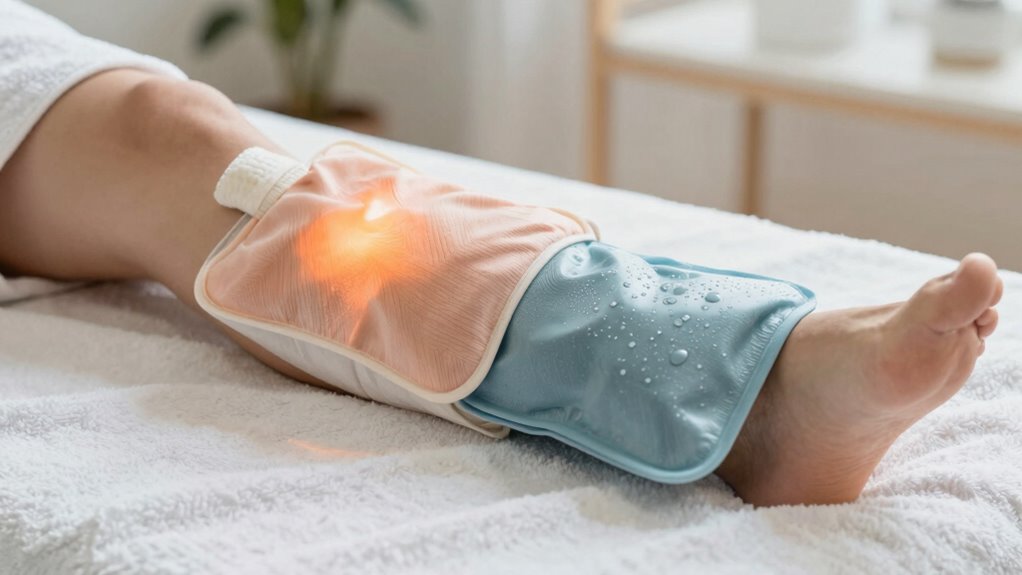

On recovery days, your choice between heat and cold therapy depends on your needs. Use cold therapy shortly after activity to reduce inflammation and swelling, especially if you have an acute injury or pain. Switch to heat therapy once swelling subsides to relax muscles and improve circulation. Alternating both can speed healing and prevent setbacks. To learn more about how to choose the right therapy for your recovery, keep exploring these options.

Turn your quiet moments into listening time
- Thousands of audiobooks, podcasts and originals
- Listen on your phone, tablet or Echo — also offline
- Cancel anytime
Key Takeaways
- Cold therapy is ideal immediately after injury to reduce swelling and inflammation during the first 24-48 hours.
- Heat therapy promotes muscle relaxation and improves circulation, best used after initial inflammation subsides.
- Alternating cold and heat can enhance recovery by reducing swelling and relaxing muscles simultaneously.
- Cold therapy numbs pain and constricts blood vessels, while heat increases blood flow and eases muscle tension.
- Choosing between heat or cold depends on injury stage, symptoms, and personal comfort for optimal recovery.
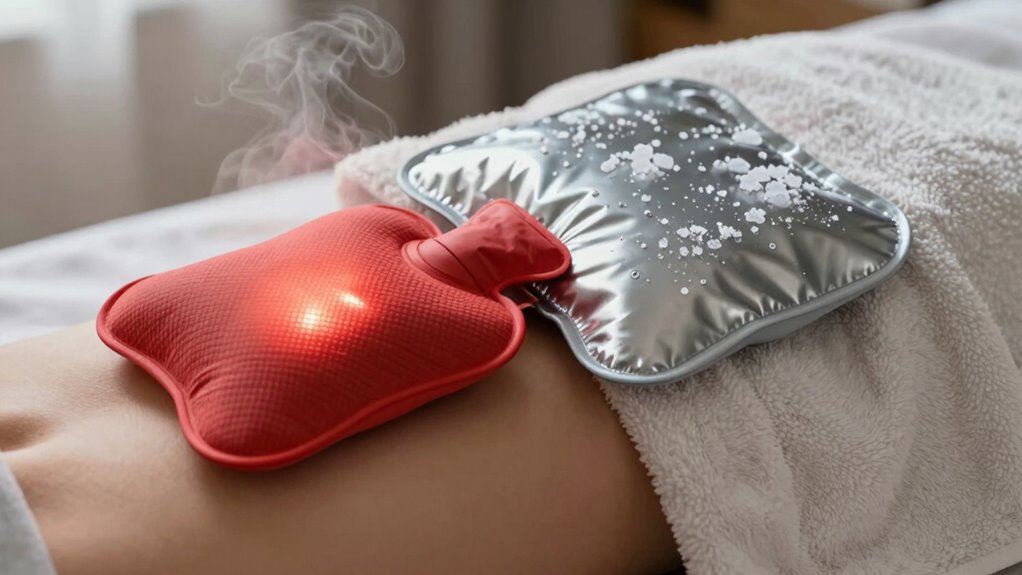
When it comes to recovery days, choosing between heat therapy and cold therapy can considerably influence how quickly and comfortably your body heals. Both methods aim to support your recovery, but they work in different ways, offering unique benefits depending on your needs. If you’re dealing with muscle tightness or stiffness, heat therapy can be your go-to. It promotes muscle relaxation by increasing blood flow, helping to loosen tight muscles and ease tension. Applying heat, whether through a heating pad or warm towel, encourages your muscles to relax, reducing discomfort and improving flexibility. This makes heat therapy especially effective if you’re feeling stiff after a long workout or if you have chronic muscle tension.
On the other hand, cold therapy is excellent for inflammation reduction. When you experience acute pain or swelling after intense exercise or injury, applying cold can help numb the area and decrease inflammation. Cold packs constrict blood vessels, which limits swelling and reduces tissue damage. This is particularly useful during the first 24 to 48 hours after a strenuous activity or injury, as it helps control the body’s inflammatory response. Cold therapy also minimizes pain by numbing nerve endings, providing relief when you’re dealing with sharp or throbbing pain. Additionally, understanding the different effects of heat and cold can help you make better choices for your specific situation. Recognizing the optimal timing for each therapy can further enhance your recovery and prevent setbacks.
Cold therapy reduces inflammation and numbs pain, especially useful within the first 24-48 hours after injury or intense exercise.
While both therapies aim to enhance recovery, they serve different purposes and are often used in tandem. For example, you might apply cold therapy immediately after a workout to reduce swelling, then switch to heat therapy later to relax muscles and improve circulation. Timing is crucial—cold is generally best in the initial stages of recovery, while heat can be more beneficial once inflammation has subsided. Using heat too early can actually exacerbate swelling, so understanding when to switch between the two can make a significant difference in your healing process. Incorporating appropriate temperature techniques can further optimize your recovery and prevent complications. Moreover, knowing the proper timing for heat and cold application can help you avoid potential setbacks and promote more effective healing.
Furthermore, your personal comfort and the specific nature of your injury or soreness should guide your choice. If your muscles feel tight and tense, heat therapy can help you loosen up and promote relaxation. Conversely, if you notice swelling, sharp pain, or recent injury, cold therapy is likely the better option to control inflammation and numb pain. Knowing when and how to use heat or cold therapy can tailor your recovery, reduce discomfort, and get you back to your routine faster.
cold therapy ice packs for injuries
As an affiliate, we earn on qualifying purchases.
As an affiliate, we earn on qualifying purchases.
Frequently Asked Questions
Can Heat or Cold Therapy Prevent Future Injuries?
Heat or cold therapy can help prevent future injuries by promoting muscle relaxation and enhancing circulation. Applying heat relaxes tense muscles, reducing the risk of strains, while cold therapy decreases inflammation and numbs pain, preventing further damage. Using these therapies appropriately during recovery days supports your muscles’ health, making injuries less likely. Just remember to use them correctly, and consult a professional if you’re unsure about your specific needs.
How Long Should I Use Each Therapy During Recovery?
Think of your recovery as tending a fire—timing is everything. Use cold therapy for about 15-20 minutes to slow inflammation and promote muscle relaxation, especially right after injury. Switch to heat therapy for 15-20 minutes later to boost circulation and soothe stiff muscles. Always listen to your body, and avoid overdoing it, so your recovery stays on the right path and prevents setbacks.
Are There Any Risks Associated With Prolonged Heat or Cold Therapy?
Prolonged use of heat or cold therapy can lead to overuse risks and skin injuries. Applying heat too long may cause burns or skin irritation, while extended cold therapy can lead to frostbite or nerve damage. To avoid these risks, limit treatments to 15-20 minutes, use proper barriers, and listen to your body. Always consult a healthcare professional if you’re unsure about the appropriate duration or method.
Can These Therapies Be Combined for Better Results?
Think of alternating treatments as a dance between fire and ice, each step complementing the other’s strengths. Yes, you can combine heat and cold therapies for better results, using them as complementary approaches to soothe soreness and reduce inflammation. By switching between warmth and coolness, you activate your body’s natural healing rhythm, accelerating recovery while minimizing risks. Just remember to listen to your body and avoid overdoing it.
What Are Signs That I Should Stop Therapy Immediately?
You should stop therapy immediately if you notice injury symptoms like increased pain, swelling, or skin irritation. If the therapy causes numbness, tingling, or a burning sensation, it’s time to stop. Also, avoid exceeding recommended therapy duration, as overdoing it can worsen your condition. Trust your body’s signals—if anything feels wrong or uncomfortable, discontinue therapy and consult a healthcare professional to prevent further injury.
electric heating pad for muscle relaxation
As an affiliate, we earn on qualifying purchases.
As an affiliate, we earn on qualifying purchases.
Conclusion
In the end, choosing between heat and cold therapy depends on your recovery needs. Did you know that a recent study found that over 70% of athletes use both therapies to optimize healing? Whether you prefer the soothing warmth of heat or the invigorating chill of cold, listening to your body is key. Experiment with both to see what boosts your recovery the most, and remember, proper rest and hydration play vital roles too.
hot and cold therapy packs for recovery
As an affiliate, we earn on qualifying purchases.
As an affiliate, we earn on qualifying purchases.
muscle recovery heat and cold packs
As an affiliate, we earn on qualifying purchases.
As an affiliate, we earn on qualifying purchases.
Halloween Picks
halloween
As an affiliate, we earn on qualifying purchases.