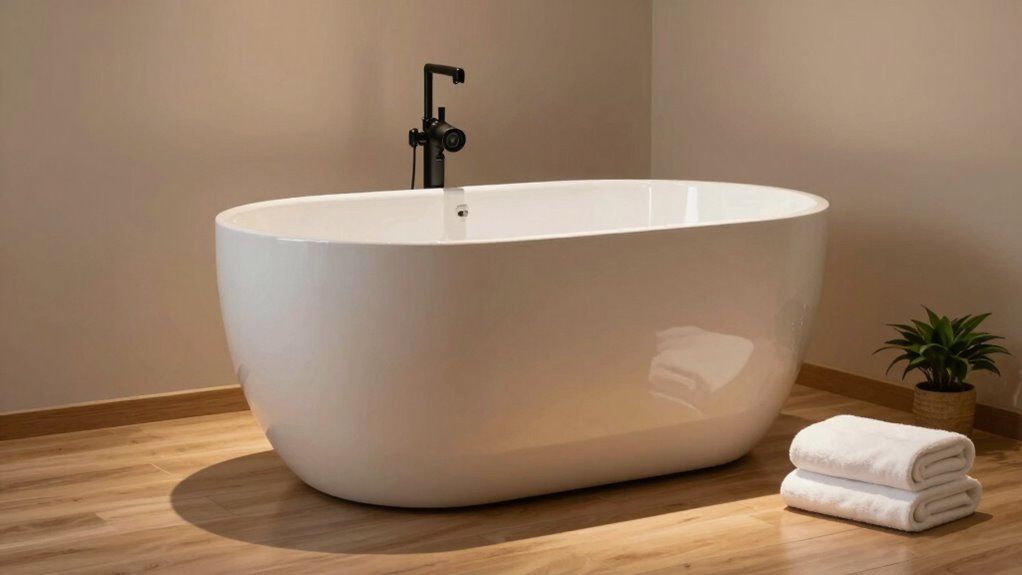

Owning a home float tank means you’d enjoy convenient access to deep relaxation and mental clarity, but it’s important to weigh setup, maintenance, and your personal comfort. You’ll need space, regular cleaning, and eco-friendly practices to keep it hygienic and safe. It’s not suitable if you’re prone to claustrophobia or anxiety without testing first. If you’re committed to wellness routines, the benefits can be worth the effort—more details can help you decide if it’s right for you.

Turn your quiet moments into listening time
- Thousands of audiobooks, podcasts and originals
- Listen on your phone, tablet or Echo — also offline
- Cancel anytime
Key Takeaways
- Ensure you have adequate space, quiet, and proper ventilation for safe and effective tank setup.
- Regular maintenance, including cleaning and water filtration, is essential for hygiene and longevity.
- Consider personal health and comfort, especially if prone to claustrophobia or anxiety, before ownership.
- Evaluate the initial investment and ongoing costs to determine if home float therapy suits your budget.
- Ownership provides convenience and privacy but requires commitment to routine care and self-assessment.
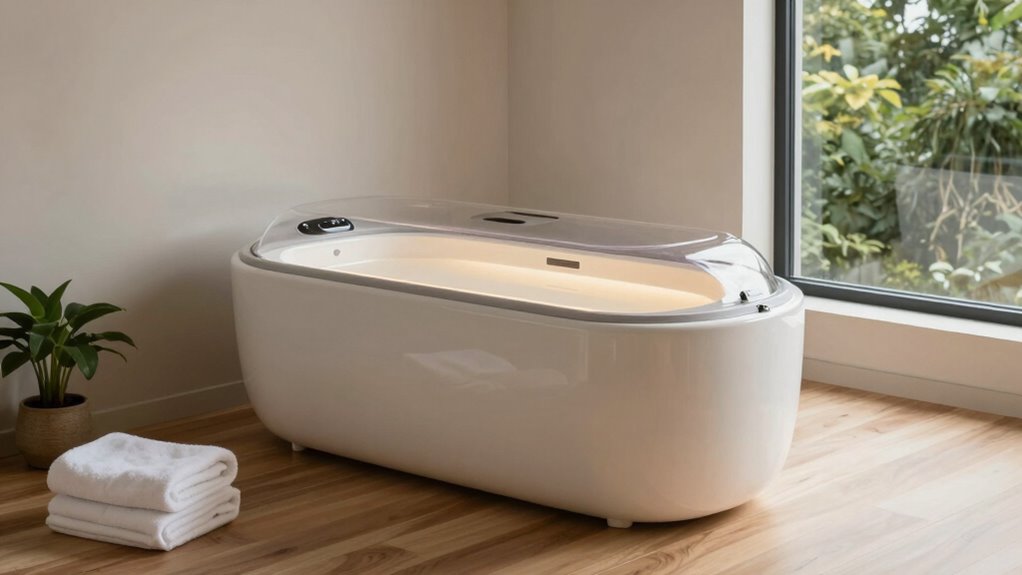
Float tanks have become an increasingly popular way to enhance relaxation and mental clarity right from the comfort of your home. These tanks provide a unique environment for sensory deprivation, allowing you to disconnect from external stimuli and focus inward. When you opt for a home float tank, you gain the convenience of practicing float therapy benefits whenever you need a mental reset or stress relief. However, before you commit to purchasing one, it’s essential to understand what’s involved and what to expect.
One of the main attractions of float therapy is its ability to promote deep relaxation by reducing sensory input. Inside a float tank, you’re enveloped in a warm, buoyant solution of Epsom saltwater, which supports your body and minimizes the need for muscular effort. This environment minimizes external distractions, helping you achieve a state of sensory deprivation. As a result, your mind can enter a deeply relaxed state, and you may experience benefits like reduced anxiety, improved sleep, and enhanced mental clarity. These benefits aren’t just temporary; many users find that regular floating helps them build resilience against daily stressors. Additionally, understanding the benefits of sensory deprivation can help you better appreciate how floating influences mental health and overall wellness. Incorporating float therapy into your routine can also support mental health benefits, making it a valuable tool for comprehensive wellness. It’s also worth noting that proper setup and ongoing maintenance are crucial for maximizing these benefits and ensuring a safe experience. Proper care and attention to tank hygiene are fundamental to preventing infections and maintaining a healthy environment.
Float therapy promotes deep relaxation and mental clarity by reducing sensory input and supporting your body in a buoyant environment.
That said, you should consider the setup and maintenance involved with a home float tank. Unlike visiting a spa or wellness center, owning a float tank requires space, initial investment, and ongoing upkeep. You’ll need a dedicated area that’s quiet and private, with proper ventilation and access to water hookups. Maintenance involves regular cleaning, water filtration, and salt replenishment to keep the environment safe and hygienic. This might seem intimidating at first, but many owners find that the long-term benefits outweigh the effort involved. Additionally, understanding the importance of biodiversity and sustainable practices can help you make environmentally conscious choices when maintaining your tank. Being aware of eco-friendly maintenance options can contribute to a more sustainable wellness routine. Proper care not only preserves the tank’s functionality but also ensures safety and environmental responsibility.
Another important aspect to think about is your personal comfort and readiness. Not everyone finds it easy to relax in enclosed spaces, especially if you’re prone to claustrophobia or anxiety. It’s recommended to try float therapy at a professional center first to see how you respond to the environment before investing in a personal tank. Additionally, some individuals with certain health conditions should consult a healthcare provider to ensure floating is safe for them. Understanding your own comfort level and potential limitations can help prevent any unnecessary discomfort or adverse reactions.
Ultimately, owning a home float tank can offer unparalleled convenience and a private sanctuary for stress relief and mental clarity. But it’s a significant commitment that requires planning, maintenance, and honest reflection on your comfort level with sensory deprivation. If you’re prepared for these aspects, you might find that floating becomes an invaluable part of your wellness routine, providing consistent access to the many float therapy benefits you seek.
Products Worth Considering

Levoit Eleva 300X HEPA Air Purifier for Home and Bedroom

Garmin Forerunner 165 GPS Running Smartwatch, 43 mm, Black

BowFlex Results Series SelectTech 552 Adjustable Dumbbell
As an affiliate, we earn on qualifying purchases.
Frequently Asked Questions
How Long Does It Take to Install a Home Float Tank?
Float tank installation usually takes about one to three days, depending on your setup process. You’ll need to prepare the space, connect the necessary plumbing and electrical systems, and guarantee proper ventilation. During the setup process, you might also need to calibrate the tank and test all functions. While it might seem quick, giving yourself extra time allows for any adjustments or troubleshooting to ensure your home float tank works perfectly.
Are Home Float Tanks Energy-Efficient?
Home float tanks are generally energy-efficient, thanks to advanced insulation technology that reduces energy consumption. You’ll find that well-designed tanks use minimal power for heating and maintaining water temperature, which helps lower your energy bills. Proper insulation keeps heat in, so you don’t waste energy. Overall, with good insulation and efficient components, your home float tank won’t substantially increase your energy use, making it a cost-effective relaxation option.
What Maintenance Is Required for a Float Tank?
Imagine feeling refreshed after every float, but neglecting proper maintenance could spoil that. You need to regularly check water quality, ensuring proper pH levels and sanitation. Follow a consistent cleaning schedule, including draining and refilling the tank weekly, cleaning filters, and disinfecting surfaces. This routine keeps your float tank safe and inviting, preventing bacteria buildup and ensuring a relaxing experience every time you immerse yourself in.
Can I Customize the Tank’s Features?
Yes, you can customize your home float tank’s features. Many tanks offer customization options like adjustable lighting, sound systems, and temperature controls. When choosing a tank, consider the tank materials—such as acrylic or fiberglass—as they influence durability and maintenance. Customizing these features allows you to create a relaxing experience tailored to your preferences, making your float tank feel more personalized and enjoyable.
Is There a Recommended Age Limit for Users?
Is there a recommended age limit for users? Absolutely. Child safety is paramount, so most float tank manufacturers recommend age restrictions—often no younger than 8 or 10 years old. This guarantees kids can follow safety guidelines and stay comfortable. Think of it as setting boundaries to protect your loved ones, allowing them to enjoy the calming benefits safely. Always consult specific tank guidelines for the best, safest experience.
Conclusion
Before you plunge in, remember that a home float tank can be a gentle gateway to relaxation, but it’s worth considering all the nuances. Think of it as planting a seed—patience and care will help it flourish. With a little research and mindful preparation, you’ll find yourself drifting into calm waters sooner than you expect. Embrace the journey, and soon, serenity will become your quiet companion awaiting your return.