
TL;DR

Turn your quiet moments into listening time
- Thousands of audiobooks, podcasts and originals
- Listen on your phone, tablet or Echo — also offline
- Cancel anytime
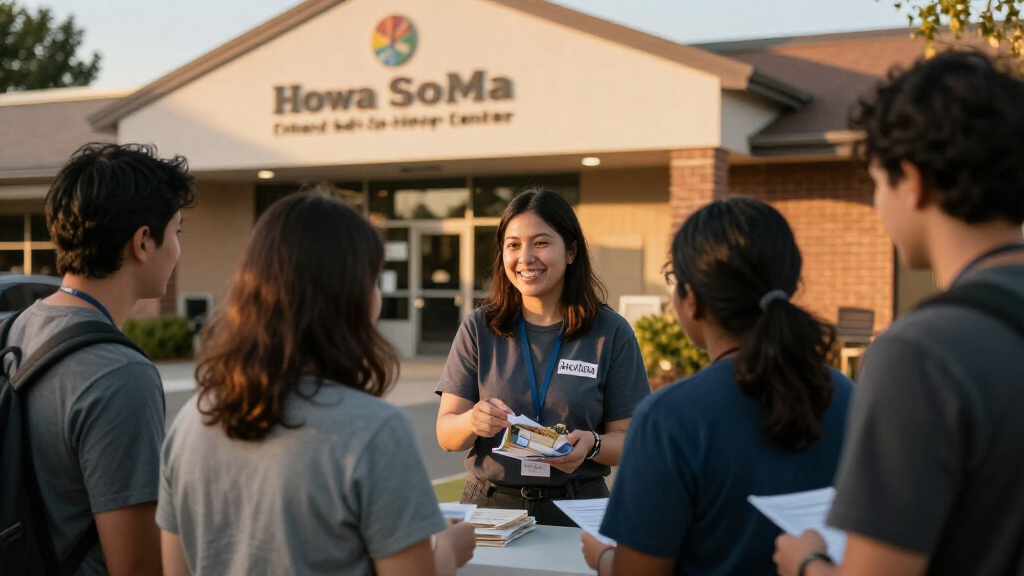
The SoMa Self-Help Center is rallying community support and lobbying efforts to prevent its closure. The center’s future is uncertain, but advocates emphasize its vital role in local mental health support.
The SoMa Self-Help Center is actively campaigning to prevent its closure, which would significantly impact community access to mental health resources in the area. The center’s advocates are rallying community support and engaging with local officials to keep it operational, emphasizing its critical role in supporting vulnerable populations.
According to statements from the center’s representatives, the closure threat stems from funding cuts and administrative decisions. The center has been a vital resource for residents seeking mental health assistance, peer support, and community programs since its establishment. Community members and local organizations have organized protests and petitions to oppose the closure, highlighting the center’s importance to the neighborhood’s well-being.
Officials from the city’s health department confirmed that discussions are ongoing regarding the center’s future, but no final decision has been made. The center’s leadership has stated they are exploring alternative funding sources and partnerships to maintain operations.
How SoMa Self-Help Center Is Fighting to Stay Open
The neighborhood center is mobilizing residents, lobbying public officials, seeking new partners, and raising funds as it confronts an uncertain future. Advocates say closure would remove a vital source of accessible mental health care, peer support, and social connection.
Serving local residents through accessible support.
Counseling, peer workshops, and social services.
Protests, petitions, lobbying, and fundraising.
City review and negotiations remain ongoing.
A neighborhood safety net
The center fills a gap between residents and larger institutions by offering free, familiar, and culturally sensitive services designed around the needs of SoMa’s diverse community.
Accessible counseling
Free assistance lowers cost barriers for residents who might otherwise go without timely mental health support.
Shared experience
Peer-led workshops create trust, practical connection, and a sense of belonging outside clinical environments.
Local social support
Programs connect vulnerable residents with services while reducing isolation and strengthening neighborhood ties.
What is at stake
Keeping the center open preserves a low-barrier support network. Closure could disperse services and place additional pressure on residents and larger institutions.
| Community need | Center stays open | Center closes | Current certainty |
|---|---|---|---|
| Accessible mental health support | ✓ Continuity preserved | ✗ Local access reduced | ~ Funding unresolved |
| Peer-led workshops | ✓ Community retained | ✗ Network disrupted | ~ Operations at risk |
| Culturally sensitive care | ✓ Local model continues | ✗ Tailored care may decline | ~ Alternatives unclear |
| Social connection | ✓ Familiar hub remains | ✗ Isolation may increase | ~ Outcome pending |
How supporters are responding
The campaign connects public participation with political pressure and financial problem-solving. Each action is intended to strengthen the case for continued operations.
Share the threat
Raise awareness of the closure risk and its community impact.
Mobilize residents
Organize protests, petitions, and visible public support.
Lobby officials
Press city decision-makers to reconsider funding and closure plans.
Build partnerships
Seek nonprofit allies and alternative sources of support.
Sustain services
Secure a viable path for the center’s continued operation.
Momentum is real. The result is not.
Advocacy activity is broad, but the decisive issue remains sustainable funding. The indicators below show campaign emphasis, not measured success rates.
Questions still unresolved
- Will alternative funding cover the center’s operating needs?
- Could city officials reverse or modify the closure plan?
- Which nonprofit partnerships could provide durable support?
- When will officials announce a final decision?
Current position: active negotiations with no final decision
The story at a glance
The center’s future depends on decisions still being negotiated, while supporters continue to make the social and financial case for keeping it open.
Why is the center facing closure?
Funding reductions from city and state sources have threatened its financial sustainability.
Who would be most affected?
Residents who depend on accessible mental health care, social services, and peer support—especially vulnerable populations.
What is being done?
Supporters are organizing protests and petitions, lobbying officials, fundraising, and exploring new partnerships.
When will the outcome be known?
A decision is expected after further review, but no exact announcement date has been confirmed.
The center’s position: Leadership says it is actively seeking alternative funding and remains committed to serving the community despite the challenges.
Why Preserving the Center Matters for Community Well-being
This development matters because the SoMa Self-Help Center provides essential mental health and social support services to a vulnerable population. Its potential closure could leave many residents without critical resources, exacerbating mental health issues and community isolation. The advocacy efforts reflect broader concerns about funding cuts to community health programs and the importance of local support networks.
As an affiliate, we earn on qualifying purchases.
Background of the Center’s Funding and Community Role
The SoMa Self-Help Center has operated for over a decade, offering free mental health counseling, peer-led workshops, and social services. Recently, it faced funding reductions from city and state sources, prompting fears of closure. The center’s supporters argue that it fills a gap left by larger institutions, providing accessible, culturally sensitive care tailored to the neighborhood’s diverse population. Past efforts to secure funding have included community fundraisers and partnerships with local nonprofits.
“This center is a lifeline for many in our neighborhood. Losing it would be a huge blow to those who rely on its services.”
— a community organizer
As an affiliate, we earn on qualifying purchases.
Unresolved Questions About Funding and Decision-Making
It is not yet clear whether the center will secure alternative funding or if city officials will reverse the closure plans. The final decision is expected in the coming weeks, but negotiations and community actions are still ongoing, leaving the outcome uncertain.
As an affiliate, we earn on qualifying purchases.
Next Steps in the Fight to Save the Center
The center’s advocates plan to continue community protests, lobbying efforts, and fundraising campaigns. City officials have indicated that a decision regarding the closure will be announced after further review, expected within the next few weeks. Stakeholders are also exploring new partnerships to support the center’s future operations.
self-help journal for mental wellness
As an affiliate, we earn on qualifying purchases.
As an affiliate, we earn on qualifying purchases.
Key Questions
Why is the SoMa Self-Help Center facing closure?
The center faces closure due to funding cuts from city and state sources, which threaten its financial sustainability.
How important is the center to the local community?
The center is a vital resource for mental health support, social services, and community engagement for many residents, especially vulnerable populations.
What actions are being taken to prevent the closure?
Community protests, petitions, and lobbying efforts are underway, along with exploring alternative funding sources and partnerships.
When will a final decision be made about the center’s future?
A final decision is expected within the next few weeks, but the exact date has not yet been announced.
Source: rss
Halloween Picks
halloween
As an affiliate, we earn on qualifying purchases.