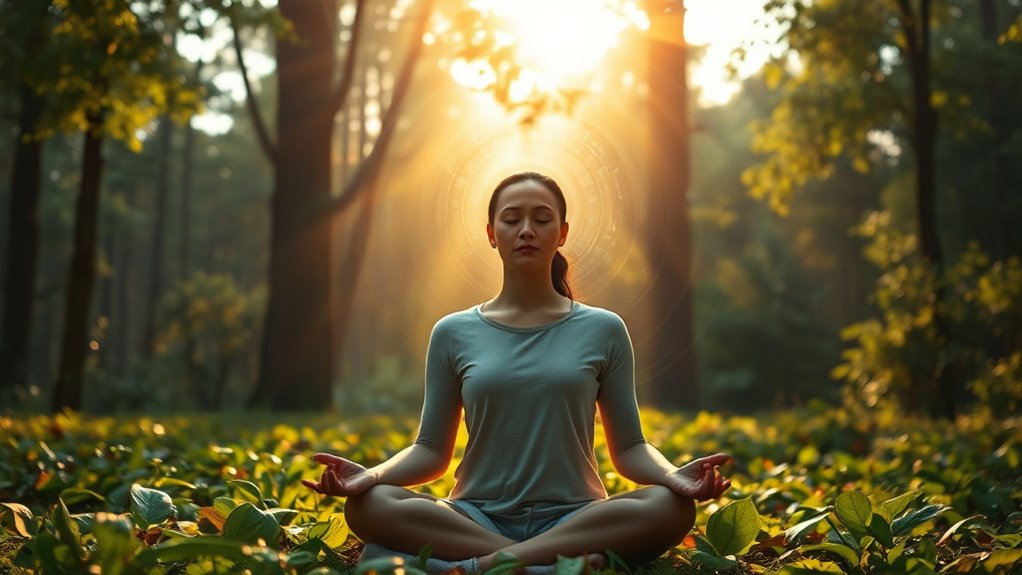

The mind-body connection shows how your thoughts, emotions, and intentions directly influence your physical health. Scientific research reveals that stress and calm states affect immune function, healing, and inflammation through brain-body feedback loops. Spiritual practices like meditation and mindfulness activate relaxation responses that promote resilience and well-being. By understanding both science and spirituality, you can strengthen this powerful link, enhancing your overall health and vigor—discover how to harness this connection for your benefit as you explore further.
Key Takeaways
- Scientific research shows that mental states influence physical health through brain-body feedback loops.
- Spiritual practices like meditation and yoga activate relaxation responses, fostering healing and emotional resilience.
- Consistent mindfulness enhances neural pathways, leading to lasting mental and physical health benefits.
- The integration of science and spirituality offers a holistic approach to well-being, emphasizing mental, emotional, and physical harmony.
- Recognizing their interplay deepens understanding of how thoughts and emotions impact overall health and healing.

Have you ever noticed how your mood can influence your physical health, or vice versa? It’s a fascinating interplay that science and spirituality both seek to understand. Recent neuroscience insights reveal that your brain doesn’t just process thoughts and emotions; it actively communicates with your body, creating a complex feedback loop. When you feel stressed, your brain signals your body to produce stress hormones like cortisol, which can impair your immune system and increase inflammation. Conversely, when you’re calm and relaxed, your brain promotes the release of feel-good chemicals like serotonin and endorphins, helping you heal faster and maintain overall health. This connection isn’t just theoretical—neuroscience shows that your thoughts and emotional states directly influence physical processes, making your mental health essential to your physical well-being.
Spiritual practices play a significant role in strengthening this mind-body connection. Meditation, yoga, and deep breathing exercises have been shown to activate the parasympathetic nervous system, which promotes relaxation and recuperation. When you dedicate time to these practices, you practically tap into your body’s innate ability to heal and restore balance. Many spiritual traditions emphasize mindfulness and intentionality, encouraging you to become more aware of your thoughts and feelings. This heightened awareness can help you identify negative patterns that might be harming your health, giving you the opportunity to shift your mindset and reduce stress. Over time, such practices can reshape neural pathways, fostering resilience and emotional stability.
Incorporating spiritual practices into your daily routine doesn’t require grand gestures—simple acts like mindful breathing or gratitude journaling can have profound effects. These activities reinforce a positive feedback loop between your mind and body, promoting mental clarity and physical vitality. Neuroscience insights support this approach, showing that consistent practice can lead to lasting changes in brain structure and function, particularly in areas related to emotional regulation and stress response. Additionally, understanding the importance of camping resources and guides can encourage you to spend more time outdoors, which has been shown to reduce stress and improve mental health. When you combine this scientific understanding with spiritual practices, you create a powerful synergy that enhances your overall well-being. It’s not about choosing between science and spirituality but recognizing how both can work together to deepen your awareness of the mind-body connection. By doing so, you release the potential to improve your health, cultivate inner peace, and foster a more harmonious life.

Meditation Starter Kit: Unlock Calm and Clarity
As an affiliate, we earn on qualifying purchases.
As an affiliate, we earn on qualifying purchases.
Frequently Asked Questions
Can Thoughts Directly Influence Physical Health Outcomes?
Yes, your thoughts can directly influence your physical health outcomes. When your mind influence activates positive thinking, it can boost your immune system, reduce stress, and promote healing. Conversely, negative thoughts impact your body by increasing cortisol levels and causing physical tension. The thought impact is powerful; by focusing on positive, constructive thinking, you enhance your overall well-being and support better health.
What Role Does Consciousness Play in the Mind-Body Connection?
Is consciousness the silent conductor of your well-being? Neuroscience insights suggest it influences your physical health profoundly, acting as a bridge between mind and body. Quantum mechanics hints that consciousness may extend beyond the brain, affecting reality itself. You can harness this power by cultivating awareness, understanding that your thoughts and feelings are not just mental states but essential forces shaping your health and life’s trajectory.
Are There Scientific Studies Linking Spirituality and Healing?
Yes, scientific studies show links between spirituality and healing. You benefit from neuroplasticity benefits when practicing spiritual activities like meditation, which can rewire your brain for better health. Energy healing techniques, such as Reiki, have shown promising results in reducing stress and promoting recovery. While research continues, these practices suggest a meaningful connection between your spiritual beliefs and physical healing, emphasizing the mind-body link‘s potential.
How Do Cultural Beliefs Shape Mind-Body Practices?
Cultural beliefs deeply influence your mind-body practices through cultural rituals and traditional healing methods. These practices reflect shared values and spiritual understandings, shaping how you approach health and wellness. When you engage in traditional healing or participate in cultural rituals, you connect with your community’s history and spiritual beliefs, reinforcing the mind-body link. This cultural context enhances your healing experience by blending spiritual practices with physical well-being.
Can Spiritual Experiences Be Measured Scientifically?
Yes, spiritual experiences can be measured scientifically. Neuroscience insights reveal how meditation effects, such as changes in brain activity and neural pathways, correlate with spiritual states. You can use fMRI or EEG scans to observe these neural patterns during spiritual practices, providing objective evidence of spiritual experiences. While subjective feelings are personal, scientific tools help quantify the brain’s role, bridging spirituality and empirical research effectively.

ProsourceFit Acupressure Mat and Pillow Set for Back/Neck Pain Relief and Muscle Relaxation, Purple
PAIN REDUCTION: Naturally reduce muscle tension, back pain and headaches by laying on the mat daily for 10…
As an affiliate, we earn on qualifying purchases.
As an affiliate, we earn on qualifying purchases.
Conclusion
Remember, your mind and body are deeply intertwined—what affects one influences the other. Embracing both science and spirituality helps you understand this connection better. By nurturing your mental and physical health together, you foster overall well-being. As the saying goes, “A healthy mind in a healthy body,” highlighting that balance is key. Stay mindful of this harmony, and you’ll find greater peace and vigor in your everyday life.

Portable Breathing Aid for Anxiety & Calm – Compact Hyperventilation Relief Device, Deep Breathing Exercise Tool for On-The-Go Stress Management, Discreet & Professional Design
Portable Breathing Aid for Anxiety & Calm – Compact Hyperventilation Relief Device, Deep Breathing Exercise Tool for On-the-Go…
As an affiliate, we earn on qualifying purchases.
As an affiliate, we earn on qualifying purchases.

The 5-Minute Gratitude Journal: Give Thanks, Practice Positivity, Find Joy
As an affiliate, we earn on qualifying purchases.
As an affiliate, we earn on qualifying purchases.