
TL;DR

Turn your quiet moments into listening time
- Thousands of audiobooks, podcasts and originals
- Listen on your phone, tablet or Echo — also offline
- Cancel anytime
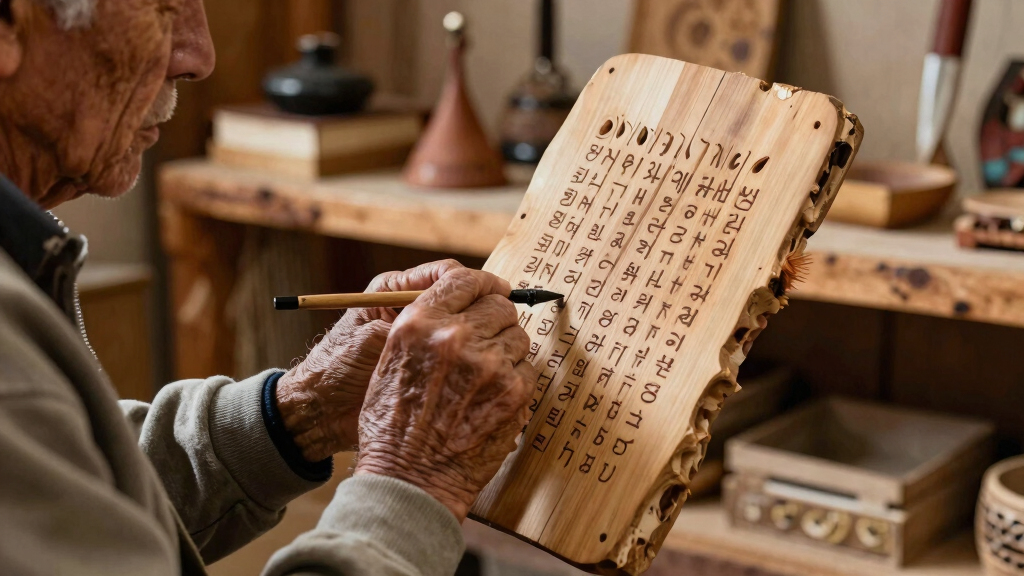
Sequoyah developed a syllabary for the Cherokee language in 1821, leading to rapid literacy growth and cultural preservation. The script influenced Native and African written languages and remains vital today.
In 1821, Cherokee silversmith Sequoyah introduced a revolutionary written language system, the Cherokee syllabary, which rapidly increased literacy among the Cherokee Nation and transformed their cultural and political life.
Sequoyah, born in the 1770s in Tennessee, spent years developing a syllabary that used 85 symbols to represent Cherokee syllables. His system was demonstrated successfully in 1821, leading to swift adoption by the Cherokee people. Within six months, about 25% of the tribe could read and write using the syllabary, and within 25 years, Cherokee literacy surpassed that of many non-Native Americans.
The syllabary enabled the Cherokee to produce their own newspaper, the Cherokee Phoenix, in 1828, and to write a constitution by 1827. It also became a vital tool for preserving language, culture, and sacred traditions, and influenced other indigenous and African writing systems. Despite U.S. government pressures and forced relocations, the Cherokee maintained and expanded the use of their written language, which remains a cultural cornerstone today.
Impact of the Cherokee Syllabary on Native Culture
The creation of the Cherokee syllabary marked a turning point in indigenous language preservation, fostering literacy, self-governance, and cultural continuity. It demonstrated how individual innovation could empower a community and influence broader linguistic and cultural developments, including its alleged influence on West African scripts. Its enduring legacy underscores the importance of linguistic sovereignty for indigenous peoples.
As an affiliate, we earn on qualifying purchases.
Development and Adoption of the Cherokee Syllabary
Before developing the syllabary, Sequoyah experimented with ideogrammic writing, but found it cumbersome. Drawing inspiration from various scripts, he devised a system of 85 symbols representing Cherokee syllables. His effort was driven by a desire to preserve Cherokee language and culture amid increasing pressure from U.S. expansion and forced removals. The syllabary’s rapid adoption in the early 1820s was unprecedented among indigenous peoples and marked a significant cultural achievement.
“The syllabary allowed the Cherokee to become highly literate in a remarkably short time, transforming their society and record-keeping.”
— an anonymous researcher
As an affiliate, we earn on qualifying purchases.
Unresolved Aspects of Sequoyah’s Later Life and Legacy
It remains unclear why Sequoyah left for Mexico in 1842 when he was around 80 years old, and his final resting place has not been confirmed despite numerous efforts. Additionally, the extent of his influence on West African scripts, such as the Vai language, is still debated among scholars.
As an affiliate, we earn on qualifying purchases.
Future Preservation and Promotion of Cherokee Writing
Efforts continue to preserve and revitalize the Cherokee language through educational programs, digital tools, and cultural initiatives. Researchers and community leaders aim to document and promote the syllabary’s use among younger generations, ensuring its survival and cultural relevance for decades to come.
As an affiliate, we earn on qualifying purchases.
Key Questions
How did Sequoyah create the Cherokee syllabary?
He experimented with various writing systems, ultimately developing 85 symbols representing Cherokee syllables, inspired by multiple scripts including Greek, Hebrew, and English.
Why was the syllabary important for the Cherokee?
It enabled widespread literacy, helped preserve language and culture, and facilitated self-governance through the publication of newspapers and official documents.
Did Sequoyah’s syllabary influence other languages?
There are claims that it influenced written scripts in West Africa, particularly the Vai language, though the extent of this influence remains debated among scholars.
What challenges does the Cherokee language face today?
With only a few thousand fluent speakers remaining, efforts are underway to revitalize the language through education, technology, and cultural programs.
Source: Hacker News
Halloween Picks
halloween
As an affiliate, we earn on qualifying purchases.