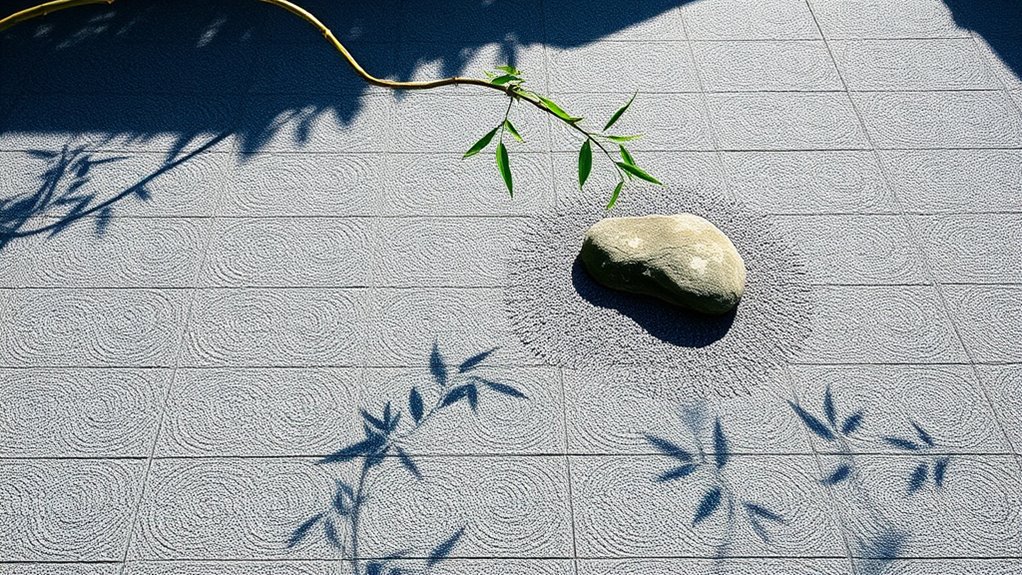

Embracing simplicity in Zen philosophy means focusing on living mindfully and shedding unnecessary worries and possessions. By practicing awareness of the present moment, you can find peace in everyday experiences like a leaf fluttering or sunlight warming your face. Connecting with nature and slowing your pace helps clear mental clutter, fostering contentment and inner calm. When you continue exploring, you’ll discover more ways to incorporate these peaceful principles into your life.
Key Takeaways
- Stripping life to essentials fosters inner peace and clarity through mindful awareness of the present moment.
- Practicing mindfulness helps release worries about the past and future, cultivating serenity within simplicity.
- Connecting with nature reinforces the Zen principle of finding contentment in what is, emphasizing effortless flow.
- Embracing simplicity involves shifting perspective to appreciate everyday moments rather than external possessions.
- Inner calm is achieved by letting go of mental clutter, fostering authenticity, and valuing quality over quantity.

Have you ever wondered what it truly means to find inner peace? In the domain of Zen philosophy, it’s about stripping life down to its essentials and discovering tranquility in simplicity. One of the most effective ways to achieve this is through mindfulness practice. By cultivating awareness of your present moment, you learn to notice your thoughts, feelings, and surroundings without judgment. This focused attention helps you let go of worries rooted in the past or anxieties about the future. Instead of getting lost in endless mental chatter, you become grounded in now. As you develop this mindfulness, you start to see the beauty in everyday moments—a leaf fluttering in the breeze, the gentle hum of insects, the warmth of sunlight on your skin. These small experiences, often overlooked, become sources of profound serenity. Techniques like visualization and affirmations from the Law of Attraction can complement mindfulness by fostering positive mental states that support inner peace.
Another powerful method to embrace Zen’s simplicity is nature immersion. When you step outside and immerse yourself in the natural world, you tap into a sense of harmony that’s often absent in modern life. Nature’s rhythms remind you that life is cyclical and effortless in its flow. As you walk through a quiet forest or sit beside a flowing stream, you begin to shed the clutter of daily worries. The sounds, sights, and smells of nature help quiet your mind, allowing you to connect deeply with the present. It’s not about achieving some perfect state but about allowing yourself to be fully present in the moment. With each breath, you become more aware of your surroundings and less caught up in the chaos of thoughts. This immersion in nature is more than just a walk; it’s a practice that reinforces the core Zen principle of simplicity—finding contentment in what is, rather than what could be or what was.
Both mindfulness practice and nature immersion serve as gateways into the Zen way of life. They teach you to slow down, observe, and appreciate the bare essentials of existence. They also help you develop self-awareness, a key component in personal development that supports emotional well-being. In doing so, you begin to let go of unnecessary attachments and mental clutter, making space for clarity and peace. Embracing simplicity isn’t about renouncing all possessions or experiences but about shifting your perspective so that you value quality over quantity. When you incorporate these practices into your daily routine, you start to see that happiness isn’t something to chase but something to uncover within the simple act of being present. Zen invites you to strip away the complexities and find serenity in the pure, unadorned moment.

Retrospec Sedona Zafu Meditation Cushion with Buckwheat Hull Fill – Adjustable Yoga & Pilates Equipment Support – 17in Crescent Cotton Cover
NATURAL COMFORT & SUPPORT: Filled with sustainable buckwheat hulls, this meditation cushion elevates your practice by aligning your…
As an affiliate, we earn on qualifying purchases.
As an affiliate, we earn on qualifying purchases.
Frequently Asked Questions
How Can I Incorporate Zen Principles Into Daily Life?
You can incorporate Zen principles into your daily life by practicing mindful living and adopting a minimalist lifestyle. Focus on being present in each moment, letting go of unnecessary clutter, and appreciating simplicity. Start small—meditate regularly, simplify your surroundings, and prioritize what truly matters. This approach helps you find peace, clarity, and balance, making every day more meaningful and centered around what genuinely brings you joy.
What Are Common Misconceptions About Zen Philosophy?
Think of Zen as a calm lake, not a turbulent storm. Many believe Zen is about strict rules or silent meditation only, but it’s more like a gentle current guiding your mind. Common misconceptions include thinking it’s a philosophical misconception about complex dogmas or that it’s about escaping life’s challenges. Instead, Zen encourages mindfulness techniques that help you stay present, clear your mind, and embrace simplicity in everyday moments.
Is Meditation Essential in Practicing Zen?
Yes, meditation is essential in practicing Zen. You focus on mindful breathing during seated meditation to cultivate awareness and presence. This practice helps you quiet your mind and connect with the present moment, which is central to Zen. While other activities can complement your practice, consistent seated meditation with mindful breathing is fundamental for deepening your Zen understanding and experiencing its true essence.
How Does Zen Address Modern Stress and Anxiety?
Think of modern stress as a turbulent river; Zen helps you steady your boat. By practicing mindfulness training, you learn to stay present amid chaos, reducing anxiety. Zen emphasizes simplicity and awareness, strengthening your emotional resilience. This approach allows you to observe your thoughts without judgment, calming your mind. Through consistent practice, you develop inner peace, making life’s storms easier to navigate and less overwhelming.
Can Zen Philosophy Be Practiced Without Religious Beliefs?
Yes, you can practice Zen without religious beliefs by adopting it as a secular practice and philosophical approach. Zen emphasizes mindfulness, meditation, and living in the moment, which don’t require spiritual or religious commitments. You focus on simplicity and awareness, allowing you to benefit from Zen’s calming techniques and mental clarity without any religious framework. It’s about personal growth and inner peace, accessible to everyone regardless of faith.
Mindsight 'Breathing Buddha' Guided Visual Meditation Tool for Mindfulness | Slow Your Breathing & Calm Your Mind for Stress & Anxiety Relief | Perfect for Adults & Kids | Relaxing Self Care Gift
🧠 WHAT IT'S FOR: Daily guided breathing to help calm & focus your mind during the day or…
As an affiliate, we earn on qualifying purchases.
As an affiliate, we earn on qualifying purchases.
Conclusion
As you embrace Zen philosophy, you’ll find that simplicity naturally reveals itself in everyday moments. Sometimes, a quiet breeze or a gentle smile unexpectedly reminds you to let go of clutter—both inside and out. By opening your heart to these small coincidences, you realize life’s true beauty lies in effortless presence. When you accept these subtle signs, you start to see how simplicity and serenity quietly walk with you, guiding your journey every day.

Magicteam White Noise Machine with 20 Non Looping Natural Soothing Sounds Memory Function 32 Levels of Volume Powered by AC or USB and Sleep Sound Timer Therapy for Baby Kids Adults Black
❤20 Non-Looping Sleep Sounds: White noise ,Brown noise, pink noise, blue noise, fan,brook, rain, ocean,bird and Bonfire,suitable for…
As an affiliate, we earn on qualifying purchases.
As an affiliate, we earn on qualifying purchases.

Island Falls Home Zen Garden Kit 11x8in. Beautiful Japanese Decor Mini Rock Feature Gift Set for Home, Office Desk. Zen Sand Garden, 6 Tools, 15 Accessories. Sand Tray Therapy Desktop Meditation Room
Wonderful High End Japanese Gift- Reward yourself or bring calm & happiness to loved ones. Japanese Zen Garden…
As an affiliate, we earn on qualifying purchases.
As an affiliate, we earn on qualifying purchases.