For most people seeking meditation headbands with EEG sensors, I would start with the Muse 2: its biofeedback and sound guidance make brain-sensing meditation more approachable than a research-style electrode cap. The Entertech Flowtime is a standout for biosensing feedback, while the Muse S Athena suits buyers who also want sleep tracking. The main tradeoff is between a guided, wearable experience and the broader electrode coverage of 64-channel caps, which can demand more setup and specialist knowledge. Comfort, app support, and the kind of feedback you actually want matter as much as sensor count. Read on for my full comparison and recommendations by buyer type.

Turn your quiet moments into listening time
- Thousands of audiobooks, podcasts and originals
- Listen on your phone, tablet or Echo — also offline
- Cancel anytime
Key Takeaways
- Muse 2 is the clearest starting point: its meditation-oriented biofeedback and sound guidance give it a more accessible role than the 64-point and 64-channel caps.
- Flowtime offers a different wearable route: its biosensing focus makes it a distinct alternative to Muse’s guided sound feedback.
- Muse S Athena stands apart for sleep: it combines brain sensing with sleep tracking, a more specific fit than a meditation-only purchase.
- More electrodes do not automatically mean a better meditation tool: the 64-point cap, XL cap, and DIGIPACE cap point toward broader electrode layouts, but their fit and setup needs may suit technical users better.
- Fit and intended use separate the cap options: the high-elasticity nylon cap and XL elastic-fiber cap make size and material relevant, while DIGIPACE highlights 10-20 electrode placement.
| 64-Point Meditation EEG Tracking Cap, High-Elasticity Nylon, Black |  | Best for Consistent Sensor Positioning | Reference points: 64 | Material: 100% nylon | Fit: High elasticity | VIEW LATEST PRICE | See Our Full Breakdown |
| Muse 2 EEG Meditation Headband with Biofeedback and Sound Guidance |  | Best for Guided Meditation Biofeedback | Model: MS-03-OP-ML | Connectivity: Bluetooth | Operating system: iOS | VIEW LATEST PRICE | See Our Full Breakdown |
| Meditation EEG Elastic Fiber Cap, 64 Holes, Size XL |  | Best Washable Sensor-Placement Cap | Material: Nylon-rubber composite | Fabric type: 100% nylon | Hole count: 64 | VIEW LATEST PRICE | See Our Full Breakdown |
| SereniBrain EEG Neurofeedback Headband for Meditation and Brainwave Monitoring |  | Best for Brainwave Data and Neurofeedback | Model: TH21A | Sensor type: EEG | Connectivity: Bluetooth | VIEW LATEST PRICE | See Our Full Breakdown |
| Muse S Athena 3rd Gen Brain-Sensing Sleep Tracking Headband, Light Grey |  | Best for Sleep and Meditation Tracking | Generation: 3rd Gen | Sensors: EEG and fNIRS | Connectivity: Bluetooth | VIEW LATEST PRICE | See Our Full Breakdown |
| Entertech Flowtime Biosensing Meditation Headband |  | Best for Guided, App-Based Biofeedback | Brand: Entertech | Model: Flowtime | Product type: Biosensing meditation headband | VIEW LATEST PRICE | See Our Full Breakdown |
| DIGIPACE 64-Channel EEG Tracking Cap for 10-20 Electrode Placement |  | Best for 10-20 Placement Practice | Brand: DIGIPACE | Electrode locations: 64 marked locations | Placement system: International 10-20 system | VIEW LATEST PRICE | See Our Full Breakdown |
| meditation headbands with EEG sensor | Color | Connectivity |
|---|---|---|
| 64-Point Meditation EEG Tracki | Black | — |
| Muse 2 EEG Meditation Headband | Black/Grey | Bluetooth |
| Meditation EEG Elastic Fiber C | Blue | — |
| SereniBrain EEG Neurofeedback | — | Bluetooth |
| Muse S Athena 3rd Gen Brain-Se | Light Grey | Bluetooth |
| Entertech Flowtime Biosensing | — | Bluetooth |
| DIGIPACE 64-Channel EEG Tracki | — | — |
More Details on Our Top Picks
64-Point Meditation EEG Tracking Cap, High-Elasticity Nylon, Black
This cap is a positioning aid, not an EEG device: its 64 reference points help users place compatible sensors consistently, but it cannot collect or report brainwave data on its own. That distinction makes it a different kind of pick from the Muse 2 or SereniBrain, which provide sensing and app-based feedback as complete headband systems. For someone already working with compatible electrodes during meditation or biofeedback training, the high-elasticity nylon may help keep placement steady between sessions. The tradeoff is that buyers must supply the sensing hardware and confirm compatibility themselves. Care is another constraint: this cap is dry-clean only, unlike the washable Meditation EEG Elastic Fiber Cap, Size XL. I’d choose it for repeatable sensor positioning, not for a ready-to-use meditation experience.
Pros:- 64 reference points support repeatable sensor placement.
- High-elasticity nylon offers a flexible, secure fit.
- Designed for meditation, relaxation, and biofeedback training.
Cons:- Does not collect signals and requires a compatible EEG system.
- Dry-clean-only care is less convenient than the washable Meditation EEG Elastic Fiber Cap.
Best for: Meditators or biofeedback practitioners who already own a compatible EEG system and want consistent reference points for sensor placement.
Not ideal for: First-time buyers seeking a complete headband with brainwave readings, guided sessions, or app feedback; this cap collects no signals by itself.
- Reference points:64
- Material:100% nylon
- Fit:High elasticity
- Closure:Pull-on
- Signal collection:Does not collect signals; requires a compatible system
- Care:Dry clean only
- Color:Black
- Origin:Imported
Our verdict“Choose this cap when you already have compatible EEG hardware and need a flexible positioning aid rather than a standalone meditation headband.”
Muse 2 EEG Meditation Headband with Biofeedback and Sound Guidance
The Muse 2 is the clearest fit here for people who want EEG feedback tied directly to a meditation routine. It connects to the Muse app over Bluetooth, responds with sound feedback during sessions, and provides a calm score afterward, so the data has an immediate role in practice rather than being only a brainwave readout. Unlike the SereniBrain headband, which reports alpha, beta, and theta patterns and supports data downloads, Muse emphasizes responsive guidance and session tracking. Core feedback works without a subscription, while Premium adds an AI coach, deeper insights, and a larger meditation library. The tradeoffs are app dependence, the need for reliable skin contact, and the fact that headphones are not included. I’d pick it over the cap-based options for a self-contained guided experience, but not for sleep-focused tracking like Muse S Athena.
Pros:- EEG biofeedback and session tracking work without a subscription.
- Responsive sound feedback gives session data an immediate role in meditation.
- Post-session calm scores help users follow practice over time.
- Optional Premium adds an AI coach, deeper insights, and more than 500 meditations.
Cons:- Requires Bluetooth and the Muse app.
- Sensors need consistent skin contact during use.
- Headphones are not included.
Best for: Meditators who want real-time EEG-linked sound cues and post-session tracking in an app, without needing a subscription for core feedback.
Not ideal for: People who want a standalone device, dislike using a phone during practice, or need headphones included in the box.
- Model:MS-03-OP-ML
- Connectivity:Bluetooth
- Operating system:iOS
- Color:Black/Grey
- Style:Muse 2 – USB-C
- Display:No display
- Built-in media:Headphones not included
- Unit count:1
Our verdict“Choose Muse 2 for app-guided, EEG-responsive meditation; choose SereniBrain instead if brainwave-pattern feedback and downloadable session data matter more.”
Meditation EEG Elastic Fiber Cap, 64 Holes, Size XL
For buyers who already have EEG equipment, this XL cap offers 64 evenly arranged sensor openings and a reusable, washable design. Its approximately 4 mm holes give compatible sensors defined positions, while the nylon-rubber composite is described as stretchy and breathable for a snug fit during meditation. Compared with the black 64-point nylon cap, this model is easier to maintain because it is washable rather than dry-clean only; that convenience may matter with frequent sessions. It still does not provide EEG sensing, app feedback, or guided meditation, so it is not an alternative to the Muse 2 or SereniBrain as a complete device. The key limitation is sizing: only XL is specified, and care instructions rule out high-temperature washing. I’d choose it for a compatible setup that needs a washable cap, provided XL fits.
Pros:- 64 evenly arranged holes provide defined sensor positions.
- Stretchy nylon-rubber composite is designed for a snug, breathable fit.
- Reusable and washable, unlike the dry-clean-only black 64-point cap.
- Approximately 4 mm openings are specified for the sensor positions.
Cons:- Does not collect EEG signals or work as a standalone headband.
- Only XL sizing is specified.
- Cannot be washed at high temperature.
Best for: EEG users with a compatible sensor system who need a reusable, washable cap in XL for repeated meditation or biofeedback sessions.
Not ideal for: Buyers without EEG hardware, or anyone who needs a choice of sizes; this cap is a positioning accessory and only XL is specified.
- Material:Nylon-rubber composite
- Fabric type:100% nylon
- Hole count:64
- Hole diameter:Approximately 4 mm
- Size:XL
- Color:Blue
- Closure:Pull-on
- Care:Washable; do not wash at high temperature
- Reusable:Yes
Our verdict“Choose this washable XL cap if you already own compatible EEG sensors and want defined placement points with easier care than the dry-clean-only alternative.”
SereniBrain EEG Neurofeedback Headband for Meditation and Brainwave Monitoring
SereniBrain suits buyers who want more explicit brainwave monitoring than a simple meditation cueing system. Its app presents alpha, beta, and theta feedback, supports guided meditation and neurofeedback exercises, keeps session history, and allows data downloads. That makes it a stronger match than Muse 2 for people who want to revisit or export session records, while Muse 2 offers its own responsive sound feedback and calm score for a more guided routine. Flexible hydrogel skin-contact sensors are designed for comfort and stable signal transmission, and the package includes a carrying case and six signal-collecting pads. The tradeoffs are dependence on a compatible smartphone or tablet and the SereniBrain app, plus an unknown software-update support date. I’d choose it for app-based monitoring and records, not for the broader sleep-and-focus scope of Muse S Athena.
Pros:- Provides real-time feedback on alpha, beta, and theta brainwave patterns.
- App includes guided meditation, neurofeedback exercises, session history, and data downloads.
- Flexible hydrogel sensors are designed for forehead comfort and stable signal transmission.
- Includes a carrying case, USB charging cable, and six signal-collecting pads.
Cons:- Requires a compatible smartphone or tablet and the SereniBrain app.
- Software update support date is unknown.
Best for: Meditators and neurofeedback users who want app-based alpha, beta, and theta feedback, session history, and downloadable data.
Not ideal for: People who want a phone-free headband or need certainty about how long software updates will be supported.
- Model:TH21A
- Sensor type:EEG
- Connectivity:Bluetooth
- Compatible devices:Smartphones and tablets
- Minimum operating system:iOS 14 or higher; Android 10 or higher
- Sensors:Flexible hydrogel skin-contact sensors
- Battery:Lithium-ion
- Included components:Smart headband, storage carrying case, USB charging cable, user manual, 6 signal-collecting pads
- Warranty:1 year
Our verdict“Choose SereniBrain if brainwave-pattern feedback and downloadable session records matter more than Muse 2’s sound-led meditation cues.”
Muse S Athena 3rd Gen Brain-Sensing Sleep Tracking Headband, Light Grey
The Muse S Athena is the most sleep-oriented option in this group, pairing EEG with fNIRS sensors for tracking across sleep, meditation, and focus training. Its soft, adjustable headband and Sleep Assist features give it a broader overnight role than Muse 2, which is centered on guided meditation and session feedback. Compared with the SereniBrain, Athena is positioned around sleep and brain training rather than alpha, beta, and theta reporting with downloadable session data. It connects to the Muse app by Bluetooth, and an optional Premium subscription adds AI coaching, more insights, and access to more than 500 meditations. Buyers should account for skin-contact sensor placement during use and the fact that some features and content sit behind that optional subscription. I’d choose Athena for one headband spanning sleep and daytime practice, not for a focused, sound-guided meditation routine.
Pros:- Combines EEG and fNIRS sensors for brain-activity tracking.
- Supports sleep, meditation, and focus training in one headband.
- Soft, adjustable design is suited to overnight use.
- Includes Sleep Assist and a feature designed to support longer deep sleep.
Cons:- Sensors must stay in contact with the skin.
- Some features and content require an optional Premium subscription.
Best for: People who want one adjustable headband for sleep tracking alongside meditation and focus training.
Not ideal for: Meditators seeking a simple sound-guided session tool or buyers who want every app feature and meditation included without an optional subscription.
- Generation:3rd Gen
- Sensors:EEG and fNIRS
- Connectivity:Bluetooth
- App:Muse app
- Subscription:Optional Premium subscription
- Color:Light Grey
- Tracking uses:Sleep, meditation, and focus training
Our verdict“Choose Muse S Athena over Muse 2 if sleep tracking is a priority and you also want meditation and focus features in the same headband.”
Entertech Flowtime Biosensing Meditation Headband
I’d pick the Flowtime for meditators who want more than brain-wave feedback: it also tracks heart rate, HRV, relaxation, attention, and stress, then organizes sessions into app reports. Guided lessons and an unguided mode make it more approachable for someone building a routine than the DIGIPACE 64-Channel EEG Tracking Cap, which is a placement-practice cap and does not list electrodes as included. Flowtime’s 29 g weight and iOS/Android Bluetooth support suit portable sessions, but its roughly eight hours of use per charge means frequent meditators may need to recharge often. It is also not water resistant, so sweat or moisture calls for care. Choose it for app-led personal feedback, not for a research-style electrode setup or medical assessment.
Pros:- Tracks brain waves alongside heart rate, HRV, relaxation, attention, and stress.
- App includes guided lessons, unguided meditation, and detailed session reports.
- Lightweight 29 g design is convenient to carry and wear.
- Bluetooth connection supports both iOS and Android smartphones.
Cons:- About eight hours of use per charge may require frequent recharging for daily users.
- Not water resistant, limiting use during sweaty sessions or near moisture.
- Smartphone app connectivity is central to its feedback experience.
Best for: Meditators who want guided lessons, session reports, and multiple brain and body metrics in a smartphone app.
Not ideal for: People seeking a multi-electrode research cap, long stretches of use between charges, or gear they can wear around moisture.
- Brand:Entertech
- Model:Flowtime
- Product type:Biosensing meditation headband
- Metrics measured:Brain waves, heart rate, HRV, relaxation, attention, and stress
- Connectivity:Bluetooth
- Compatibility:iOS and Android smartphones
- Weight:29 g
- Battery:About 8 hours of use; up to 50 days on standby
- Water resistance:Not water resistant
Our verdict“Choose Flowtime if you want guided, app-based meditation feedback across several metrics; skip it if you need a research-style cap or longer battery runtime.”
DIGIPACE 64-Channel EEG Tracking Cap for 10-20 Electrode Placement
The DIGIPACE cap is the lineup’s specialist option for buyers who need 64 marked electrode locations laid out for the international 10-20 system. That makes it a better fit for practicing placement or preparing a compatible EEG setup than the Entertech Flowtime, which is a ready-to-use meditation headband with app feedback and multiple tracked metrics. The tradeoff is that DIGIPACE lists the cap only; electrodes are not listed as included, so this is not a complete sensing system by itself. Its elastic, breathable nylon-rubber composite is intended for extended wear, though the listed 20-inch size may not suit every head. The product also states it is not a medical device, so I would not choose it for diagnosis or treatment.
Pros:- 64 marked locations support practice with the international 10-20 electrode placement system.
- Elastic nylon-rubber composite is designed for a flexible fit.
- Breathable construction is intended for extended wear.
- Purpose-built for meditation tracking and electrode-placement practice.
Cons:- Cap only; electrodes are not listed as included, so additional compatible equipment is needed for sensing.
- Listed size is 20 inches, which may not fit every user.
- Not intended to diagnose, treat, or prevent disease.
Best for: EEG learners, researchers, or meditation practitioners who already have compatible electrodes and need a cap marked for 10-20 placement.
Not ideal for: Beginners seeking a complete, app-connected meditation biofeedback device, or buyers who need a medical diagnostic tool.
- Brand:DIGIPACE
- Electrode locations:64 marked locations
- Placement system:International 10-20 system
- Material:Elastic nylon-rubber composite
- Size:20 inches
- Item dimensions:20 x 20 x 1 inches
- Included components:Cap
- Intended use:Meditation tracking and 10-20 placement practice
- Medical device:No
Our verdict“Choose DIGIPACE if you already have compatible EEG equipment and need marked 10-20 placement; choose Flowtime instead for a ready-to-use app-based meditation headband.”
How We Picked
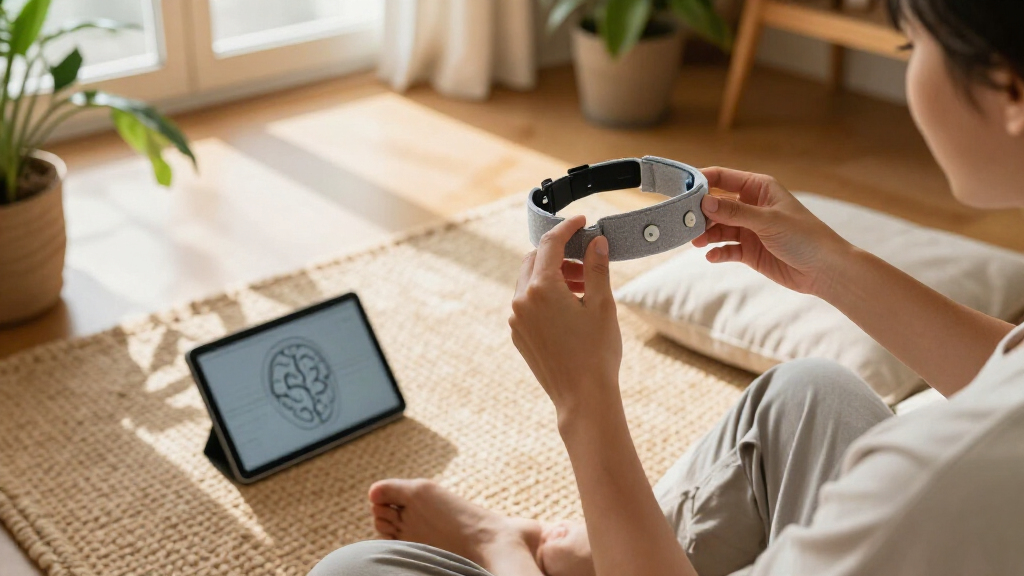
I ranked these options by how directly their design supports meditation with EEG feedback, then weighed usability, comfort and fit, the kind of feedback offered, and versatility beyond a single session type. A meditation-focused wearable with guidance has a practical advantage for many buyers over a cap whose electrode layout may require more setup or EEG familiarity. I also considered whether a product has a distinct use case, such as sleep tracking, rather than treating every sensor-bearing headband as interchangeable.
This order favors clear meditation use and approachable operation, not the highest stated channel count. Muse 2 leads for its combination of meditation biofeedback and sound guidance; Flowtime and Muse S Athena follow for their distinct biosensing and sleep-focused roles. The caps remain relevant for buyers prioritizing electrode coverage or placement, but a buyer should confirm compatibility, included components, and setup requirements before choosing one. Product names and listed features inform this comparison; no unsupported claims about clinical accuracy or measured EEG performance are assumed.
| meditation headbands with EEG sensor | Color |
|---|---|
| 64-Point Meditation EEG Tracki | Black |
| Muse 2 EEG Meditation Headband | Black/Grey |
| Meditation EEG Elastic Fiber C | Blue |
| SereniBrain EEG Neurofeedback | — |
| Muse S Athena 3rd Gen Brain-Se | Light Grey |
| Entertech Flowtime Biosensing | — |
| DIGIPACE 64-Channel EEG Tracki | — |
Factors to Consider When Choosing Meditation Headbands With EEG Sensors
Before choosing, decide what you want the headband to do during an actual session. A wearable designed around guided meditation solves a different problem from a multi-electrode cap intended for a specific placement layout. These broader checks can help prevent a mismatch between your practice, your comfort needs, and the equipment you buy.
Choose Feedback You Will Use
EEG sensors can feed into very different experiences, from sound guidance to brainwave monitoring. Decide whether you want real-time cues that help structure a meditation session or readings you plan to interpret yourself. Guided feedback is often easier to act on, while rawer monitoring can appeal to technically curious users. A common mistake is buying for the promise of brain data without checking how the app presents it. Look for a clear description of what the feedback means and whether the associated software supports your device. If the product’s feedback format does not match your practice, more sensors may not make it more useful.
Match Sensor Layout to Your Skill and Goal
Sensor count and placement are not the same thing as meditation usefulness. A multi-point cap may be relevant when you need a particular electrode arrangement, but it can bring more fitting and setup demands than a guided wearable. Check whether the product specifies electrode placement, what additional components are required, and whether the intended software can read that configuration. Do not assume that a cap described as 64-point or 64-channel works as a complete consumer meditation system out of the box. If your goal is simply to follow a guided session, start with the feedback experience rather than the largest number in a listing. If you have a research or technical workflow, confirm compatibility before purchase.
Treat Fit as Part of Signal Setup
A headband or cap must sit securely and comfortably for the duration of a session; fit can shape whether you will use it regularly. Stretch materials and a listed size such as XL are useful clues, but they do not tell you how the item will fit your head or how stable its sensors will feel. Check sizing information, return terms, care instructions, and whether hair or glasses could affect your fit. Buyers often focus on sensor specifications and leave comfort until after purchase. For longer sessions, a secure fit without distracting pressure matters more than a feature you rarely use. If the size range is unclear, treat that as a real uncertainty rather than assuming elastic fabric solves it.
Check App, Device, and Data Compatibility
The headband is only one part of the experience; compatible software and a supported phone or tablet can determine whether its feedback is accessible. Before buying, check operating-system support, any app requirements, connectivity details, and whether features depend on an ongoing service. Also review what data the app stores and what controls it gives you, particularly if you plan to track sessions over time. A device that pairs easily but offers little useful interpretation may not meet your goal. Avoid relying on a general claim such as brainwave monitoring without confirming the specific outputs and workflow. Compatibility checks are especially valuable for technical electrode caps, where software and hardware may need to work together.
Pay More Only for a Specific Added Use
A higher-priced model makes more sense when its extra function has a clear place in your routine. Sleep tracking, for example, may justify choosing a sleep-oriented headband if you will use that feature as well as meditation feedback. If you only want guided mindfulness sessions, extra tracking functions can add complexity without improving your core use. Compare what is included, not just the feature list: app access, accessories, charging, and maintenance can affect the long-term experience. For cap-style products, check whether the listing covers the parts and instructions needed for your intended setup. Buying around a specific need helps avoid paying for features you will not use or discovering that a technically promising cap needs additional equipment.
Frequently Asked Questions
Is Muse 2 or Flowtime a better first EEG meditation headband?
I would choose Muse 2 if sound guidance and a clearly meditation-oriented feedback experience are your priorities. Flowtime is a reasonable alternative if its biosensing approach better matches the feedback you want, but compare the current app descriptions before deciding. Neither product should be chosen on a claim of superior EEG accuracy without supporting details. Check phone compatibility, what each session reports, and whether the app explains the feedback in a way you can use. A short list of must-have functions can make this decision clearer than comparing feature names alone.
Should I buy a 64-channel cap for meditation instead of a wearable headband?
Only if you have a specific reason to use that electrode layout and are prepared for its setup requirements. A cap such as the DIGIPACE model highlights 10-20 electrode placement, which may matter to a technical workflow but does not automatically make it more suitable for everyday guided meditation. Check what electrodes and other components are included, how the cap connects to compatible equipment, and whether its software supports your intended use. If you mainly want prompts or sound-based feedback during a session, a meditation-focused wearable is likely a simpler fit. Treat channel count as one specification, not a measure of how helpful the meditation experience will be.
Can one headband support both meditation and sleep tracking?
The Muse S Athena is the option in this lineup specifically described as combining brain sensing with sleep tracking. That makes it a more relevant choice if you plan to use both functions, rather than adding a sleep feature you may never open. Check how sleep tracking is presented, whether the app supports the features you expect, and whether the headband is comfortable for overnight wear. A device intended for meditation sessions may not feel suitable through a full night, so do not assume daytime comfort translates to sleep comfort. If meditation is your only goal, a sleep-oriented model may be more device than you need.
What should I check before choosing between the two elastic EEG caps?
Compare the listed size, fabric, electrode layout, and the equipment needed to use each cap, rather than focusing on the shared 64-point description. The high-elasticity nylon model emphasizes stretch fabric, while the elastic-fiber listing specifies size XL; those details may affect fit but do not guarantee compatibility or comfort. Look for a sizing guide, care instructions, and clear information about included electrodes and connectors. Also confirm that your intended software can work with the cap’s layout. If the listing leaves these points unanswered, consider whether a guided wearable would better suit your goal.
Do EEG meditation headbands provide a medical diagnosis?
These products should be treated as consumer meditation or monitoring tools, not as diagnostic devices, unless a product’s documentation explicitly states an appropriate medical use and authorization. Brain-sensing feedback may help structure a personal practice, but it does not by itself establish a medical condition or measure meditation quality in a definitive way. For health concerns, discuss them with a qualified clinician rather than relying on a wearable’s app output. Read the manufacturer’s intended-use statements and data explanations before interpreting session results. This distinction matters especially with technical caps, whose electrode count can sound clinical even when the product is not intended for diagnosis.
Conclusion
For most meditation buyers, I recommend the Muse 2 as best overall because its biofeedback and sound guidance connect directly to guided practice. Flowtime is my best value-style alternative for shoppers drawn to biosensing feedback, while Muse S Athena is the best premium fit for buyers who also want sleep tracking—though confirm the current feature set before purchase. Beginners should start with Muse 2’s more approachable meditation focus instead of a multi-electrode cap. For specific technical needs, compare the 64-point nylon cap, XL elastic-fiber cap, and DIGIPACE 10-20 cap by size, included components, and software compatibility; choose DIGIPACE when its stated placement layout matches your workflow. The right choice is the one whose fit and feedback you will use, not simply the one with the most electrodes.