

For a guided meditation book that balances approachable practice with everyday usefulness, I’d make Practicing Mindfulness my best overall pick, while How to Meditate suits readers who want a practical foundation and Guided Meditation Scripts: 5 and 10 Minute Read-Aloud Meditations fits short sessions. The main choice is between a book that teaches you to meditate, a collection of ready-to-read scripts, or a set of themed practices for specific needs. Script-heavy titles may serve teachers and facilitators better than readers seeking step-by-step instruction, while broad beginner guides may offer less variety for experienced practitioners. I compared all 12 by audience, ease of use, practice variety, and how clearly each title supports its intended use. Continue reading for the full breakdown and help matching a book to your routine.

Turn your quiet moments into listening time
- Thousands of audiobooks, podcasts and originals
- Listen on your phone, tablet or Echo — also offline
- Cancel anytime
Key Takeaways
- Practicing Mindfulness stands out as the strongest all-around fit because its 75 practices suggest breadth for regular personal use, while professional script collections target a narrower audience.
- How to Meditate is the clearest choice for readers who want guidance on building a practice, rather than a stack of read-aloud scripts.
- The 135-script collections serve different needs: 135+ Guided Meditation Scripts for Relaxation, Self-Discovery, and Growth has a broad personal-growth frame, while 135 Guided Imagery Scripts is explicitly aimed at facilitators and group settings.
- Guided Meditation Scripts: 5 and 10 Minute Read-Aloud Meditations is the most clearly time-bounded option, making it a practical match for readers who need short sessions.
- Professional titles such as 35 Guided Meditation Scripts and Guided Meditation Scripts for Wellness Professionals make more sense for people leading others than for beginners seeking a meditation primer.
| 135+ Guided Meditation Scripts for Relaxation, Self-Discovery, and Growth | 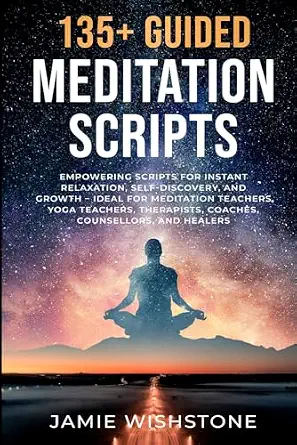 | Best for Meditation Teachers | Content type: Guided meditation scripts | Number of scripts: 135+ | Main themes: Relaxation, self-discovery, and personal growth | VIEW ON AMAZON | See Our Full Breakdown |
| 135 Guided Imagery Scripts: Meditation and Visualization for Counselors, Healers, Yoga Nidra, Stress Reduction, Self-Healing, and Groups |  | Best for Guided Imagery and Groups | Content type: Guided imagery scripts | Number of scripts: 135 | Practice formats: Meditation and visualization | VIEW ON AMAZON | See Our Full Breakdown |
| A Mind Like Still Water: Guided Meditation and Mindfulness Book for Peace and Happiness |  | Best for a Gentle Beginner Introduction | Content type: Guided meditation and mindfulness book | Experience level: Beginner-friendly | Stated aims: Peace and happiness | VIEW ON AMAZON | See Our Full Breakdown |
| How to Meditate: A Practical Guide to Making Friends with Your Mind |  | Best for Building a Practical Habit | Content type: Practical meditation guide | Stated focus: Making friends with your mind | Guidance: Practical meditation techniques and insights | VIEW ON AMAZON | See Our Full Breakdown |
| Meditation for Beginners: The Ultimate and Easy Guide to Learn How to Be Peaceful and Relieve Stress, Anxiety And Depression |  | Best for Stress-Relief Seekers | Content type: Described in the title as a beginner guide | Stated experience level: Beginners | Named subject areas: Meditation, mindfulness, stress management, anxiety, depression, and yoga | VIEW ON AMAZON | See Our Full Breakdown |
| Practicing Mindfulness: 75 Essential Meditations to Reduce Stress, Improve Mental Health, and Find Peace in Everyday Life |  | Best for Everyday Stress Relief | Format: Book | Meditation count: 75 | Primary focus: Mindfulness | VIEW ON AMAZON | See Our Full Breakdown |
| 35 Guided Meditation Scripts for Meditation Teachers, Yoga Teachers, Therapists, Coaches, Counsellors, and Healers |  | Best for Wellness Professionals | Format: Book of guided meditation scripts | Script count: 35 | Intended users: Meditation teachers | VIEW ON AMAZON | See Our Full Breakdown |
| Guided Meditation Scripts: 5 and 10 Minute Read-Aloud Meditations for Calm, Healing, and Sleep | 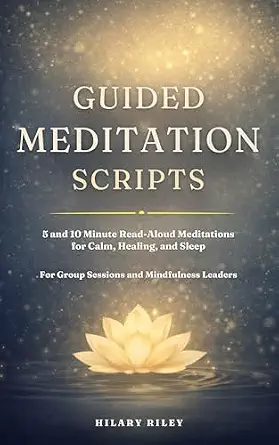 | Best for Short Group Sessions | Format: Book of guided meditation scripts | Session lengths: 5 and 10 minutes | Delivery: Read aloud | VIEW ON AMAZON | See Our Full Breakdown |
| Mindfulness, Mantras & Meditations: 55 Inspirational Practices to Soothe the Body, Mind & Soul |  | Best for a Mixed Practice | Format: Book of practices | Practice count: 55 | Practice types: Mindfulness, mantras, and meditations | VIEW ON AMAZON | See Our Full Breakdown |
| Guided Meditations, Explorations, and Healings |  | Best for Readers Seeking a Different Format | Format: Not specified | Content stated in title: Guided meditations, explorations, and healings | Practice count: Not specified | VIEW ON AMAZON | See Our Full Breakdown |
| Guided Meditation Scripts for Wellness Professionals |  | Best for Wellness Practitioners | Topics: Mindfulness, breathwork, relaxation | Intended audience: Yoga teachers, coaches, therapists, holistic practitioners | Content type: Guided meditation scripts | VIEW ON AMAZON | See Our Full Breakdown |
| The Blooming of a Lotus: Essential Guided Meditations for Mindfulness, Healing, and Transformation |  | Best for Healing-Focused Reflection | Format: Book | Topics: Mindfulness, healing, personal transformation | ASIN: 0807020567 | VIEW ON AMAZON | See Our Full Breakdown |
| guided meditation book | Content type | Format |
|---|---|---|
| 135+ Guided Meditation Scripts | Guided meditation scripts | — |
| 135 Guided Imagery Scripts: Me | Guided imagery scripts | — |
| A Mind Like Still Water: Guide | Guided meditation and mindfulness book | — |
| How to Meditate: A Practical G | Practical meditation guide | — |
| Meditation for Beginners: The | Described in the title as a beginner guide | — |
| Practicing Mindfulness: 75 Ess | — | Book |
| 35 Guided Meditation Scripts f | — | Book of guided meditation scripts |
| Guided Meditation Scripts: 5 a | — | Book of guided meditation scripts |
| Mindfulness | — | Book of practices |
| Guided Meditations | — | Not specified |
| Guided Meditation Scripts for | Guided meditation scripts | — |
| The Blooming of a Lotus: Essen | — | Book |
More Details on Our Top Picks
135+ Guided Meditation Scripts for Relaxation, Self-Discovery, and Growth
More than 135 scripts give this collection a ready-made resource for teachers who lead varied sessions. Its focus spans relaxation, self-discovery, and personal growth, so it may suit classes or client work that move beyond stress relief alone. Compared with 35 Guided Meditation Scripts for Meditation Teachers, Yoga Teachers, Therapists, Coaches, Counsellors, and Healers, this book offers a much larger script count, which can help instructors seeking more material to draw from. That breadth also means the description does not establish how scripts are organized or how much guidance each includes. It is aimed at practitioners rather than clearly at someone learning to meditate independently. I’d choose it for a teaching library, while a beginner wanting step-by-step personal instruction may prefer How to Meditate: A Practical Guide to Making Friends with Your Mind.
Pros:- Includes more than 135 scripts, providing a broad pool of session material
- Covers relaxation, self-discovery, and personal growth
- Explicitly targets meditation teachers, yoga teachers, and healers
Cons:- The supplied description does not explain how the scripts are organized or how long they take to lead
- Its practitioner-focused audience may make it less suitable as a self-guided beginner course
Best for: Meditation and yoga teachers, plus healers, who want a broad collection of scripts for sessions focused on relaxation and personal growth
Not ideal for: New meditators seeking a clearly described, progressive personal practice rather than scripts intended for practitioners to use with others
- Content type:Guided meditation scripts
- Number of scripts:135+
- Main themes:Relaxation, self-discovery, and personal growth
- Intended audience:Meditation teachers, yoga teachers, and healers
Our verdict“Choose this collection if you teach meditation or yoga and want more script variety than a shorter practitioner-focused book provides.”
135 Guided Imagery Scripts: Meditation and Visualization for Counselors, Healers, Yoga Nidra, Stress Reduction, Self-Healing, and Groups
Guided imagery and visualization set this script collection apart from books centered on general mindfulness instruction. Its 135 scripts address Yoga Nidra, stress reduction, self-healing, and group use, giving counselors and healers a defined set of themes to draw on. Compared with 135+ Guided Meditation Scripts for Relaxation, Self-Discovery, and Growth, it has a more explicit imagery-based angle and names counselors and groups among its intended settings; the other collection describes a broader personal-growth focus. The supplied details do not say how the scripts are arranged, how long they run, or what training they assume, so buyers cannot judge session fit from the description alone. I’d pick it for a practitioner seeking visualization material, while How to Meditate: A Practical Guide to Making Friends with Your Mind better matches someone learning a personal practice.
Pros:- Provides 135 guided imagery scripts
- Explicitly includes meditation, visualization, and Yoga Nidra
- Addresses stress reduction and self-healing
- Names counselors, healers, and groups as intended users
Cons:- The available description does not specify script length or how the material is organized
- Its professional and group focus may not suit readers seeking personal step-by-step instruction
Best for: Counselors, healers, and group facilitators seeking guided visualization scripts with Yoga Nidra and stress-reduction themes
Not ideal for: Readers looking for a beginner course in meditation or a clearly mapped sequence for individual daily practice
- Content type:Guided imagery scripts
- Number of scripts:135
- Practice formats:Meditation and visualization
- Named themes:Yoga Nidra, stress reduction, and self-healing
- Intended audience:Counselors, healers, and groups
Our verdict“Choose this book if you lead counseling or group sessions and specifically want imagery-based practices, including Yoga Nidra themes.”
A Mind Like Still Water: Guided Meditation and Mindfulness Book for Peace and Happiness
Beginner-friendly guidance and a theme of finding calm make this the gentlest personal-use pick in this set. The description frames meditation through a hidden ancient kingdom, giving the book a story-like premise that may appeal to readers who find abstract instructions hard to engage with. That sets it apart from How to Meditate: A Practical Guide to Making Friends with Your Mind, which is presented as a practical guide to understanding the mind and building a practice. The tradeoff is limited detail about the actual exercises: the supplied information does not show their format, sequence, or depth. Readers wanting a substantial toolkit for leading sessions should look instead at 135+ Guided Meditation Scripts for Relaxation, Self-Discovery, and Growth. I’d choose this for an approachable first step, with modest expectations about how much method is described.
Pros:- Described as suitable for beginners
- Combines guided meditation and mindfulness
- Uses a hidden ancient kingdom as a distinctive narrative frame
- Focuses on peace and happiness
Cons:- The available description gives little detail about specific practices or their sequence
- The supplied information does not establish its depth for experienced meditators
Best for: New meditators who prefer an approachable, story-framed introduction focused on mindfulness and inner calm
Not ideal for: Experienced practitioners or teachers who need detailed techniques, a large script library, or a clearly described progression
- Content type:Guided meditation and mindfulness book
- Experience level:Beginner-friendly
- Stated aims:Peace and happiness
- Described framing:A journey through a hidden ancient kingdom
- Intended readers:Men and women seeking inner calm
Our verdict“Choose this as a gentle first meditation book if its story-like framing appeals more than a practical manual.”
How to Meditate: A Practical Guide to Making Friends with Your Mind
Practical techniques and plain-language guidance make this the clearest choice here for someone who wants to establish a meditation routine. Its emphasis on understanding the mind and cultivating mindfulness gives it a different purpose from the script collections, such as 135 Guided Imagery Scripts, which are aimed at practitioners and group use. It also reads as a more direct instructional option than A Mind Like Still Water, whose description leans on a story-like framing and promises calm. The tradeoff is that experienced meditators may find its beginner focus too basic, and the supplied details do not outline specific techniques or a course structure. I’d pick it when clear practical instruction matters more than a large menu of read-aloud meditations.
Pros:- Offers practical meditation techniques
- Uses guidance described as easy to understand for beginners
- Focuses on mindfulness and understanding the mind
- Targets development of a personal meditation practice
Cons:- May feel basic to experienced meditators
- The supplied description does not list specific techniques or explain the book’s structure
Best for: Beginners who want practical, understandable guidance for starting a personal mindfulness routine
Not ideal for: Experienced meditators seeking advanced methods or instructors looking for ready-to-read session scripts
- Content type:Practical meditation guide
- Stated focus:Making friends with your mind
- Guidance:Practical meditation techniques and insights
- Practice themes:Mindfulness and mental well-being
- Intended experience level:Beginners
Our verdict“Choose this practical guide if you are starting a personal meditation habit and do not need a library of scripts.”
Meditation for Beginners: The Ultimate and Easy Guide to Learn How to Be Peaceful and Relieve Stress, Anxiety And Depression
Stress and anxiety relief are the clearest signals in this title, making it a possible fit for readers who come to meditation seeking help with difficult feelings. Yet the supplied product details offer no description of the book’s exercises, format, or audience, so I cannot tell whether it provides guided meditations, general advice, or a structured learning plan. That makes it harder to recommend confidently than How to Meditate: A Practical Guide to Making Friends with Your Mind, which is described as offering practical techniques for beginners. It is also less clearly defined than A Mind Like Still Water, whose description specifically presents guided meditation and mindfulness. I’d treat this as a tentative option for a beginner drawn to its stated themes, and verify the contents before choosing it as a guided meditation book.
Pros:- The title identifies beginners as the intended audience
- States a focus on peace and stress relief
- Names anxiety and depression among its subject areas
- Connects meditation with mindfulness and yoga in the title
Cons:- No product description or specific practice details were supplied
- The available information does not confirm that the book contains guided meditations
- The approach to anxiety and depression is not described
Best for: Beginners specifically seeking a meditation guide whose stated themes include stress and anxiety relief
Not ideal for: Buyers who need confirmed guided exercises, a clearly described method, or specific information about the book’s approach
- Content type:Described in the title as a beginner guide
- Stated experience level:Beginners
- Named subject areas:Meditation, mindfulness, stress management, anxiety, depression, and yoga
- Stated aims:Peace and stress relief
Our verdict“Consider this only if its stress-relief focus fits your needs and you can first confirm that its contents provide the guidance you want.”
Practicing Mindfulness: 75 Essential Meditations to Reduce Stress, Improve Mental Health, and Find Peace in Everyday Life
Seventy-five mindfulness meditations give this book the clearest focus on building a repeatable personal practice in this group. Its emphasis on stress and everyday calm makes it a more direct fit for individual readers than 35 Guided Meditation Scripts for Meditation Teachers, which is framed as a resource for professionals leading others. The larger collection may offer more choices as you settle into a routine, though the supplied description does not identify specific techniques, session lengths, or how the practices differ. That lack of detail makes it harder to tell whether the meditations suit a particular need or experience level. I’d shortlist it for someone seeking regular, general-purpose mindfulness prompts, while readers wanting scripts tailored to sleep or group sessions may prefer Guided Meditation Scripts: 5 and 10 Minute Read-Aloud Meditations.
Pros:- Includes 75 meditations, giving readers multiple practices to explore
- Focuses on stress reduction and mental well-being
- Designed for practice in everyday life
Cons:- The available description does not identify the meditation techniques
- No session lengths or guidance on choosing a practice are provided
Best for: Readers seeking a broad collection of mindfulness meditations to use as part of an everyday stress relief routine
Not ideal for: Readers who need clearly described techniques, specified session lengths, or scripts tailored to sleep or group facilitation
- Format:Book
- Meditation count:75
- Primary focus:Mindfulness
- Stated aim:Stress reduction
- Additional focus:Mental well-being
- Practice context:Everyday life
Our verdict“Choose this for a sizeable set of everyday mindfulness meditations, provided you do not need detailed descriptions of each practice before choosing.”
35 Guided Meditation Scripts for Meditation Teachers, Yoga Teachers, Therapists, Coaches, Counsellors, and Healers
Thirty-five guided scripts make this the most explicitly practitioner-oriented option in the five-book batch. The intended audience includes meditation and yoga teachers, therapists, coaches, counsellors, and healers, so its value is in supporting sessions led for others rather than supplying a clearly defined personal meditation program. Compared with Practicing Mindfulness, which is aimed at everyday stress relief, this title speaks more directly to professionals who need material for facilitated practice. The tradeoff is that the description offers no sample scripts or detail about their themes, length, or structure, making it difficult to judge fit for a particular group or client. I’d favor it over the five- and ten-minute script collection when professional use is the priority, but not when specified short session lengths matter most.
Pros:- Provides 35 scripts for guided meditation sessions
- Names a broad range of intended wellness professionals
- Can support meditation and mindfulness sessions led for others
Cons:- The available description provides no sample scripts
- Script length, themes, and structure are not specified
- Its professional focus may be a poor fit for personal self-guided practice
Best for: Meditation teachers, yoga instructors, therapists, and wellness practitioners seeking scripts to support guided sessions
Not ideal for: Individual beginners looking for a clearly explained, self-guided meditation course or readers who need script samples before choosing
- Format:Book of guided meditation scripts
- Script count:35
- Intended users:Meditation teachers
- Additional intended users:Yoga teachers, therapists, coaches, counsellors, and healers
- Stated use:Facilitating meditation sessions
- Practice focus:Meditation and mindfulness
Our verdict“Choose this if you lead meditation or wellness sessions and can work with limited information about the scripts’ format.”
Guided Meditation Scripts: 5 and 10 Minute Read-Aloud Meditations for Calm, Healing, and Sleep
Five- and ten-minute read-aloud meditations give this book the most specific session-length promise in the lineup. That makes it easier to match a practice to a short opening, break, or wind-down than with 35 Guided Meditation Scripts for Meditation Teachers, whose description does not state how long its scripts run. Its stated themes—calm, healing, and sleep—also offer a clearer starting point for leaders planning a session around a particular mood. The tradeoff is the narrow time range: readers wanting longer guided practices may need another resource, and the description does not explain script variations or customization. I’d choose it for concise read-aloud sessions, while someone building a broad personal routine may get more variety from Practicing Mindfulness.
Pros:- Specifies five- and ten-minute session lengths
- Designed for read-aloud use
- Covers calm, healing, and sleep
- Description identifies group sessions and mindfulness leaders as intended uses
Cons:- The stated session lengths may not suit readers seeking longer meditations
- The available description gives no script samples
- Script variations and customization options are not described
Best for: Mindfulness leaders and group facilitators who need brief read-aloud meditations with stated five- or ten-minute lengths
Not ideal for: Readers seeking longer sessions, detailed customization guidance, or a broad self-guided mindfulness collection
- Format:Book of guided meditation scripts
- Session lengths:5 and 10 minutes
- Delivery:Read aloud
- Stated themes:Calm, healing, and sleep
- Intended use:Group sessions
- Intended users:Mindfulness leaders and practitioners
Our verdict“Choose this for short, ready-to-read group sessions when five- or ten-minute formats fit your plans.”
Mindfulness, Mantras & Meditations: 55 Inspirational Practices to Soothe the Body, Mind & Soul
Fifty-five practices spanning mindfulness, mantras, and meditation give this book a broader mix than Practicing Mindfulness, which is described specifically as a collection of mindfulness meditations. That mix may appeal to beginners who want to try different ways of settling into a daily routine, rather than follow a single stated approach. Its focus on soothing body, mind, and soul sets a gentle, holistic tone, but the description does not say which techniques appear or explain how the practices differ. Readers who prefer a clearly defined use case may find Guided Meditation Scripts: 5 and 10 Minute Read-Aloud Meditations easier to match to short sessions, since it specifies timing and themes. I’d pick this for variety across practice types, with the caveat that the available information leaves the contents hard to preview.
Pros:- Includes 55 practices
- Combines mindfulness, mantras, and meditations
- Aimed at beginners
- Offers practical guidance for incorporating practice into daily life
Cons:- The available description does not identify specific techniques
- Session lengths and practice structure are not stated
- The broad holistic focus may be less useful to readers seeking one defined meditation method
Best for: Beginners who want to explore mindfulness, mantras, and meditation practices in one everyday-use book
Not ideal for: Readers who need specific technique descriptions, structured session lengths, or scripts for leading groups
- Format:Book of practices
- Practice count:55
- Practice types:Mindfulness, mantras, and meditations
- Intended audience:Beginners
- Stated focus:Soothing the body, mind, and soul
- Practice context:Daily life
Our verdict“Choose this if you are a beginner drawn to trying several kinds of soothing practice and can accept limited detail about their contents.”
Guided Meditations, Explorations, and Healings
The supplied product data provides only the title and ASIN for Guided Meditations, Explorations, and Healings, so I can’t judge its audience, number of practices, or how the material is presented. Its title suggests a scope that includes meditations, explorations, and healing, but that alone does not establish what a reader will find inside. This uncertainty puts it at a disadvantage beside Practicing Mindfulness, which is described as containing 75 everyday-focused meditations, and Guided Meditation Scripts: 5 and 10 Minute Read-Aloud Meditations, which states its session lengths and themes. I’d treat this as a tentative pick for readers specifically drawn to its broader title, not as a first choice for buyers who need to compare format, practice length, or intended use before deciding.
Pros:- Title explicitly names guided meditations
- Title also signals explorations and healings as areas of interest
- May appeal to readers looking for a broader theme than everyday stress relief
Cons:- No product description was supplied
- Practice count, format, and session lengths are unknown
- Intended audience and specific techniques cannot be established from the supplied data
Best for: Readers specifically interested in a book titled around guided meditations, explorations, and healings who can verify its contents before choosing
Not ideal for: Buyers who need confirmed information about audience, practice count, session length, or content before selecting a guided meditation book
- Format:Not specified
- Content stated in title:Guided meditations, explorations, and healings
- Practice count:Not specified
- Session length:Not specified
- Intended audience:Not specified
- ASIN:0385417373
Our verdict“Consider this only if its title matches your interests and you can confirm the contents, since the supplied details do not support a close comparison.”
Guided Meditation Scripts for Wellness Professionals
Written for practitioners, this collection is aimed at yoga teachers, coaches, therapists, and holistic professionals seeking scripts around mindfulness, breathwork, and relaxation. That practical audience gives it a different purpose from 35 Guided Meditation Scripts for Meditation Teachers, Yoga Teachers, Therapists, Coaches, Counsellors, and Healers, which also targets instructors but names a broader set of practitioner roles. The supplied details do not say how many scripts the book contains, how they are organized, or whether they are adaptable for different sessions, so I would not choose it based on expectations of a particular format or scope. Its three stated themes offer a useful starting point for professionals whose work spans calming and mindfulness practices, but the narrow description leaves readers with little basis for judging depth. Solo readers looking for step-by-step personal instruction may find a beginner-oriented title such as How to Meditate a clearer fit.
Pros:- Covers mindfulness, breathwork, and relaxation.
- Addresses several wellness professions rather than a single practitioner group.
- Script-focused framing may suit professionals seeking material to guide meditation sessions.
Cons:- The supplied details do not specify the number or length of scripts.
- No information is provided about structure, adaptations, or how the scripts are used.
- Its professional focus may be less suitable for readers seeking a personal meditation course.
Best for: Yoga teachers, therapists, coaches, and holistic practitioners looking for meditation scripts centered on mindfulness, breathwork, and relaxation.
Not ideal for: First-time meditators seeking a clearly described, step-by-step personal guide, or practitioners who need confirmed script counts and session formats before choosing.
- Topics:Mindfulness, breathwork, relaxation
- Intended audience:Yoga teachers, coaches, therapists, holistic practitioners
- Content type:Guided meditation scripts
Our verdict“Choose this if you guide clients or classes and want scripts across three core wellness themes; look elsewhere if you need detailed information about format or a beginner’s course.”
The Blooming of a Lotus: Essential Guided Meditations for Mindfulness, Healing, and Transformation
Mindfulness, healing, and personal transformation define this book’s stated focus, making it a more reflective choice than the practice-led Practicing Mindfulness: 75 Essential Meditations to Reduce Stress, Improve Mental Health, and Find Peace in Everyday Life. The title suggests a healing-oriented path, while the supplied details confirm only its broad themes and book format; they do not describe the exercises, intended experience level, or how the meditations are presented. That limited information makes it difficult to judge whether it offers step-by-step guidance or suits a particular routine. I would place it on a shortlist for readers drawn to personal reflection and transformation, but those who want a known number of practices or a clearly stated stress-management focus have more concrete clues in Practicing Mindfulness. Its appeal rests on theme rather than documented structure.
Pros:- Combines mindfulness with healing and personal transformation themes.
- Identified as a book, giving readers a clear format category.
- Offers a distinct reflective focus compared with practice-count-led mindfulness titles.
Cons:- The supplied data does not describe the meditations or how they are guided.
- No intended reader level or practice length is specified.
- Limited content details make it hard to compare its scope with more fully described options.
Best for: Readers seeking a book framed around mindfulness, healing, and personal transformation who are comfortable choosing without details about the exercises.
Not ideal for: Buyers who want a specified set of practices, clear guidance on format or difficulty, or a book explicitly organized around stress reduction.
- Format:Book
- Topics:Mindfulness, healing, personal transformation
- ASIN:0807020567
Our verdict“Consider it if its healing and transformation themes match your goals, but choose a more fully described guide if you need a clear practice format.”

How We Picked
I compared these books by how directly their stated format and audience answer common guided meditation needs: learning to meditate, finding repeatable personal practices, fitting sessions into limited time, or leading others. I gave weight to clear audience cues, the range or focus suggested by the title, and whether a reader could tell what kind of support the book offers before choosing it. Script count alone did not determine placement; a large collection can be useful to a facilitator yet less suitable for someone who needs instruction.
The ranking favors versatility for personal practice, then clear entry points for beginners and useful specialization for time-limited or professional use. Practicing Mindfulness leads for its apparent balance of breadth and everyday application; How to Meditate ranks highly for practical instruction. Niche script books place lower for general readers, even when their focused audience could find them more useful than the top picks. The supplied product information is limited to titles, so claims about specific chapter contents, audio, or production quality are not assumed.
| guided meditation book | Content type | Format |
|---|---|---|
| 135+ Guided Meditation Scripts | Guided meditation scripts | — |
| 135 Guided Imagery Scripts: Me | Guided imagery scripts | — |
| A Mind Like Still Water: Guide | Guided meditation and mindfulness book | — |
| How to Meditate: A Practical G | Practical meditation guide | — |
| Meditation for Beginners: The | Described in the title as a beginner guide | — |
| Practicing Mindfulness: 75 Ess | — | Book |
| 35 Guided Meditation Scripts f | — | Book of guided meditation scripts |
| Guided Meditation Scripts: 5 a | — | Book of guided meditation scripts |
| Mindfulness | — | Book of practices |
| Guided Meditations | — | Not specified |
| Guided Meditation Scripts for | Guided meditation scripts | — |
| The Blooming of a Lotus: Essen | — | Book |
Factors to Consider When Choosing Guided Meditation Book
Before choosing a guided meditation book, decide what role you want it to play: teacher, practice menu, quick-session prompt, or resource for guiding other people. The title and stated audience can point you in the right direction, but they do not tell the whole story. These factors can help you avoid buying a format that sounds relevant yet does not match how you plan to meditate.
Choose Between Instruction and Read-Aloud Scripts
A beginner often needs explanations about posture, attention, and what to do when the mind wanders; scripts assume that the reader is ready to follow a guided exercise. These formats solve different problems, so a large script count does not make a book a better introduction. If you are unsure how to practice, start with instruction and add scripts later. If you already meditate or lead sessions, scripts may provide more immediate variety. A common mistake is choosing by the word “guided” alone without checking whether the book teaches the reader or supplies material to read aloud.
Match the Book to Personal or Professional Use
Books written for teachers, therapists, coaches, or wellness professionals may be organized around leading other people rather than supporting a solo routine. That focus can be an advantage if you need prompts for classes or groups, but it may leave a personal reader without the orientation they expect. Before buying, ask whether you will read each practice silently, aloud to yourself, or to a group. For professional use, consider whether the stated audience matches your setting and the kinds of sessions you lead. Do not assume that a book’s professional framing makes it unsuitable for personal use, but check that the format fits your purpose.
Pick a Session Length You Can Repeat
A short session can lower the effort needed to practice on a busy day, while longer exercises may suit a quieter routine. A title that specifies five- and ten-minute scripts gives a useful time signal, but it does not prove that every exercise will fit every schedule. Think about when you actually expect to meditate: before work, during a break, or as part of a wind-down routine. Choosing a book with sessions that fit that window can make it easier to return to practice. Avoid treating a short format as a substitute for a structured learning path if your main goal is to understand meditation.
Look for a Focus That Matches Your Reason for Practicing
Some readers want broad mindfulness practice; others are drawn to relaxation, sleep, self-discovery, or guided imagery. A specific theme can make it easier to choose an exercise for a particular moment, while a wide-ranging collection may offer more options across changing needs. Read the full title and description for clues about which concerns the book addresses. Do not assume that a meditation book can replace care from a qualified health professional, especially when seeking help for ongoing mental health symptoms. When you want a general habit, favor a clear, repeatable practice over a promise that sounds tailored to every problem.
Judge Variety by Usefulness, Not Just Quantity
A high number of scripts can be valuable when you lead varied sessions or enjoy changing your practice often. For a personal routine, a smaller set with a clear progression may be easier to use than a large collection with no obvious starting point. Consider whether you prefer repeating familiar exercises or exploring new themes. If the listing does not explain how the practices are organized, avoid assuming that more entries mean better guidance. A focused collection may serve one specific need well, while a broad collection is more flexible but may require more browsing.
Check the Format Before You Commit
Guided practice depends on usable instructions, so the way a book presents its text matters as much as its subject. Readers planning to follow prompts with eyes closed may prefer a companion recording, but the titles here do not establish that audio is included. If you intend to read scripts aloud, check whether the publisher describes them as read-aloud material and whether the session lengths suit your setting. For solo practice, think about whether you are comfortable reading a prompt and then pausing to follow it. Verify format details in the product listing rather than inferring them from the word “guided.”
Frequently Asked Questions
Should I choose a meditation guide or a book of scripts if I am new to meditation?
If you do not yet know how to settle into a practice, a practical guide such as How to Meditate is the more natural starting point because its stated purpose is instruction. A script collection can still help, but it may expect you to follow a prompt without explaining the broader practice. Think about whether you need help learning what to do or simply want something to guide a session. If both needs matter, start with instruction and add a script collection once you have a basic routine. Check the book description for beginner guidance rather than relying on the category label alone.
Are meditation script collections useful for someone practicing alone?
They can be, especially if you enjoy having words guide your attention or want a choice of themes. Some collections are explicitly aimed at counselors, teachers, or groups, so their format may be better suited to reading aloud than to solo use. Consider whether you want to read prompts yourself and pause between them, or whether you expect a recording to lead the whole session. The listed titles do not confirm that audio accompanies the scripts. For independent practice, favor a book whose description makes the personal-use format clear.
Does a larger number of meditations mean a better guided meditation book?
Not by itself. A large collection can offer variety, but the number of practices does not show how easy they are to use, how they are organized, or whether they fit your needs. The 135-script titles may appeal to readers or facilitators who want a broad pool of material, while a more focused book can be easier to return to regularly. Decide whether variety or a clear path matters more to you. If the description does not explain the structure, treat the count as a sign of breadth rather than proof of quality.
Which kind of book makes sense if I only have a few minutes to meditate?
A book that explicitly labels short sessions is a sensible place to start, and Guided Meditation Scripts: 5 and 10 Minute Read-Aloud Meditations signals that kind of time range. Short practices can fit a break or a busy morning more readily than a book centered on longer sessions. Still, check whether the listed length refers to reading time or the full guided exercise. If you want to build a deeper foundation as well, pair short sessions with a separate instructional approach rather than expecting one format to cover both jobs. Choose a duration you can repeat comfortably.
Can I use a guided meditation book to address anxiety, depression, or sleep problems?
Meditation books may offer practices for relaxation or winding down, but a title’s stated theme does not establish that it treats a health condition. If symptoms are persistent, severe, or interfering with daily life, seek guidance from a qualified health professional. For general personal practice, choose a book whose focus matches what you want to work on, such as short calming sessions or mindfulness exercises. Avoid selecting a book solely because its title promises relief. The best fit is a practice resource that complements your needs without replacing appropriate care.
Conclusion
Best overall: I’d choose Practicing Mindfulness for readers who want a broad set of everyday practices. Best value for variety: 135+ Guided Meditation Scripts for Relaxation, Self-Discovery, and Growth offers the widest stated script count, though it is less clearly an instructional guide. Best for beginners: How to Meditate is the strongest fit for learning the basics. For short sessions, choose Guided Meditation Scripts: 5 and 10 Minute Read-Aloud Meditations; for professionals leading groups, look to 135 Guided Imagery Scripts or 35 Guided Meditation Scripts. Readers seeking a more specialized theme can compare Mindfulness, Mantras & Meditations and The Blooming of a Lotus. Match the format to how you plan to practice, and the right choice becomes much clearer.
Halloween Picks
halloween
As an affiliate, we earn on qualifying purchases.