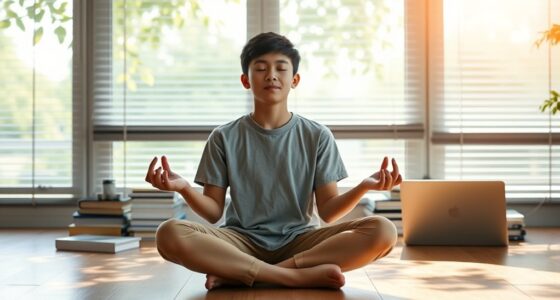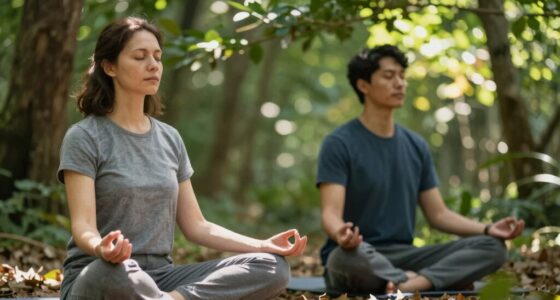

When your schedule is packed, quick meditation methods like focused breathing and guided imagery can offer instant relief. Take a few minutes during breaks to breathe deeply through your nose, expanding your belly and slowly exhaling to release tension. Alternatively, use mental imagery to create calming scenes that distract from stress. Consistently practicing these simple techniques helps boost focus and reduces stress amid chaos. Keep going, and you’ll discover even more ways to incorporate meditation into your busy life.
Key Takeaways
- Incorporate quick 5-minute breathing exercises during breaks or commuting to reset your focus.
- Use guided imagery to create calming mental scenes anytime you need a mental escape.
- Prioritize consistency over session length to build a sustainable meditation habit.
- Find a quiet, comfortable spot, even briefly, to enhance concentration and relaxation.
- Personalize techniques to fit your schedule and environment, making meditation easier to maintain regularly.
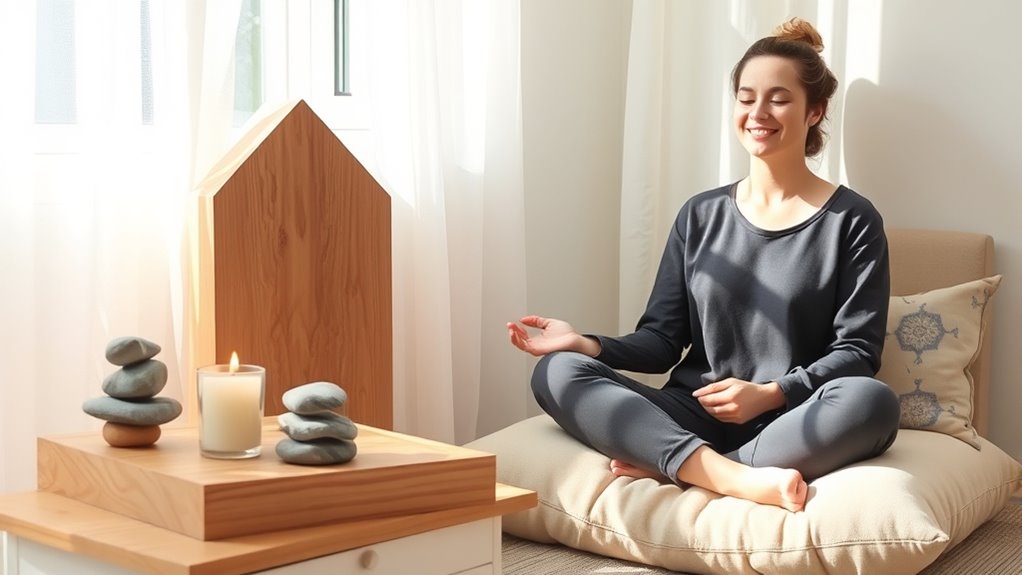
Are you curious about how to make your meditation practice more effective? Even with a busy schedule, you can incorporate simple techniques that bring calm and clarity into your day. One powerful way to do this is by focusing on breathing exercises. These exercises help you anchor your attention, slow down racing thoughts, and reduce stress rapidly. When you find a moment—whether during a quick break or while commuting—pause, breathe deeply through your nose, and let your belly rise. Exhale slowly, feeling the tension leave your body. This simple act, repeated a few times, can reset your mind and restore your focus. Breathing exercises are flexible and don’t require special equipment or long periods of time, making them perfect for tight schedules.
Even a few deep breaths can quickly restore focus and reduce stress during busy days.
Another effective technique for busy individuals involves guided imagery. This method uses your imagination to create calming scenes or mental journeys. You can listen to a guided imagery recording or simply picture a peaceful place—like a quiet beach, a lush forest, or a serene mountain top. As you visualize, engage all your senses: hear the gentle waves, feel the warm sun, smell the fresh air. Guided imagery helps divert your mind from daily stressors and creates a mental retreat you can access anytime. Even just a few minutes of this mental escape can markedly lower anxiety and improve your mood. It’s especially useful when you need a quick mental break but don’t have time for a full meditation session.
To make the most of these techniques, start small. Dedicate just five minutes to breathing exercises or guided imagery during your day. Find a quiet spot or sit comfortably where you won’t be disturbed. Close your eyes if you can, and focus entirely on your breath or your imaginary scene. Over time, these short practices build resilience against stress and help you develop a steady meditation habit, even on hectic days. Remember, consistency beats duration. The more regularly you practice, the more natural and effortless meditation becomes, allowing you to tap into its benefits whenever you need them most.
Incorporating simple tools like breathing exercises and guided imagery into your daily routine can transform your approach to meditation, making it accessible regardless of your schedule. These techniques are quick, effective, and easy to personalize, helping you stay grounded amid chaos and ensuring you get the mental clarity and calm you deserve. Additionally, understanding the importance of sticking wall decor and secure placement can create a peaceful environment that supports your meditation practice.

Rainlax Mindfulness Breathing Owl, 4-7-8 Guided Visual Meditation Light
- All-in-One Mindfulness Device: Breathing light, night light, noise machine
- 4-7-8 Breathing Guide: Guided relaxation with color cues
- Soothing Nature Sounds: Heartbeat, ocean, rain, and more
As an affiliate, we earn on qualifying purchases.
As an affiliate, we earn on qualifying purchases.
Frequently Asked Questions
Can Meditation Be Effective in Just One Minute?
Yes, meditation can be effective in just one minute. You can practice mindfulness breathing to achieve quick relaxation, even during busy moments. Focus on taking slow, deep breaths, inhaling through your nose and exhaling through your mouth. This simple practice helps clear your mind, reduce stress, and boost focus. Just dedicate a minute to mindful breathing, and you’ll notice a calming effect that can carry you through the rest of your day.
What Are the Best Types of Meditation for Beginners?
As a beginner, you should try simple meditation types like breathing techniques and guided imagery. Breathing techniques help you focus on your breath, calming your mind quickly. Guided imagery involves visualizing peaceful scenes, making it easier to relax. These methods are easy to learn and fit into busy schedules. Start with a few minutes daily, and you’ll soon notice the calming benefits of meditation.
How Do I Stay Consistent With Daily Meditation?
They say, “Consistency is key,” and it’s true for meditation too. To stay committed, prioritize time management by scheduling a specific moment each day, like morning or lunch breaks. Make meditation a habit by setting reminders and creating a dedicated space. Over time, this routine becomes second nature, making it easier to stay consistent even on busy days. Keep at it, and you’ll see the benefits grow.
Is It Okay to Meditate Lying Down or in Bed?
Yes, it’s okay to meditate lying down or in bed if it helps with your meditation comfort and aligns with your sleep posture. Just be mindful that lying down might make you more prone to falling asleep, which can be beneficial for relaxation but might interfere with meditation focus. Adjust your posture to stay alert while still feeling comfortable, ensuring your meditation remains effective without compromising your sleep habits.
Can Meditation Help Improve Focus During Work?
Yes, meditation can improve your focus during work. By practicing mindfulness techniques and breathing exercises regularly, you train your mind to stay present and resist distractions. Short meditation sessions, even just a few minutes, help reset your attention span and boost mental clarity. Incorporate deep breathing and mindful awareness into your routine to enhance concentration, reduce stress, and maintain productivity throughout your busy workday.

TEAWOO 3 PCS Portable Breathing Trainer with Adjustable Resistance Settings
- Adjustable Resistance: Customize resistance levels easily
- High-Quality Material: Made from durable ABS silicone
- Easy to Clean: Simple design for quick cleaning
As an affiliate, we earn on qualifying purchases.
As an affiliate, we earn on qualifying purchases.
Conclusion
Even with a packed schedule, dedicating just a few minutes to meditation can transform your entire day. Imagine turning your chaos into calm, like flipping a switch that instantly floods your mind with peace and clarity. With these simple tips, you’ll be able to carve out moments of serenity amidst the busiest days, making stress evaporate faster than a snowflake in the summer sun. Embrace meditation, and watch your stress melt away in an instant!

Free Guided Meditation App – Sleep and Relaxation
- Guided Meditation for Sleep: Relaxing guided meditations to help you sleep
- Nature Sounds: Soothing nature sounds for better sleep
- White Noise: Calming white noise for relaxation
As an affiliate, we earn on qualifying purchases.
As an affiliate, we earn on qualifying purchases.
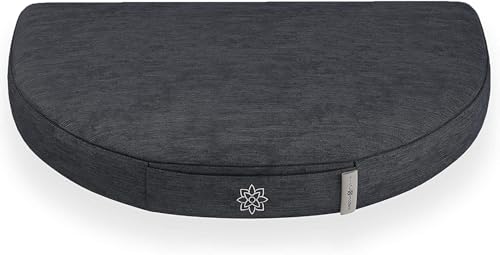
Mindful Modern Travel Meditation Cushion | Outdoor Floor Cushions for Adults | Stylish Outdoor Decor | Portable Mindfulness Pillow | Accessories for Women | Washable Cover
- Ideal for Travel: Provides support and promotes good posture
- Comfortable Meditation Support: Ensures stability and comfort during meditation
- Natural Buckwheat Filling: Adjustable for personalized comfort and support
As an affiliate, we earn on qualifying purchases.
As an affiliate, we earn on qualifying purchases.