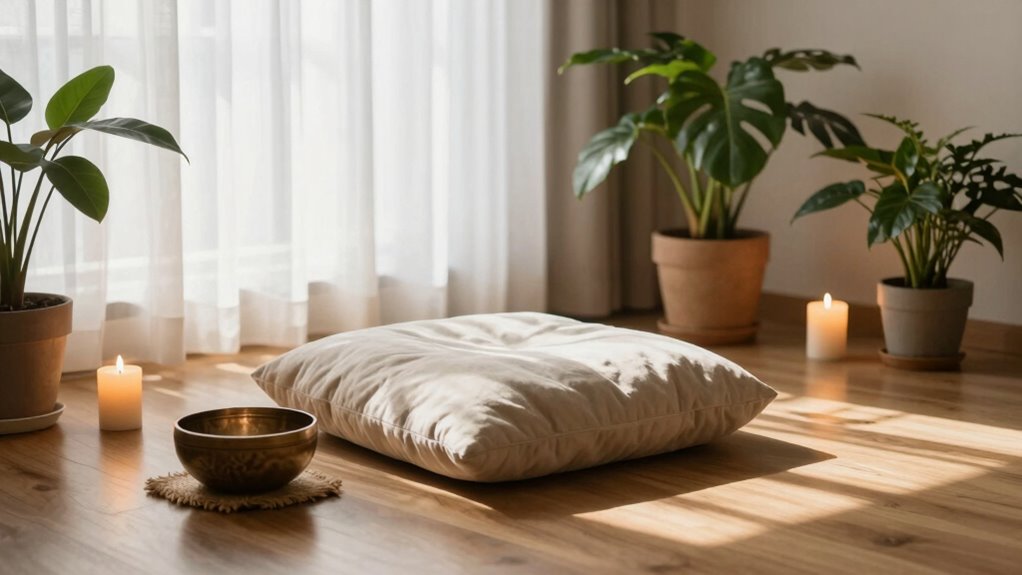

To build a lasting meditation habit, choose a specific time each day and start with just a few minutes, gradually increasing as you become more comfortable. Create a dedicated, inviting space to reinforce your practice, and use anchors like your breath or bodily sensations to stay present. Be patient and kind to yourself, recognizing setbacks as part of the process. Focus on consistency and trust in your progress—if you keep at it, you’ll discover how your routine naturally evolves over time.

Turn your quiet moments into listening time
- Thousands of audiobooks, podcasts and originals
- Listen on your phone, tablet or Echo — also offline
- Cancel anytime
Key Takeaways
- Establish a consistent daily routine at a set time to reinforce the habit.
- Create a dedicated, inviting space to associate with mindfulness practice.
- Start with short sessions and gradually increase duration to build sustainability.
- Practice patience and self-compassion to handle setbacks and maintain motivation.
- Use anchors like breath or bodily sensations to stay present and deepen focus.

Starting a meditation habit can seem challenging at first, but with a clear plan and consistent effort, it becomes easier over time. One of the key steps is developing effective mindfulness techniques that resonate with you. These techniques help anchor your attention to the present moment, making it easier to stay committed. For example, you might focus on your breath, noticing each inhale and exhale, or pay attention to the sensations in your body. As you practice, you’ll notice that your mind naturally wanders—that’s one of the most common meditation challenges. Instead of getting frustrated, gently bring your focus back to your chosen anchor, cultivating patience and self-compassion along the way.
Start small, focus on your breath, and practice patience—building a meditation habit takes gentle persistence.
Consistency is vital when building a lasting meditation habit. Set aside a specific time each day, whether it’s morning, lunch break, or evening, so that meditation becomes a non-negotiable part of your routine. Starting small works best; even five minutes a day can lead to significant benefits over time. As your practice deepens, you can gradually increase the duration, but the key is to start with achievable goals. Keep a meditation journal or use reminders to reinforce your commitment. When obstacles arise—like feeling too busy or distracted—remind yourself of the benefits you seek, such as reduced stress and greater clarity. Recognize these as meditation challenges, not setbacks, and approach them with curiosity rather than judgment.
Creating a dedicated space for your practice can also help solidify the habit. Find a quiet corner where you won’t be disturbed, and make it inviting with a cushion or chair. This physical cue signals to your brain that it’s time to meditate, which can make the process feel more natural. Over time, your mind will associate this space with mindfulness, strengthening your habit. Remember that building any new routine requires patience; setbacks are inevitable but not failures. When you slip up, acknowledge it without self-criticism and recommit the next day. Additionally, incorporating elements from backyard transformation essentials, like a peaceful outdoor setting, can enhance your meditation environment and make the practice more inviting.
Ultimately, consistency and patience are your best allies. As you continue, you’ll notice that meditation becomes less of a chore and more of a refuge—a moment of peace amid daily chaos. The journey is unique for everyone, so trust your process and celebrate small victories along the way. With persistence, your meditation practice will evolve from a challenge to a natural, enriching part of your life.
meditation cushion for beginners
As an affiliate, we earn on qualifying purchases.
As an affiliate, we earn on qualifying purchases.
Frequently Asked Questions
What’s the Best Time of Day to Meditate Consistently?
The best time to meditate consistently is during your ideal morning or evening routines. Morning meditation helps set a positive tone for the day, while evening sessions promote relaxation and better sleep. Choose a time when you’re least likely to be interrupted, and make it part of your daily schedule. Consistency matters most, so find a time that fits seamlessly into your routine and stick with it.
How Long Should I Meditate as a Beginner?
As a beginner, start with 5 to 10 minutes of meditation daily. Focus on simple meditation techniques like mindful breathing or body scans, which help develop your mindfulness practices gradually. You can increase your meditation time as you become more comfortable, but consistency is key. By keeping sessions short and manageable, you’ll build a sustainable habit that improves over time, without feeling overwhelmed.
Can Meditation Replace Other Stress-Relief Techniques?
Meditation can complement other stress-relief techniques like mindfulness practices and breathing exercises, but it might not fully replace them. You benefit most when you integrate meditation into your routine alongside these methods. By combining mindfulness techniques and breathing exercises with meditation, you create a holistic approach to managing stress. This synergy helps deepen relaxation, improve focus, and build resilience, making your stress management more effective and sustainable over time.
What if I Can’T Quiet My Mind During Meditation?
If you can’t quiet your mind during meditation, don’t worry—it’s common. Instead of forcing silence, try mindfulness techniques that focus on observing your thoughts without judgment. Use focus strategies like gentle breathing or body scans to anchor your attention. Remember, meditation is about awareness, not silence. With consistent practice, you’ll find it easier to stay present, making your meditation more effective and enjoyable over time.
How Do I Stay Motivated to Meditate Daily?
Like a ship needing a steady anchor, your motivation for daily meditation relies on your commitment to mindfulness practices. When faced with meditation challenges, remind yourself of the benefits—calm, clarity, resilience—and visualize your progress. Set small, achievable goals and celebrate each success. Keep your practice enjoyable, vary techniques, and remember that consistency beats perfection. This way, you’ll stay motivated, turning meditation into a rewarding, lasting part of your life.
As an affiliate, we earn on qualifying purchases.
Conclusion
Building a meditation habit might seem tough at first, but remember, consistency beats perfection. Even if you miss a day or two, don’t get discouraged. It’s natural to stumble, but what matters is returning to your practice without guilt. Over time, those small, committed moments become part of your routine, transforming meditation from a chore into a peaceful refuge. Stick with it—you’re worth the effort, and your mind will thank you.
As an affiliate, we earn on qualifying purchases.
As an affiliate, we earn on qualifying purchases.
Columbus Day / Indigenous Peoples' Day Picks
long weekend sales
As an affiliate, we earn on qualifying purchases.