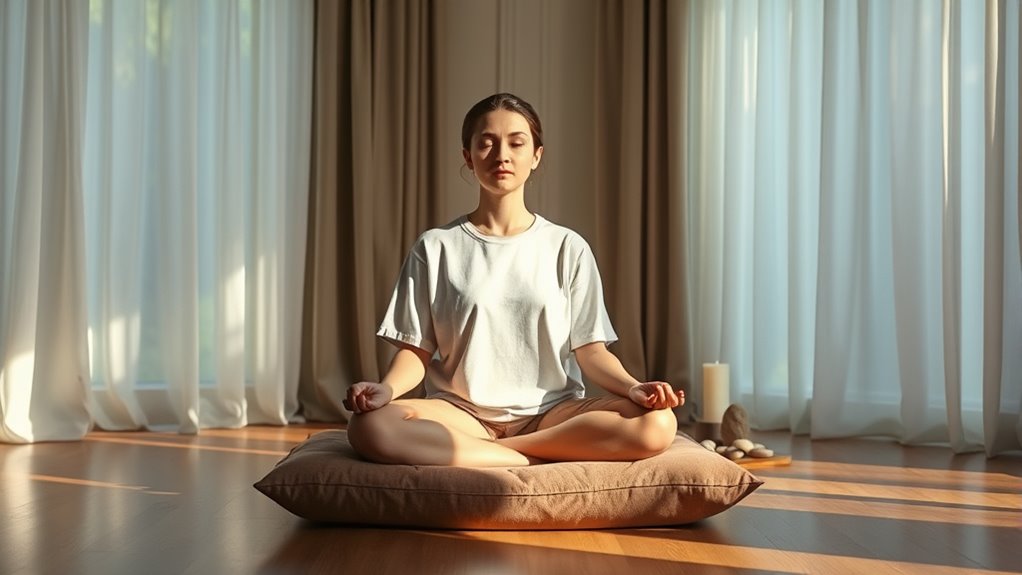

Meditation offers a simple, effective way to manage pain by calming your mind and relaxing your body through breathing exercises and mindfulness. You can focus on slow, deep breaths to signal safety to your brain, reducing stress and easing discomfort. Paying attention to the present moment without judgment helps diminish emotional distress linked to pain. If you stay committed, you’ll discover how these techniques can empower you to cope better with discomfort and improve your overall well-being.
Key Takeaways
- Meditation shifts focus away from pain, activating relaxation responses that calm the nervous system.
- Breathing exercises like diaphragmatic and box breathing help regulate stress and reduce pain perception.
- Mindfulness techniques encourage observing pain sensations without judgment, diminishing emotional distress.
- Regular meditation practice enhances coping skills and promotes overall well-being in managing chronic pain.
- Techniques are simple, accessible, and can be integrated into daily routines to effectively alleviate pain symptoms.
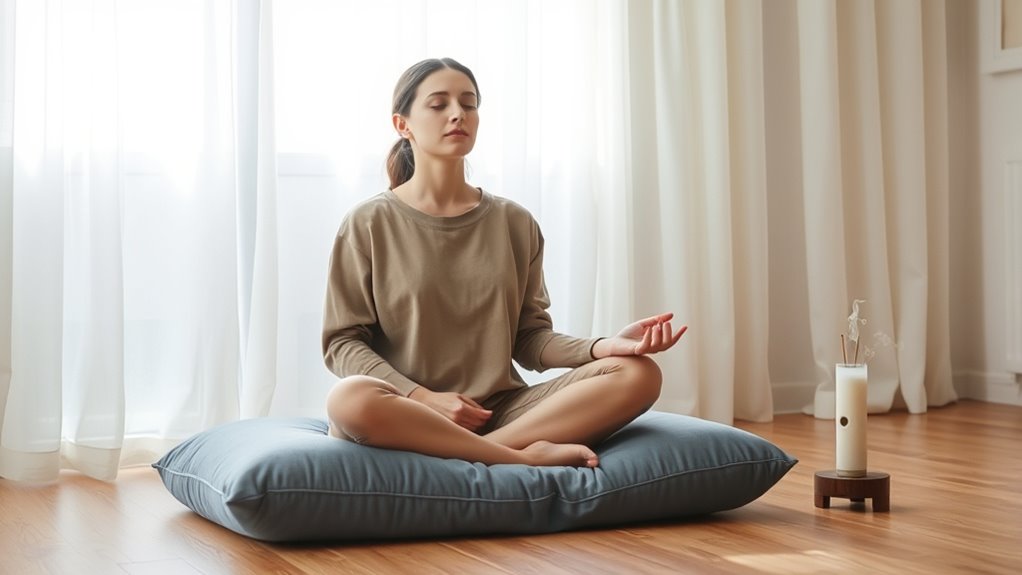
Have you ever considered that meditation might help manage your pain? Many people overlook the power of simple practices like breathing exercises and mindfulness techniques to ease discomfort. These methods don’t require special equipment or a lot of time, but they can make a significant difference in how you experience pain. When you focus on your breath and stay present in the moment, you can shift your attention away from pain and reduce its intensity. This approach helps activate your body’s natural relaxation response, calming your nervous system and decreasing stress, which often worsens pain.
Meditation techniques like mindful breathing can help reduce pain and promote relaxation.
Breathing exercises are a fundamental part of meditation for pain management. When you take slow, deep breaths, you send a message to your brain that it’s safe to relax. Techniques such as diaphragmatic breathing or box breathing help regulate your heart rate and lower cortisol levels, the hormone linked to stress. As you breathe deeply, you promote a sense of calm that counteracts the tension and anxiety often associated with pain. The key is to focus on each inhale and exhale, noticing how your chest or belly rises and falls. Over time, these breathing exercises become a refuge you can turn to whenever pain flares up, giving you a practical tool to regain control.
Alongside breathing exercises, mindfulness techniques serve as powerful tools for pain management. Mindfulness involves paying full attention to your present experience without judgment. When you practice mindfulness, you become aware of your pain without immediately trying to eliminate or avoid it. Instead, you observe the sensation as it is, which can diminish its emotional impact. For example, you might focus on the physical sensations of pain, the temperature, or the texture, bringing awareness to these details with curiosity rather than frustration. This shift in perspective helps you detach from the pain, reducing feelings of helplessness and emotional distress. Consistent practice strengthens your ability to remain present, making it easier to cope with chronic pain episodes.
Both breathing exercises and mindfulness techniques are accessible and easy to incorporate into your daily routine. They work synergistically to relax your mind and body, break the pain cycle, and improve your overall well-being. The more you practice, the more natural these techniques become, enabling you to draw on their calming effects whenever needed. By dedicating even a few minutes each day to mindful breathing and present-moment awareness, you empower yourself to manage pain more effectively, gaining a sense of control and peace amidst discomfort. Additionally, understanding industry trends related to meditation can help you stay motivated and find new techniques to enhance your practice.
Top picks for "meditation pain management"
Open Amazon search results for this keyword.
As an affiliate, we earn on qualifying purchases.
Frequently Asked Questions
Can Meditation Replace Medication for Pain Relief?
Meditation can’t fully replace medication for pain relief, but it can considerably reduce your reliance on medication dependence. Practicing mindfulness benefits your body and mind by helping you manage pain better, promoting relaxation, and lowering stress levels. While meditation offers valuable support, it’s crucial to follow your healthcare provider’s advice. Combining both approaches can enhance your overall pain management strategy, providing relief and improving your quality of life.
How Long Does It Take to See Results From Meditation?
You can start noticing results from your mindfulness practice within a few days to weeks, but it varies based on your meditation duration and consistency. Typically, practicing meditation for 10-20 minutes daily helps build benefits faster. The key is regularity; the longer and more consistent your meditation duration, the sooner you’ll experience pain relief and improved well-being. Stick with it, and you’ll likely see positive changes soon.
Is Meditation Effective for Chronic or Acute Pain?
Yes, meditation is effective for both chronic and acute pain. By practicing mindfulness benefits, you can better manage pain perception and reduce stress, which often worsens pain symptoms. Regular meditation helps you develop a sense of calm and control, decreasing your reliance on medication. Over time, you’ll notice less pain intensity and improved emotional resilience, making meditation a valuable tool in your pain management routine.
Are There Specific Meditation Techniques Best for Pain?
Yes, certain meditation techniques are especially effective for pain. You might find mindfulness techniques helpful, as they teach you to stay present and observe pain without judgment. Guided imagery can also be powerful, allowing you to visualize calming scenes that reduce discomfort. By practicing these methods regularly, you can better manage pain and improve your overall well-being. Give them a try and see which works best for you.
Can Meditation Cause Any Negative Side Effects?
Meditation can cause negative side effects if you’re not careful. You might encounter mindfulness pitfalls like emotional discomfort or feeling overwhelmed, especially during intense sessions. Some people could develop meditation dependency, relying on it excessively for relief. To avoid these issues, practice mindfully, set realistic expectations, and take breaks when needed. If you experience persistent discomfort or dependency, consult a healthcare professional for guidance.
Conclusion
You might think meditation won’t work for your pain, but giving it a genuine try can make a difference. Even just a few minutes daily helps you develop better control over your discomfort. Don’t worry if your mind wanders; it’s part of the process. With patience and consistency, meditation becomes a powerful tool to ease pain and regain a sense of calm. So, why not start today and see how your body responds?