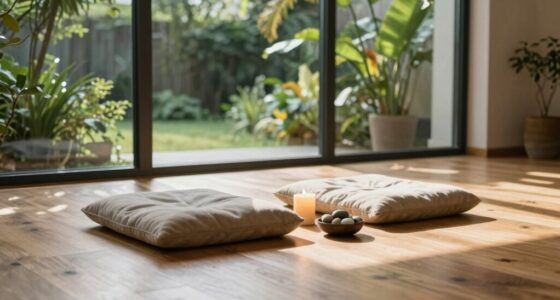
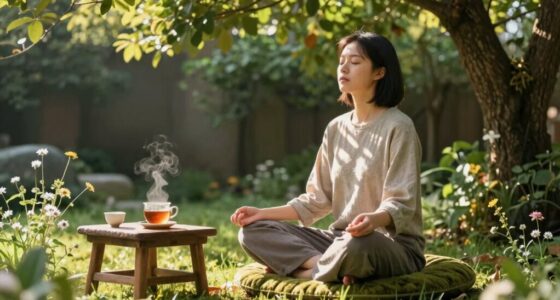
Yes, meditation can help you become more patient by calming your mind and reducing stress. With regular practice, you’ll notice your reactions become calmer and more controlled, even in frustrating situations. Meditation trains you to stay present and emotionally resilient, making it easier to accept delays and setbacks. Over time, patience becomes a natural part of how you respond to life’s challenges. Keep exploring and you’ll discover even more ways meditation can support your growth.

Turn your quiet moments into listening time
- Thousands of audiobooks, podcasts and originals
- Listen on your phone, tablet or Echo — also offline
- Cancel anytime
Key Takeaways
- Meditation cultivates mindfulness, enabling better emotional regulation and reducing impulsive reactions like impatience.
- Regular practice activates the relaxation response, lowering stress hormones and increasing tolerance for frustration.
- Mindfulness enhances awareness of emotional triggers, allowing deliberate, calmer responses instead of impulsive reactions.
- Consistent meditation fosters acceptance of uncontrollable situations, reducing frustration and promoting patience.
- Over time, meditation deepens resilience, making patience a natural aspect of emotional well-being.

Meditation can be a powerful tool for cultivating patience, especially when you approach it with consistency and intention. When you dedicate time to mindfulness practices, you’re training your mind to stay present and focused, which naturally fosters patience. As you practice regularly, you begin to notice how your reactions to frustrating situations become calmer and more measured. This shift doesn’t happen overnight, but with persistence, your ability to remain composed improves, making patience a natural outcome of your meditation routine.
One of the key ways meditation helps you develop patience is through stress reduction. When you meditate, you activate your body’s relaxation response, which reduces the levels of stress hormones like cortisol. This calming effect makes it easier for you to handle challenging situations without feeling overwhelmed or reactive. Over time, you’ll find yourself more tolerant of delays, setbacks, or irritating behaviors from others, because your nervous system learns to stay centered even in the face of frustration. Meditation doesn’t eliminate stress completely, but it gives you the tools to manage it better, creating a foundation for patience to grow. Incorporating stress management techniques into your routine can further enhance these benefits.
Meditation activates your relaxation response, reducing stress hormones and fostering patience and emotional resilience over time.
Mindfulness practices are essential to this process. They encourage you to observe your thoughts, feelings, and bodily sensations without judgment. As you become more aware of your immediate reactions—such as impatience or irritation—you gain insight into your habitual responses. This awareness is vital because it allows you to choose a more deliberate, calm response instead of impulsively reacting. Over time, this deliberate response becomes more natural, helping you develop a more patient outlook. The more you practice mindfulness, the more you condition your mind to pause and reflect before reacting, which is key to cultivating patience in everyday life. Additionally, understanding how lifevest advisors emphasize thorough research and risk management can inspire you to approach your emotional growth with deliberate planning and patience. Incorporating consistent practice into your routine further solidifies these benefits, making patience an integral part of your daily interactions.
Furthermore, meditation helps you develop a sense of acceptance and compassion, both toward yourself and others. When you’re patient, you recognize that things often unfold outside your control, and that’s okay. Meditation teaches you to accept these moments without frustration, fostering a mindset that views delays or inconveniences as opportunities for growth rather than obstacles. Developing this emotional resilience can significantly enhance your capacity for patience. As you become more comfortable with uncertainty through your practice, patience becomes less about effort and more about a natural way of being. This shift in perspective ultimately empowers you to approach life’s challenges with a calmer, more patient attitude, making your interactions more harmonious and less stressful. Embracing the mindfulness aspect of meditation consistently can deepen this resilience and support your ongoing development of patience.
As an affiliate, we earn on qualifying purchases.
Frequently Asked Questions
How Long Does It Take to See Patience Benefits From Meditation?
You can start noticing patience development from meditation in as little as a few days to weeks, especially with consistent mindfulness practice. Regular meditation helps you become more aware of your reactions, gradually fostering patience. The key is daily commitment; the more you practice, the quicker you’ll observe improvements. Over time, this mindfulness enhances your ability to stay calm and patient during challenging situations, reinforcing your overall patience.
Is Meditation Effective for All Age Groups?
Meditation is like a universal key fitting different age-specific doors, offering benefits across all age groups. For children, it fosters developmental patience stages by improving focus, while adults gain emotional resilience. Seniors often experience enhanced calmness and mental clarity. Though benefits vary, meditation’s adaptability makes it effective at any age, helping you cultivate patience through tailored practices suited to each developmental stage, ensuring everyone can access its calming power.
Can Meditation Replace Other Patience-Building Techniques?
Meditation can complement, but not replace, other patience-building techniques. Many meditation misconceptions suggest it alone instantly boosts patience, but consistent practice enhances patience in daily life over time. Combining meditation with strategies like mindful communication and stress management creates a well-rounded approach. You’ll find that integrating meditation helps you develop patience more naturally, but relying solely on it might not address all situations requiring patience.
Are There Specific Meditation Styles Better for Increasing Patience?
Certain meditation styles, like mindfulness techniques and guided visualizations, are especially effective for increasing patience. Mindfulness helps you stay present and observe your impulses without reacting, which builds patience over time. Guided visualizations, on the other hand, encourage you to imagine calm, patient scenarios, reinforcing your ability to remain composed. Incorporating these styles into your routine can considerably enhance your patience skills.
How Often Should I Meditate to Improve Patience?
Think of meditation like watering a plant; consistency helps it grow. To boost patience, meditate daily for about 10-20 minutes, focusing on breathing exercises and mindfulness practices. Regular practice trains your mind to stay calm and centered in frustrating moments. With dedication, you’ll notice your patience improving as your mind becomes more resilient and less reactive over time. Keep at it, and patience will become second nature.
As an affiliate, we earn on qualifying purchases.
Conclusion
So, don’t dismiss meditation just yet. Yes, it takes some time and consistency, but the patience you build during meditation can spill over into your daily life. Even if you don’t see immediate results, keep practicing—you’ll likely notice yourself feeling calmer and more tolerant over time. Remember, it’s not about perfection but progress. Stick with it, and you’ll find yourself becoming a more patient, peaceful person, one mindful breath at a time.
As an affiliate, we earn on qualifying purchases.
guided meditation for emotional resilience
As an affiliate, we earn on qualifying purchases.
As an affiliate, we earn on qualifying purchases.
Fall Picks
fall essentials
As an affiliate, we earn on qualifying purchases.