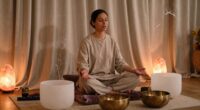
Sound meditation uses crafted sounds like singing bowls and guided tones to help you relax, focus, and connect with your inner self effortlessly. It works by syncing your brainwaves to promote deep calm, reduce stress, and enhance well-being. Many people love it because it’s accessible, doesn’t require special skills, and offers lasting mental and emotional benefits. Keep going to discover how this powerful practice can transform your mind and body.

Turn your quiet moments into listening time
- Thousands of audiobooks, podcasts and originals
- Listen on your phone, tablet or Echo — also offline
- Cancel anytime
Key Takeaways
- Sound meditation uses crafted sounds to promote relaxation, self-awareness, and emotional well-being.
- It facilitates brainwave entrainment, helping the mind achieve calm, focus, or meditative states.
- Vibrational healing restores energy balance and clears blockages on physical, emotional, and spiritual levels.
- People love its accessible nature, easy practice, and proven benefits like reduced stress and improved sleep.
- Technology enhances its effectiveness, making sound meditation a versatile and powerful mental health tool.

Have you ever wondered why sound meditation has become so popular? It’s because it offers a simple yet powerful way to connect with your inner self, reduce stress, and improve your overall well-being. At its core, sound meditation uses carefully crafted sounds—like singing bowls, tuning forks, or guided tones—to influence your brain and body. One key reason it works so well is because of brainwave entrainment, a process where your brain’s electrical activity syncs with the rhythm of the sounds you listen to. When your brain matches these frequencies, you naturally slip into states of deep relaxation, heightened focus, or even meditative bliss. That synchronization isn’t accidental; it’s a precise mechanism that makes sound meditation so effective for calming your mind and promoting vibrational healing. Vibrational healing, after all, is about using sound vibrations to restore balance and harmony within your body’s energy systems. When you immerse yourself in these vibrations, they can resonate with your own energy fields, helping to clear blockages and promote healing on a physical, emotional, and spiritual level. Additionally, the use of native instruments and techniques rooted in sustainable practices can enhance the authenticity and effectiveness of your experience. Incorporating sound vibrations with these practices can further amplify the benefits of your meditation sessions. You might find that during a sound meditation session, your thoughts start to quiet down, and your breathing becomes more even. That’s because the sounds are guiding your brain into a relaxed state, similar to what you experience during deep sleep or intense focus. As your brainwave patterns shift, you become more receptive to positive changes and self-awareness. Research indicates that audio technology plays a crucial role in optimizing the therapeutic effects of sound therapy. Many people love sound meditation because it’s accessible—no special equipment or prior experience is needed. Just a comfortable space, some soothing sounds, and your willingness to be present. It’s also incredibly versatile; you can do it sitting, lying down, or even walking, depending on what feels best for you. Over time, consistent practice can lead to lasting benefits, including reduced anxiety, better sleep, and a greater sense of peace. Furthermore, understanding the brainwave entrainment process can help deepen your appreciation of how sound therapy can induce profound mental states.
As an affiliate, we earn on qualifying purchases.
Frequently Asked Questions
Can Sound Meditation Help With Chronic Pain Management?
Sound therapy can help you manage chronic pain by promoting relaxation and reducing stress, which often worsens pain symptoms. When you practice sound meditation, the vibrations and calming tones can stimulate your nervous system, leading to pain relief. It’s a non-invasive approach that encourages your body to heal naturally. Regular sessions might improve your overall well-being, making pain more manageable and enhancing your quality of life.
Is Sound Meditation Suitable for Children or Beginners?
Picture a gentle lullaby guiding a child or a beginner into calm waters; sound meditation is very suitable for them. It offers child-friendly benefits like calming nerves and enhancing focus, making it accessible for beginners. The soothing sounds act as an inviting bridge, easing newcomers into mindfulness without complexity. Its gentle nature makes it an ideal starting point, encouraging young or new practitioners to explore relaxation and inner peace effortlessly.
What Equipment Is Necessary for Practicing Sound Meditation?
For sound meditation, you mainly need equipment essentials like singing bowls, tuning forks, or chimes to create soothing sounds. Meditation accessories such as comfortable cushions or mats help you relax during practice. You might also use headphones for immersive sound or a portable speaker if you prefer to meditate outdoors. Keep your space quiet and free from distractions, and you’ll be all set to enjoy the calming benefits of sound meditation.
How Often Should I Practice Sound Meditation for Best Results?
You should practice sound meditation at least 3 to 4 times a week for the best results. Following consistent frequency guidelines helps your mind and body adapt more effectively. Regular practice enhances relaxation, reduces stress, and deepens your meditation experience. Remember, consistency benefits your progress, so try to establish a routine that fits your schedule. Over time, you’ll notice greater mental clarity and emotional balance from maintaining this habit.
Are There Any Potential Side Effects of Sound Meditation?
About 5% of people report temporary discomfort during sound therapy, but serious side effects are rare. While meditation safety is generally high, some individuals may experience headaches, dizziness, or emotional releases. It is crucial to listen to your body and stop if you feel uneasy. Always consult a healthcare professional if you have concerns or underlying health conditions, ensuring your sound meditation practice remains safe and beneficial.
guided sound meditation recordings
As an affiliate, we earn on qualifying purchases.
As an affiliate, we earn on qualifying purchases.
Conclusion
Think of sound meditation as a gentle river carving its way through your mind, clearing away clutter with each soothing wave. As you drift along this current, you find clarity and peace flowing effortlessly within. Just like a river’s steady course, sound meditation guides you to a tranquil oasis amid life’s chaos. Embrace this journey, and you’ll discover a peaceful sanctuary where your mind can rest, refresh, and renew itself.
brainwave entrainment audio devices
As an affiliate, we earn on qualifying purchases.
As an affiliate, we earn on qualifying purchases.
vibrational healing sound therapy
As an affiliate, we earn on qualifying purchases.
As an affiliate, we earn on qualifying purchases.
Halloween Picks
halloween
As an affiliate, we earn on qualifying purchases.