
Crying during meditation often happens because focusing inward allows suppressed feelings like memories, fears, or pain to surface from your subconscious. This emotional release helps clear tension and promotes healing, signaling progress in processing unresolved emotions. Tears show you’re engaging with your subconscious and opening to personal growth. As you continue exploring, you’ll discover how understanding these responses can support deeper self-awareness and ongoing emotional well-being.

Turn your quiet moments into listening time
- Thousands of audiobooks, podcasts and originals
- Listen on your phone, tablet or Echo — also offline
- Cancel anytime
Key Takeaways
- Crying during meditation indicates emotional release and subconscious feelings surfacing.
- Tears reflect healing, helping to clear emotional tension stored over time.
- Emotional responses during meditation enhance self-awareness and promote personal growth.
- Allowing tears to flow supports deeper emotional processing and inner peace.
- Crying signals a breakthrough in emotional healing and progress in the meditation journey.
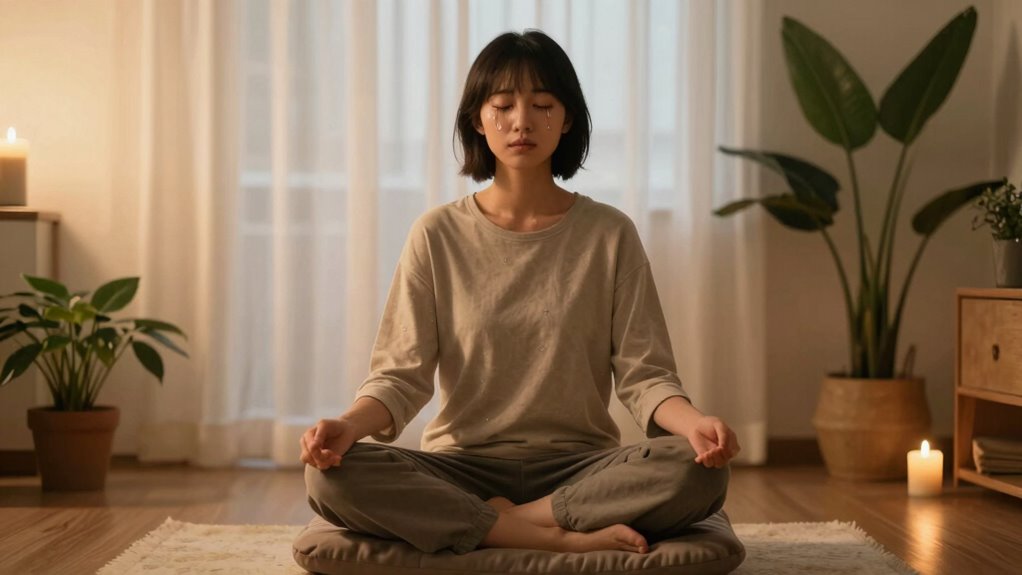
Many people find themselves unexpectedly crying during meditation, which can feel confusing or even uncomfortable. This emotional response isn’t unusual and often signals a deep process of emotional release happening beneath the surface. When you sit quietly and focus inward, you create space for suppressed feelings to surface. These feelings might be memories, fears, or unresolved pain that your subconscious has been holding onto. As you relax and turn your attention inward, your mind and body begin to work through these emotions, often leading to tears. It’s important to recognize that crying in meditation isn’t a sign of weakness or failure but a sign of your mind engaging in subconscious healing.
Crying during meditation is a natural part of the healing process. It’s your subconscious trying to communicate what it’s been hiding or suppressing. When these emotions emerge, your body releases built-up tension, and your mind starts to process unresolved issues. This emotional release can feel intense, but it’s also incredibly freeing. It’s like clearing out emotional clutter that’s been weighing you down. As you allow yourself to feel and express these emotions, you give your subconscious the chance to heal. Recognizing the importance of mind-body connection can help in understanding how your perceptions during meditation influence your emotional responses. Holding back tears or trying to suppress the feelings can prolong the process, so it’s best to accept and let them flow naturally. Remember, this is a crucial step toward emotional clarity and inner peace.
The tears you shed during meditation often mark a breakthrough in your emotional journey. They symbolize that your mind is working through layers of pain or trauma that have been stored away for years. This process isn’t always comfortable, but it’s necessary for genuine healing. When you cry, you’re not just releasing tears—you’re also releasing emotional pain and making room for growth. Over time, these moments of emotional release can help you gain a better understanding of yourself, fostering resilience and compassion. Many people find that crying during meditation becomes less frequent as they heal and become more in tune with their emotions. It’s a sign that your subconscious is opening up and that you’re on a path of genuine healing and self-discovery. Recognizing the emotional release involved can help you embrace these moments as vital steps in your healing journey. Additionally, understanding how subconscious feelings influence your reactions can deepen your self-awareness and support your ongoing growth. Developing awareness of your emotional responses can further enhance your ability to process and integrate these experiences effectively.
meditation emotional release journal
As an affiliate, we earn on qualifying purchases.
As an affiliate, we earn on qualifying purchases.
Frequently Asked Questions
Can Crying During Meditation Indicate Emotional Release or Unresolved Trauma?
Crying during meditation often indicates emotional awareness and can signal trauma healing. When you experience tears, it might mean you’re releasing built-up emotions or confronting unresolved trauma. This reaction is a natural part of the process, helping you process feelings deeply stored inside. Embrace these moments as signs of progress, and consider seeking support if the emotions feel overwhelming. Your tears can be a powerful step toward emotional clarity and healing.
Does Crying During Meditation Mean I Am Doing It Wrong?
Crying during meditation doesn’t mean you’re doing it wrong; it’s often a sign you’re breaking through emotional suppression. Many meditation myths suggest you should feel nothing, but emotional release can be part of the process. Instead of worrying, accept your tears as a healthy sign of inner work. Trust your experience, and remember that meditation is about awareness, not perfection—your emotions are valid and valuable.
Are There Specific Meditation Techniques That Cause More Emotional Expression?
Yes, certain meditation techniques, like mindfulness or body scan, can trigger more emotional expression because they increase emotional awareness. When you’re more present with your feelings, you might cry as part of processing emotions. This is a normal part of experiencing the full benefits of meditation, helping you connect deeply with yourself. Embracing these moments can enhance your emotional awareness and deepen your meditation benefits.
How Can I Manage Overwhelming Emotions That Arise While Meditating?
When emotions flood like a storm during meditation, focus on your breath to anchor yourself. Cultivate emotional awareness by labeling feelings without judgment, which helps you navigate meditation discomfort. Think of your emotions as passing clouds—acknowledge them and let them drift away. If overwhelmed, gently pause, take deep breaths, and remind yourself it’s okay to experience these feelings. With practice, you’ll tame the storm and find serenity in your practice.
Is It Common for Beginners to Cry During Their First Few Sessions?
Yes, it’s quite common for beginners to cry during their first few meditation sessions. This happens because meditation can bring up deep emotional awareness, especially if you’re seeking meditation comfort. As you become more familiar with the practice, you’ll likely find it easier to manage overwhelming feelings. Remember, crying is a natural part of emotional release, and with patience, your meditation experience will grow more calming and balanced.
guided meditation for emotional healing
As an affiliate, we earn on qualifying purchases.
As an affiliate, we earn on qualifying purchases.
Conclusion
Think of meditation as a gentle river, flowing steadily through your mind. Sometimes, just beneath the surface, hidden emotions bubble up like tributaries joining the main stream. When you cry during meditation, you’re not drowning but releasing old debris carried along by the current. Embrace these tears as clearing the way for clearer waters ahead. Like a river finding its path, your emotions guide you toward deeper understanding and peace.
meditation cushion for deep relaxation
As an affiliate, we earn on qualifying purchases.
As an affiliate, we earn on qualifying purchases.
mindfulness meditation for emotional clarity
As an affiliate, we earn on qualifying purchases.
As an affiliate, we earn on qualifying purchases.
Halloween Picks
halloween
As an affiliate, we earn on qualifying purchases.