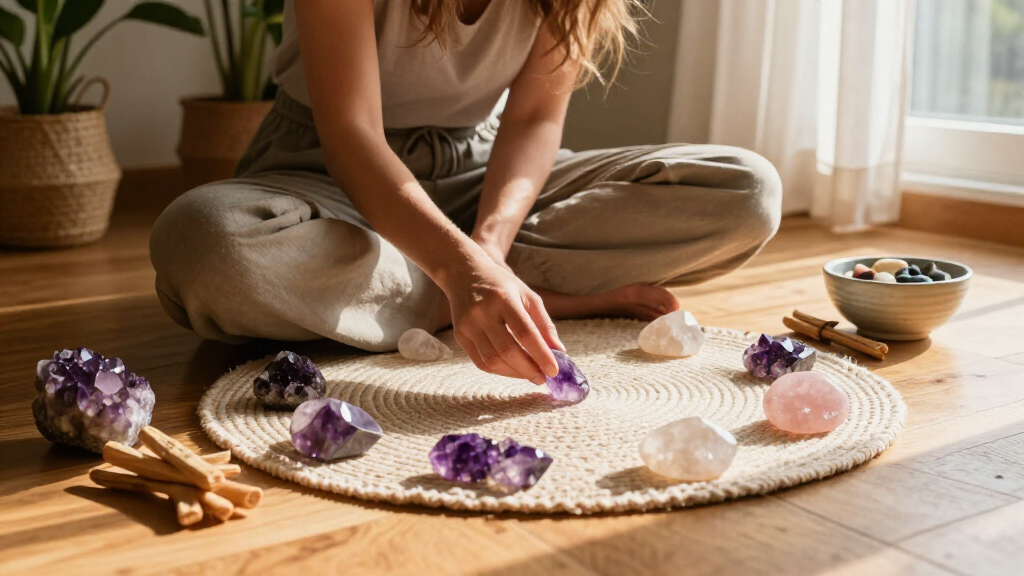
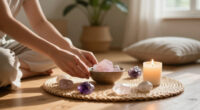
This guide walks you through building a personal crystal healing set from scratch: choosing the stones, buying them without overpaying, cleansing them of residual energy, charging them with your intention, and arranging them into a working set you can use for meditation, chakra work, or placement on the body. This guide is written for beginners and intermediate practitioners who want a curated, intentional set rather than a random bag of stones. No prior crystal experience is required. Expect the full process to take two to four hours of active work, plus up to 24 hours of passive time if you choose a full cleansing method such as moonlight. Crystal healing is a complementary practice; it does not replace medical treatment, so treat your set as a tool for relaxation, focus, and personal ritual rather than therapy.

Turn your quiet moments into listening time
- Thousands of audiobooks, podcasts and originals
- Listen on your phone, tablet or Echo — also offline
- Cancel anytime

32-Piece Natural Raw Crystal and Healing Stone Set with Guide
- ✔ Total Pieces: 32
- ✔ Popular Rough Crystals: 16 (Amethyst, Black Obsidian, Citrine, Clear Quartz, and more)
- ✔ Special Specimen Stones: 16 (Black Tourmaline, Blue Calcite, Fluorite, Selenite, and more)

AOOVOO 17-Piece Natural Raw Chakra Stone Set with Selenite Plate and Amethyst Necklace
- ✔ Piece Count: 17
- ✔ Stone Types: 14 raw chakra stones including Amethyst, Lapis Lazuli, Tiger Eye, Red Jasper, Pyrite, Citrine, Fluorite, and Obsidian
- ✔ Included Accessories: Selenite charging plate, amethyst necklace, beginner’s guide

23-Piece Healing Crystals and Chakra Stones Gift Set
- ✔ Piece Count: 23
- ✔ Included Items: 7 chakra stones, blue orgone pyramid, thumb worry stones, chakra bracelets, chakra moon necklace, crystal guidebook, storage bag, wooden box
- ✔ Stone Size: Approximately 1.5–1.8 inches
Difficulty: Beginner | Time: 2-4 hours (including shopping time; cleansing may add 24 hours)
What You’ll Need
Tools & Materials:
- 5-9 tumbled or raw crystals (a starter set typically includes clear quartz, amethyst, rose quartz, black tourmaline, and citrine)
- A storage pouch or box with dividers, ideally natural fabric such as cotton, silk, or suede
- A cleansing medium: sage or palo santo, a bowl of dry sea salt, or running water (depending on stone hardness)
- A quiet space for charging and arrangement
- Optional: a reference card or notebook to record each stone’s purpose
- Optional: selenite charging plate or slab
Knowledge:
- Basic awareness that some stones are soft or water-soluble and cannot be cleansed in water
- Familiarity with your own intention (sleep, focus, emotional balance, protection, etc.) before shopping
Before purchasing anything, write down one or two primary intentions for your set. A set built around a purpose (for example, stress relief) is easier to select, cheaper, and more satisfying to use than a set assembled stone by stone with no goal. Keep this list with you when shopping so you buy what you planned rather than what a seller promotes.
32-Piece Natural Raw Crystal and Healing Stone Set with Guide
For buyers who want maximum stone variety in a single purchase, this Cereikei set is the clear leader of the three. Where the AOOVOO kit stops at 14 stones and the gift set at 7 chakra stones, this set delivers 32 distinct crystals — 16 popular rough gemstones like Amethyst, Citrine, and Clear Quartz, plus 16 special specimens including Black Tourmaline, Blue Calcite, Fluorite, and Selenite. That second group is what separates it: specimens like these usually have to be bought individually, and having them bundled gives you far more room to explore which stones resonate with your practice.The size range is worth understanding before you buy. Most stones sit around 1.3 inches, but pieces run from 0.7 inches up to 4 inches for larger Selenite. That spread makes the set versatile — the bigger pieces work on display or as meditation focal points, while the smaller ones suit grids and pocket carry. The tradeoff is consistency: because these are raw, unpolished natural stones, your set will not match the product photos exactly, and a few pieces may be smaller than expected. Compared with the AOOVOO set, you also give up accessories — there’s no charging plate or necklace here. This pick makes the most sense for someone who values stone count and specimen diversity over a curated, structured kit.
Pros:
- Largest variety here with 32 distinct crystal types
- Includes 16 special specimen stones rarely found in starter kits
- Versatile size range works for grids, handling, and display
- Raw, unpolished format appeals to collectors who prefer natural specimens
Cons:
- Natural variation means stones may differ noticeably from photos
- Some pieces as small as 0.7 inches may disappoint display-focused buyers
- No accessories like a charging plate, jewelry, or storage box
Best for: Collectors and practitioners who want the widest variety of raw stones for healing grids, meditation, and display
Not ideal for: Beginners who want guided structure and accessories, or anyone expecting uniform, polished stones
Bottom line: If stone variety is your top priority, this 32-piece set delivers more crystal types per dollar of intent than anything else in this lineup.
“If stone variety is your top priority, this 32-piece set delivers more crystal types per dollar of intent than anything else in this lineup.”
AOOVOO 17-Piece Natural Raw Chakra Stone Set with Selenite Plate and Amethyst Necklace
This AOOVOO set takes the opposite approach to the Cereikei kit: instead of maximum stone count, it focuses on structure and completeness. The 14 raw chakra stones cover the stones most commonly used in chakra balancing — Amethyst, Lapis Lazuli, Tiger Eye, Red Jasper, Citrine, and others — so a newcomer isn’t left guessing what to do with an exotic specimen. Crucially, it’s the only set in this lineup that includes a selenite charging plate, which many practitioners use to cleanse stones between sessions, plus an amethyst necklace that lets you carry one stone with you throughout the day.Compared with the 23-piece gift set, the AOOVOO kit is more practice-oriented and less presentation-focused. The gift set wins on packaging with its wooden box, but AOOVOO wins on function: the charging plate is a genuinely useful daily tool, and the included beginner’s guide walks new users through energy-balancing basics. The drawback is size consistency — raw natural stones vary in shape and dimension, so your set may look less uniform than tumbled alternatives. And as with every set here, the health-benefit claims are marketing language rather than proven science. This option stands out as the most sensible first purchase for someone starting a meditation or Reiki practice.
Pros:
- Includes a selenite charging plate — unique in this lineup
- Beginner’s guide makes it genuinely approachable for newcomers
- Amethyst necklace extends the set beyond static display
- Arrives in a gift box suitable for special occasions
Cons:
- Raw stones vary in size and shape, so sets may look inconsistent
- Health-benefit claims are not scientifically substantiated
- Fewer stone types than the Cereikei 32-piece set
Best for: Beginners starting a chakra, meditation, or Reiki practice who want guidance and useful accessories included
Not ideal for: Experienced collectors seeking rare specimens or maximum stone variety
Bottom line: The most complete starter kit of the three, pairing a focused chakra stone selection with practical accessories beginners will actually use.
“The most complete starter kit of the three, pairing a focused chakra stone selection with practical accessories beginners will actually use.”
23-Piece Healing Crystals and Chakra Stones Gift Set
Where the AOOVOO kit is built for practice and the Cereikei set for variety, this 23-piece set is built for presentation. It’s the only option here that arrives in a wooden collection box, and it layers in accessories neither competitor matches in combination: a blue orgone pyramid, chakra bracelets, a moon necklace, thumb worry stones, a 12-page guidebook with an identification chart, and a storage bag. If you’re buying a crystal set as a gift — particularly for someone curious but not yet committed — this package feels substantially more considered than a loose bag of stones.The tradeoff is depth of stone collection. You get 7 chakra stones at roughly 1.5 to 1.8 inches, sourced from Brazil and Madagascar, which is a smaller crystal selection than either competitor offers. Buyers hoping for larger display pieces or rare specimens should look to the Cereikei set instead. The strength here is breadth of format: jewelry, a pyramid, and worry stones let someone engage with crystals in different ways without needing prior knowledge. The 12-page guidebook is thinner than a dedicated beginner’s manual but adequate for identifying what’s in the box. As with the other sets, the described energy and stress-relief benefits are claims rather than established science — judge it as a wellness and mindfulness kit, not a medical one.
Pros:
- Wooden box makes it the most gift-ready option of the three
- Includes jewelry, worry stones, and an orgone pyramid for varied use
- Guidebook with identification chart helps newcomers name each piece
- Stones sourced from Brazil and Madagascar
Cons:
- Only 7 core chakra stones — the smallest crystal selection here
- Stones may be too small for buyers wanting larger display pieces
- Healing and stress-relief claims are not substantiated
Best for: Gift buyers and casual users who want a polished, all-in-one package with jewelry and display pieces
Not ideal for: Serious collectors wanting many stone types or larger display specimens
Bottom line: The best choice when presentation matters most — a complete, gift-boxed introduction to crystals that trades stone variety for format diversity.
“The best choice when presentation matters most — a complete, gift-boxed introduction to crystals that trades stone variety for format diversity.”
As an Amazon Associate we earn from qualifying purchases.
Before You Start
Two things to settle before you spend money. First, understand the Mohs hardness rule: stones rated 6 or above (quartz family, amethyst, citrine) tolerate water cleansing; softer or metallic stones (selenite, malachite, pyrite, halite, calcite, angelite) can dissolve, tarnish, or break in water, so use smoke or dry salt for those instead. Second, buy from reputable sources — established metaphysical shops, gem shows, or sellers who disclose whether stones are natural, heat-treated, or dyed. Avoid listings that promise medical cures; that is a sign of an unreliable seller. You do not need expensive or rare specimens. Tumbled stones in the two-to-four-centimeter range cost very little and work well for placement sets.
Step-by-Step Instructions
Step 1: Define the purpose of your set
Write down the primary purpose of your set in one sentence, such as “emotional balance and better sleep” or “focus and protection during work.” Under it, list two or three secondary purposes. This list becomes your shopping filter and later your charging intention. Circle the single most important purpose — your set should be built around it.
Tip: A set with one clear purpose of five to nine stones is far easier to work with than a general-purpose collection of twenty.
Check: You have one written primary intention and a short list of secondary intentions you can say out loud from memory.
Step 2: Select a core of five foundational stones
Choose five stones that cover the broad functions of most healing sets: clear quartz (amplification and versatility), amethyst (calm and meditation), rose quartz (emotional softness and self-compassion), black tourmaline (grounding and protection), and citrine (energy and optimism). Together these five handle most intentions and give beginners a flexible base. If one does not match your purpose, substitute a stone with a similar reputation — for example, smoky quartz in place of black tourmaline.
Tip: Hold each stone in your hand before buying if you are shopping in person. If a stone feels physically uncomfortable or you simply dislike it, choose another — you will avoid using a stone you resent.
Check: You have five stones, can name each one, and know the role each plays in your set.
Step 3: Add three to four stones matched to your intention
Add three or four stones that specifically support your written purpose. For sleep and calm: lepidolite, howlite, blue lace agate. For focus and work: fluorite, tiger’s eye, sodalite. For emotional release: moonstone, rhodonite, apache tears. Look up each candidate stone’s hardness and check it against your intended cleansing method before buying. Write the name and purpose of each addition on your reference card as you go.
Tip: Stop at nine stones total. Larger sets become inventory to manage rather than tools to use.
Check: Your set totals eight or nine stones, every addition matches your intention list, and each is recorded on your reference card.
Step 4: Inspect and clean your stones physically
Examine each stone under bright light for cracks, chips, glue seams, or dye pooling in surface cracks (a sign of artificially colored stone). Wipe each stone with a dry, soft cloth to remove dust and handling residue. If a stone fails inspection — cracked, obviously dyed, or glued — set it aside and return or replace it before proceeding.
Tip: Dye often collects in hairline fractures and appears darker there than on the polished surface. Run a damp cotton swab over an inconspicuous spot; color transfer indicates dye.
Check: Every stone passes visual inspection, is free of dust, and shows no signs of dye or repair.
Step 5: Cleanse each stone energetically
Choose one cleansing method and apply it to all stones. Smoke: pass each stone through sage or incense smoke for thirty seconds while stating your intention. Moonlight: place all stones on a windowsill or safe outdoor surface overnight during a full moon. Dry salt: bury the stones in a bowl of dry sea salt for eight hours, then brush them clean. For quartz-family stones only, running water for one minute under a tap also works. Never place selenite, calcite, halite, malachite, or pyrite in water.
Tip: Dry salt cleansing is the safest universal method when you are unsure of a stone’s composition.
Check: Every stone has completed one full cleansing cycle without damage, discoloration, or pitting.
Step 6: Charge the set with your intention
Within a day of cleansing, sit somewhere quiet with all stones arranged in front of you. Hold each stone individually for one to two minutes, state your primary intention out loud or silently, and picture the stone serving that purpose. Place each charged stone into your storage pouch or onto a selenite slab as you finish it. Work through the entire set without interruption.
Tip: Speaking the intention aloud, even quietly, tends to produce a stronger sense of connection than silent statement — use whichever feels natural, but be consistent.
Check: You have held and stated an intention over every stone, and each one now rests in its storage place.
Step 7: Arrange the set for use and storage
Store the set in its pouch or a divided box, keeping softer stones separated from harder ones so they do not scratch. Decide on your working arrangement: a chakra layout (one stone per major chakra position), a simple grid (clear quartz at center, intention stones around it), or a loose set you select from per session. Practice laying out the set once on a flat surface or on yourself so you know where each stone belongs before your first real session.
Tip: Keep the reference card inside the pouch. During a session you should never have to stop and remember which stone does what.
Check: The set stores cleanly without stones knocking together, and you can lay out your chosen arrangement from memory in under a minute.
Step 8: Run your first healing session
Schedule twenty minutes alone. Lay out your arrangement, sit or lie with it, and breathe slowly with your primary intention in mind. For body placement, rest stones on the corresponding chakra points and keep them there for ten to fifteen minutes. End the session by thanking the set in whatever way feels natural, returning each stone to its place, and noting the session — date, stones used, how you felt — in your notebook.
Tip: Consistency matters more than duration. A short daily session builds a stronger routine than a long occasional one.
Check: You completed a full session start to finish, returned all stones to storage, and wrote one session log entry.
Common Mistakes to Avoid
- Cleansing water-soluble stones in water — Check hardness before any water exposure. Keep selenite, calcite, halite, malachite, and pyrite away from all liquids and use smoke or dry salt instead.
- Buying dyed or synthetic stones sold as natural — Buy from sellers who disclose treatments, inspect for dye pooling in cracks, and be suspicious of unusually vivid, uniform color at very low prices — bright fuchsia or neon blue “crystals” are almost always dyed.
- Building an oversized, purposeless collection — Write your intention before shopping and cap the set at nine stones. Add stones only when a real gap appears after weeks of use.
- Skipping the intention step after cleansing — Charge the set within a day of cleansing so the two steps stay linked in your routine. An uncharged set still works as a focus tool, but the ritual value of the sequence is lost.
Troubleshooting
Problem: A stone appears cloudy, pitted, or duller after cleansing
Solution: It was likely damaged by water or salt. Remove it from the set, dry it completely, and reassess. If the surface is rough or flaking, retire the stone or keep it as a display piece only; switch that role in your set to a harder substitute and cleanse with smoke going forward.
Problem: You feel nothing during sessions and doubt the set is working
Solution: Shift your measure away from sensation. Crystal work functions as a structured relaxation and attention practice — the value lies in the ritual of slowing down and focusing. Shorten sessions to ten minutes, hold one stone instead of a full layout, and track mood in your log for two weeks before judging results.
Problem: Stones scratch or chip each other in storage
Solution: Move the set to a divided box or wrap each stone individually in a small square of natural fabric. Keep hard stones (quartz, 7 on the Mohs scale) from resting against soft stones (calcite, fluorite, selenite, 3-4).
Problem: You cannot remember which stone serves which purpose
Solution: Write the stone name and one-line purpose on your reference card and keep it in the pouch. After a few sessions the associations become second memory, but the card removes the friction while you are learning.
What Success Looks Like
Your set is complete when all of the following are true: you own eight or nine stones that each map to a written purpose on your reference card; every stone passed physical inspection with no signs of dye or damage; all stones completed one full cleansing cycle appropriate to their hardness; the whole set was charged under your stated intention in one sitting; stones store cleanly without contact damage; and you have finished at least one full session, logged it, and can lay out your arrangement from memory in under a minute. At that point the set is functional and ready for regular use.
Next Steps
Re-cleanse the set every two to four weeks, or whenever a session felt unusually heavy — selenite slabs make this easy, since resting stones on selenite overnight cleanses them without any ritual. Review your session log monthly: if a stone goes unused for a month, consider whether a different stone would serve your intention better. When you want to expand, add stones one at a time for a specific gap rather than in batches. If you develop an interest in a particular practice — chakra layouts, crystal grids, or meditation — build a second dedicated set around it rather than stretching this one. Finally, keep the practice honest: use the set alongside, never instead of, professional care for any health concern.
Frequently Asked Questions
Do I need expensive or rare crystals for a healing set to work?
No. Common tumbled stones — clear quartz, amethyst, rose quartz, black tourmaline — cost very little and are the backbone of most sets. Price reflects rarity and appearance, not usefulness. A complete starter set of eight or nine tumbled stones can be assembled inexpensively from a reputable shop or gem show.
How often should I cleanse my crystal healing set?
Every two to four weeks with regular use, and immediately after any session that felt emotionally intense. If your set sits unused, cleanse it before returning to it. Resting the stones on a selenite slab overnight is the lowest-effort routine method.
Which crystals must never be put in water?
Selenite, halite, calcite, malachite, angelite, and pyrite are the common ones. Selenite, halite, and calcite can dissolve or become damaged; malachite contains copper that can leach; pyrite tarnishes. When in doubt of a stone’s composition, use smoke or dry salt cleansing instead of water.
Can I use a crystal healing set on someone else?
Yes, with consent and clear communication. Ask the person to choose or hold stones beforehand so the selection reflects them rather than you, cleanse the set after each use with another person, and keep sessions short the first time. Never present crystal work as medical treatment, and never discourage anyone from seeking professional care.
How do I know if a crystal is real rather than glass or dyed?
Glass imitations often contain round bubbles visible under magnification and feel lighter than expected. Dye pools in surface cracks and appears darker there than on polished faces. Buy from sellers who disclose whether stones are natural or treated, and be skeptical of vividly uniform color at bargain prices — natural amethyst and citrine vary in tone across the stone.
Halloween Picks
halloween
As an affiliate, we earn on qualifying purchases.