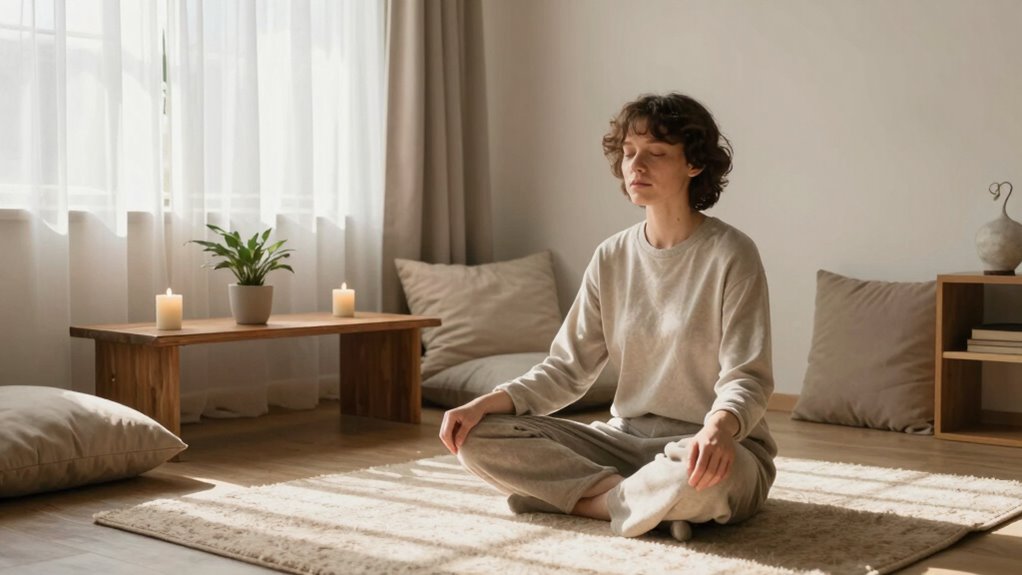
If you hate sitting still, try movement-based meditation to stay mindful comfortably. Practice gentle activities like walking, slow stretching, or tai chi, focusing on your breath and sensations. These techniques help release tension and keep you engaged, making meditation feel natural and enjoyable. By listening to your body and incorporating movement, you can build a regular practice without stress. Keep exploring, and you’ll discover how to make mindfulness fit seamlessly into your life.

Turn your quiet moments into listening time
- Thousands of audiobooks, podcasts and originals
- Listen on your phone, tablet or Echo — also offline
- Cancel anytime
Key Takeaways
- Try movement-based practices like walking, tai chi, or gentle stretching to stay mindful without stillness.
- Keep sessions short and gradually increase duration to build comfort and consistency.
- Focus on bodily sensations and breath awareness during gentle movements instead of stillness.
- Incorporate active techniques into daily routines, such as mindful cooking or cleaning.
- Remember that mindfulness can be achieved through flexible, personalized approaches beyond traditional sitting meditation.
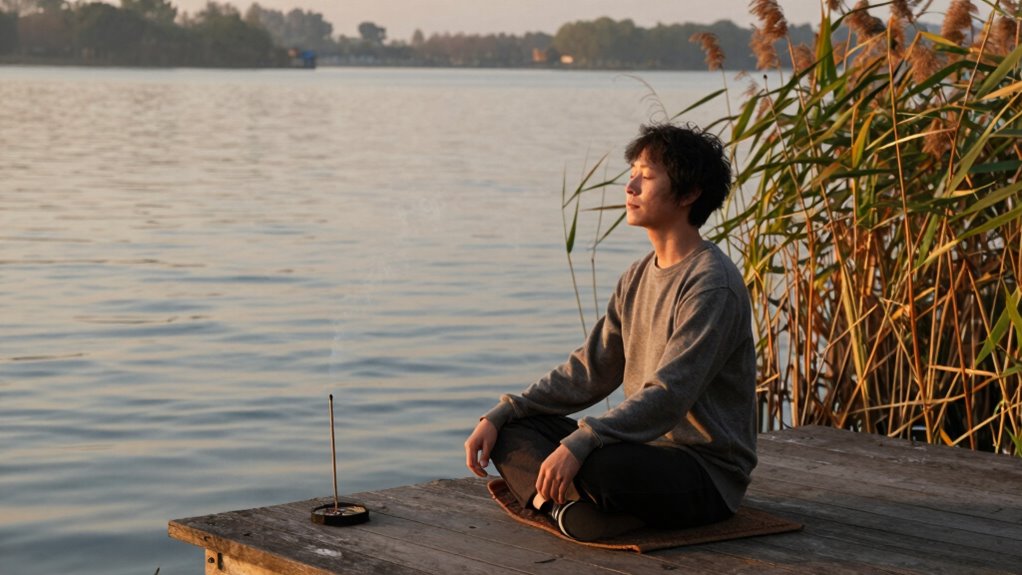
If stillness feels intolerable, movement meditation might be a better fit. This practice involves gentle, deliberate movements that keep your body engaged while cultivating mindfulness. You might opt for walking meditation, where you focus on each step—the sensation of your feet touching the ground, the rhythm of your stride, and the environment around you. Alternatively, try slow stretching or tai chi, which combine controlled movements with breath awareness. These forms of movement meditation allow you to be active without losing touch with the present moment. They also help release tension and improve your focus, making meditation feel less like a chore and more like a natural part of your day. Incorporating mindfulness practices can help deepen your experience and make the process feel more accessible. Developing a personalized approach can make it easier to stay committed and find joy in your mindfulness routine.
The key is to listen to your body and choose practices that feel comfortable. You don’t need to sit cross-legged on the floor or remain perfectly still to meditate—your goal is to cultivate awareness and relaxation in a way that suits your personality and energy level. Starting with short sessions of breathing exercises or movement meditation helps build consistency without overwhelming you. Additionally, understanding how urban greening impacts mental health and well-being can motivate you to integrate mindfulness into your daily life. Embracing active meditation techniques can also make mindfulness more engaging and suited to diverse personalities. Over time, you may find it easier to incorporate stillness into your routine, but even if you don’t, these active techniques still bring the benefits of mindfulness. Remember, meditation isn’t about perfection; it’s about finding what works for you and making it a part of your everyday life.
As an affiliate, we earn on qualifying purchases.
Frequently Asked Questions
Can I Meditate While Lying Down Instead of Sitting?
Yes, you can meditate while lying down instead of sitting. Lying meditation is a great posture alternative if sitting feels uncomfortable or tiring. Find a comfortable spot, lie flat, and keep your body relaxed. Focus on your breath or your sensations to stay present. Just be mindful of falling asleep; if that happens, gently bring your awareness back. This method helps you meditate comfortably without sacrificing mindfulness.
How Long Should I Meditate if I Dislike Sitting Still?
If you dislike sitting still, start with just five minutes of meditation, gradually increasing as you feel comfortable. Imagine Sarah, who found mindfulness distractions less overwhelming by meditating while walking. Pay attention to your posture preferences—whether lying down or standing—and choose what feels best. Short, consistent sessions help build your practice without frustration, making it easier to stay committed and experience the calming benefits of meditation.
Are There Meditation Techniques Suitable for Restless Individuals?
Yes, there are meditation techniques suited for restless individuals. You can try mindfulness exercises that involve gentle movement, like walking meditation or stretching. Breathing techniques, such as deep belly breathing or rhythmic inhaling and exhaling, help calm your mind. These methods keep you engaged while cultivating focus. By incorporating movement and breath awareness, you make meditation more accessible and effective, even if sitting still feels uncomfortable.
Can Movement-Based Meditation Help With Impatience?
Yes, movement-based meditation can help with impatience. Walking meditation and dynamic breathing allow you to stay active while focusing your mind. The juxtaposition of motion and mindfulness teaches patience and presence, calming restless energy. By engaging your body intentionally, you shift from frustration to awareness, making it easier to manage impatience. These techniques turn movement into a tool for mental clarity, helping you find calm amid your natural energy.
Is It Okay to Meditate With My Eyes Open?
Yes, it’s perfectly okay to meditate with your eyes open. Using eye-opening techniques like soft gaze or visual focus helps reduce discomfort for many people. You can choose a spot to softly look at, like a candle flame or a natural scene, to stay present. This approach can make meditation easier if sitting still feels challenging, allowing you to stay engaged while maintaining mindfulness without feeling confined.
As an affiliate, we earn on qualifying purchases.
Conclusion
Even if sitting still feels like a mountain you can’t climb, remember, meditation isn’t about perfect stillness. Picture yourself as a leaf gently drifting on a flowing stream, moving with the current rather than fighting against it. Embrace the gentle rhythm of your breath, and let each inhale and exhale carry you closer to calm. With each small, mindful movement, you’re creating a peaceful space within—one that doesn’t demand stillness, only presence.
As an affiliate, we earn on qualifying purchases.
mindfulness meditation accessories
As an affiliate, we earn on qualifying purchases.
As an affiliate, we earn on qualifying purchases.
Halloween Picks
halloween
As an affiliate, we earn on qualifying purchases.